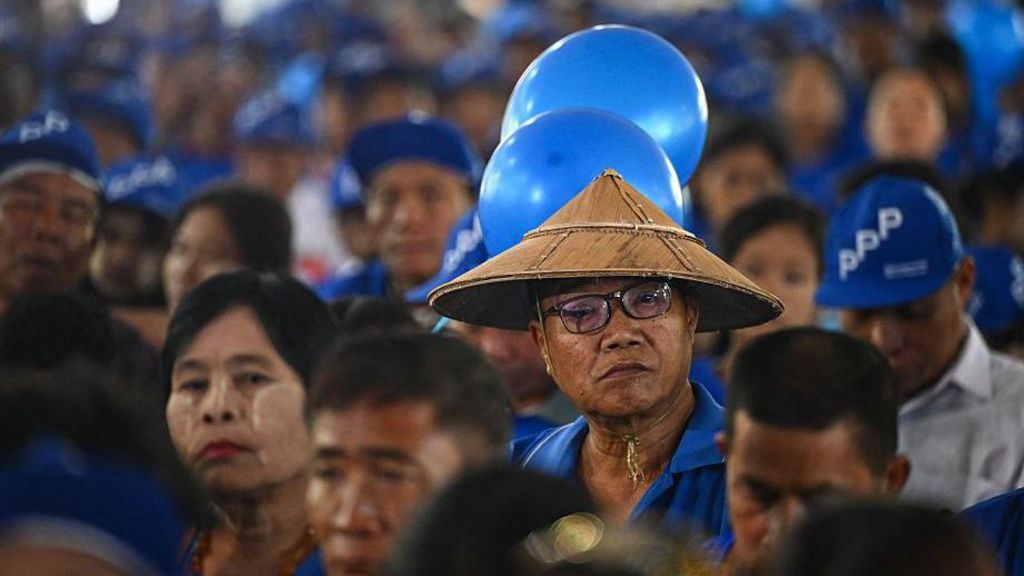
Myanmar’s military junta has initiated a controversial phased electoral process spanning the next month, a move international observers are characterizing as a thinly veiled attempt to legitimize its power. The election proceeds under circumstances where major political parties remain dissolved, their leadership imprisoned, and approximately half the population unable to participate due to an ongoing and devastating civil war.
This ballot, the first since the military seized control in a February 2021 coup, unfolds against a backdrop of intense conflict. The junta, bolstered by support from China and Russia, has managed to reclaim some territory this year through relentless airstrikes after suffering significant losses to a coalition of armed resistance groups and ethnic armies. The conflict has resulted in thousands of fatalities, displaced millions, and crippled the nation’s economy.
To ensure the election proceeds as intended, the regime has enacted severe punitive measures. A law instituted in July criminalizes dissent against the polls, carrying penalties up to the death penalty. Already, prominent cultural figures, including film director Mike Tee and comedian Ohn Daing, have been sentenced to seven-year prison terms for criticizing pro-election propaganda.
Logistical challenges are immense, with voting scheduled in only 274 of 330 townships, deemed the only sufficiently stable areas. The process is segmented into three phases, a strategy analysts suggest allows the junta to tactically adjust outcomes based on initial results. Only six parties, including the military-backed Union Solidarity and Development Party, are permitted to field candidates nationwide. Notably, Aung San Suu Kyi’s National League for Democracy, which won previous elections overwhelmingly, has been banned.
International condemnation is widespread. The United Nations High Commissioner for Human Rights, Volker Türk, stated that conditions for free expression or assembly are nonexistent, with civilians “being coerced from all sides.” Western nations and the European Parliament have dismissed the vote as a sham, while ASEAN has called for inclusive political dialogue as a prerequisite for any legitimate election. The junta, however, maintains the election is a step toward restoring a “multi-party democratic system” for the people of Myanmar, defiantly rejecting international criticism.