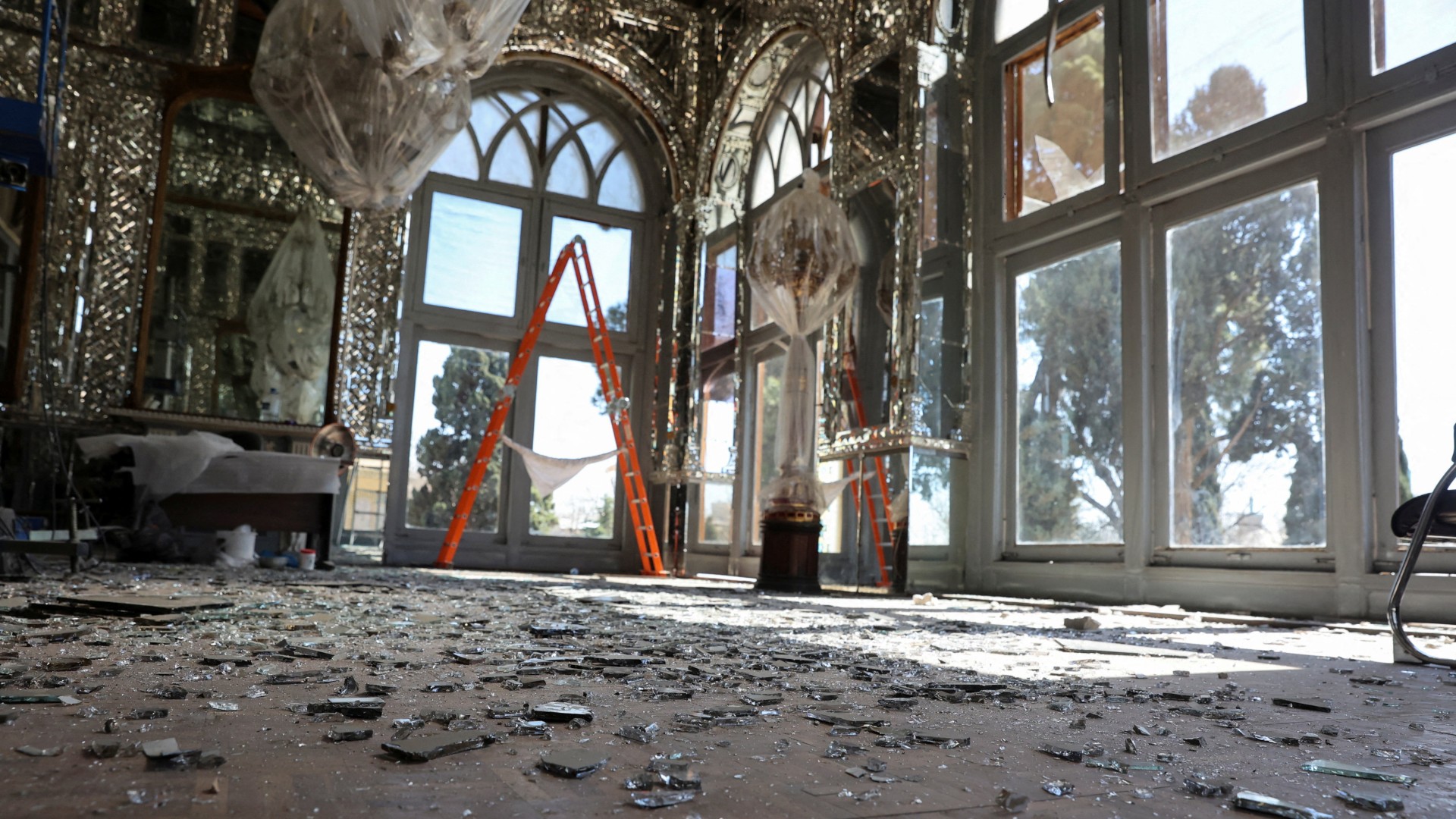
Iran’s cultural landscape, bearing witness to millennia of civilization through conquests, artistic renewal, and master craftsmanship, now faces unprecedented threats as its World Heritage Sites become casualties of military strikes. Over the past two and a half weeks, Israeli and American operations have targeted numerous historical landmarks across multiple Iranian provinces, damaging structures that represent both pre-Islamic and Islamic architectural traditions.
The assault on Iran’s cultural patrimony began dramatically on March 1st when Golestan Palace, Tehran’s sole UNESCO World Heritage Site, suffered significant damage from nearby missile strikes. Iranian media documented shattered windows, compromised mirror and glasswork installations, and historically significant Orsi doors damaged by blast effects. This 14th-century Safavid-era complex, later expanded during the Qajar dynasty, serves as a museum complex representing Persia’s royal heritage.
In Isfahan, the devastation extended to multiple protected sites within the Naqsh-e Jahan Square UNESCO designation. Chehel Sotoun Palace, commissioned by Shah Abbas I in the 17th century, sustained severe interior damage with photographs showing demolished doors, fractured windows, and debris throughout its celebrated halls. Most tragically, a 17th-century fresco depicting Safavid Shah Tahmasp welcoming Mughal ruler Humayun developed a massive crack through its center.
The adjacent Ali Qapu palace, part of the same UNESCO designation dating to 1597, suffered similar destruction with its doors and windows shattered. Meanwhile, the historic Jameh Mosque of Isfahan, with architectural elements dating to the 8th-century Abbasid era, lost numerous turquoise tiles in a March 9th blast, with photographic evidence showing smoke plumes rising behind the structure.
Further west, the ancient Falak ol-Aflak citadel in Khorramabad, dating to the Sassanian period (3rd-7th centuries), was struck on March 8th when Israeli air strikes targeted the adjacent cultural heritage department building. While the main castle structure survived intact, the explosion damaged archaeology and anthropology museums, barracks, and regimental buildings within the complex.
Iranian officials have characterized these attacks as a ‘declaration of war on civilization,’ noting that the targeted sites represent not just national heritage but human history. With 29 UNESCO World Heritage Sites—the tenth highest concentration globally—Iran’s cultural treasures face ongoing risks as conflicts persist. The international community, particularly UNESCO, faces mounting pressure to respond to what heritage experts describe as an unprecedented assault on global cultural patrimony.