The ongoing conflict across the Middle East has entered a new phase of widespread escalation, with fresh violence, diplomatic overtures, and global calls for peace unfolding across multiple nations over the past 24 hours.
In his inaugural Easter address to thousands gathered in St Peter’s Square, Pope Francis delivered a stark rebuke of rising global violence, urging leaders holding the power to initiate conflict to prioritize peaceful resolution. “We have slowly grown numb to bloodshed, accepting violence as an unchangeable reality and becoming desensitized to the deaths of thousands of innocent people,” the Pope stated, a message that comes as regional casualty counts continue to climb.
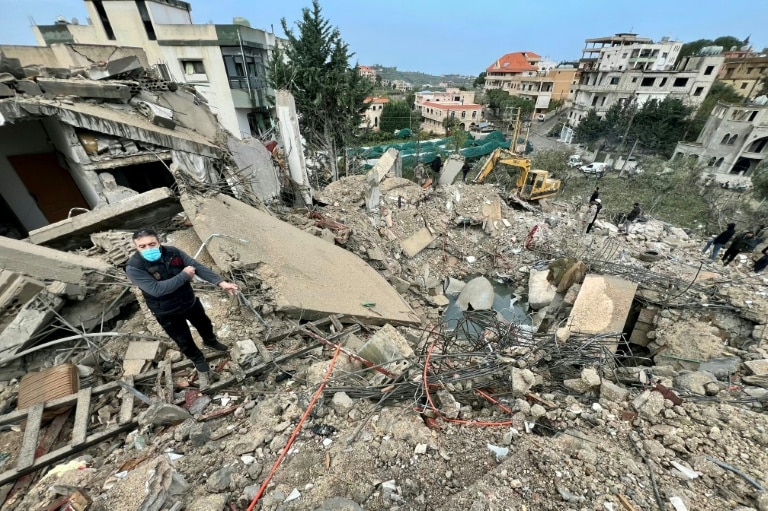
One of the deadliest recent incidents occurred in the southern Lebanese town of Kfar Hatta, where an Israeli airstrike took the lives of seven people, including an entire family of six. Lebanese civil defense sources confirm the family had gathered in the town, located 45 miles from the Israeli-Lebanese border, to await evacuation after Israeli orders to clear the area. This strike comes amid a broadening Israeli offensive against Hezbollah targets across Lebanon, including the capital Beirut. The Israeli military confirmed it launched a new wave of strikes on Beirut targeting what it calls Hezbollah infrastructure sites, with eyewitnesses on the ground reporting low-flying Israeli warplanes and missile impacts on residential buildings in the city’s southern districts.
Tensions between the U.S. and Iran have also spiked following a high-stakes rescue mission for a downed U.S. fighter jet crew. U.S. President Donald Trump hailed the recovery of the missing airman in what he called a “daring” special operations mission, noting the service member was injured but expected to make a full recovery. A second crew member was rescued a day earlier. However, Iranian military spokesman Ebrahim Zolfaghari rejected Trump’s account, claiming the operation was “completely foiled” by Iranian forces, who he says destroyed two U.S. C-130 transport planes and two helicopters during the confrontation.
Iran has also launched a widespread aerial campaign against Gulf nations aligned with Israel and the U.S., causing widespread disruption to critical energy and infrastructure facilities. In Bahrain, an Iranian drone strike ignited a large blaze at a storage tank operated by state energy giant Bapco Energies. While the fire has been fully contained and no injuries have been reported, the company confirmed assessments of structural damage are still ongoing. Across the border in the United Arab Emirates, Abu Dhabi emergency crews battled fires at a major petrochemical plant caused by falling debris from Iranian attacks. The facility has suspended all operations pending damage assessments, with no casualties reported to date. Iranian forces specifically targeted UAE aluminum production facilities, according to statements from the UAE’s defense ministry, which confirmed its air defense systems are actively intercepting incoming missile and drone threats. Further north, two of Kuwait’s power and water desalination plants were damaged in an Iranian drone strike, forcing the shutdown of two major electricity generating units. No casualties have been reported in the Kuwaiti attack.
Hezbollah, the Lebanese militant group, announced it had conducted its first cruise missile strike on an Israeli warship off the Lebanese coast, a significant escalation of cross-border hostilities. The Israeli military however said it had no confirmation of the attack taking place.
On the Iranian domestic front, a record-breaking national internet shutdown has entered its 37th day, making it the longest sustained nationwide internet blackout ever recorded globally, according to internet monitoring group NetBlocks. In a separate development, U.S.-Israeli joint strikes killed five members of Iran’s Islamic Revolutionary Guard Corps in the country’s northwestern Ardabil province, Iranian state news agency IRNA confirmed.
Amid the escalating violence, diplomatic efforts are still underway to de-escalate key flashpoints. Oman and Iran held bilateral talks focused on securing safer freedom of navigation through the strategic Strait of Hormuz, a critical chokepoint for nearly 20% of the world’s daily oil supplies, Omani state media reported Sunday. Both sides’ technical experts put forward a series of proposals to ease tensions around the strait, according to the agency. Lebanese President Joseph Aoun has also reiterated his call for urgent negotiations with Israel, saying he seeks to prevent southern Lebanon from suffering the same level of widespread destruction that Gaza has endured. “It is an open secret that Israel intends to replicate the Gaza campaign in southern Lebanon,” Aoun said in a national televised address following the launch of expanded Israeli airstrikes and ground operations in southern Lebanon.