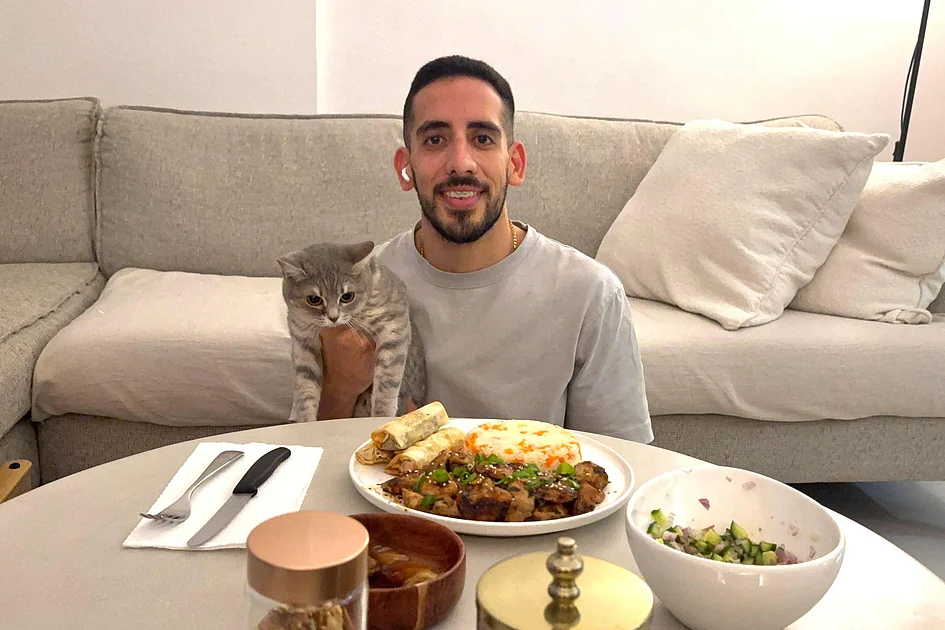
In an inspiring display of cultural curiosity, Junior Gomes, a Brazilian expatriate residing in the United Arab Emirates, has embarked on his first Ramadan fasting experience to better understand Islamic traditions. The Director of Operations at Little Legends sports academy, who was raised in South Africa, decided to personally experience the month-long spiritual practice after observing his fasting students.
Gomes, who previously relied exclusively on takeout and restaurant meals, has undergone a remarkable culinary transformation during Ramadan. With guidance from friends, he now prepares balanced home-cooked meals including spring rolls and other nutritious dishes—a significant departure from his previous lifestyle. ‘I never cooked in my life before this,’ Gomes admitted, expressing pride in his newly acquired kitchen skills.
The daily Ramadan routine involves pre-dawn awakenings at 4:00 AM for suhoor meals carefully designed with proteins, carbohydrates, and sufficient fluids. Despite maintaining his rigorous gym schedule and managing multiple responsibilities at the children’s sports academy, Gomes reports the experience has been less challenging than anticipated. He particularly notes the psychological difficulty of the final hours before sunset when thirst and hunger intensify, followed by heightened appreciation for nourishment after breaking the fast.
Beyond physical adaptation, Gomes has discovered deeper philosophical insights. ‘The whole self-control thing is quite important,’ he reflects. ‘You actually learn to appreciate things more. During the day, be a better person. Have some self-control. Be grateful. Give back.’
In a surprising familial coincidence, Gomes discovered his brother in Brazil had independently decided to fast alongside his Muslim wife, creating an unplanned bond of shared experience across continents. This unexpected connection has added another layer of meaning to his cultural exploration, demonstrating how Ramadan traditions can bridge geographical and cultural divides.