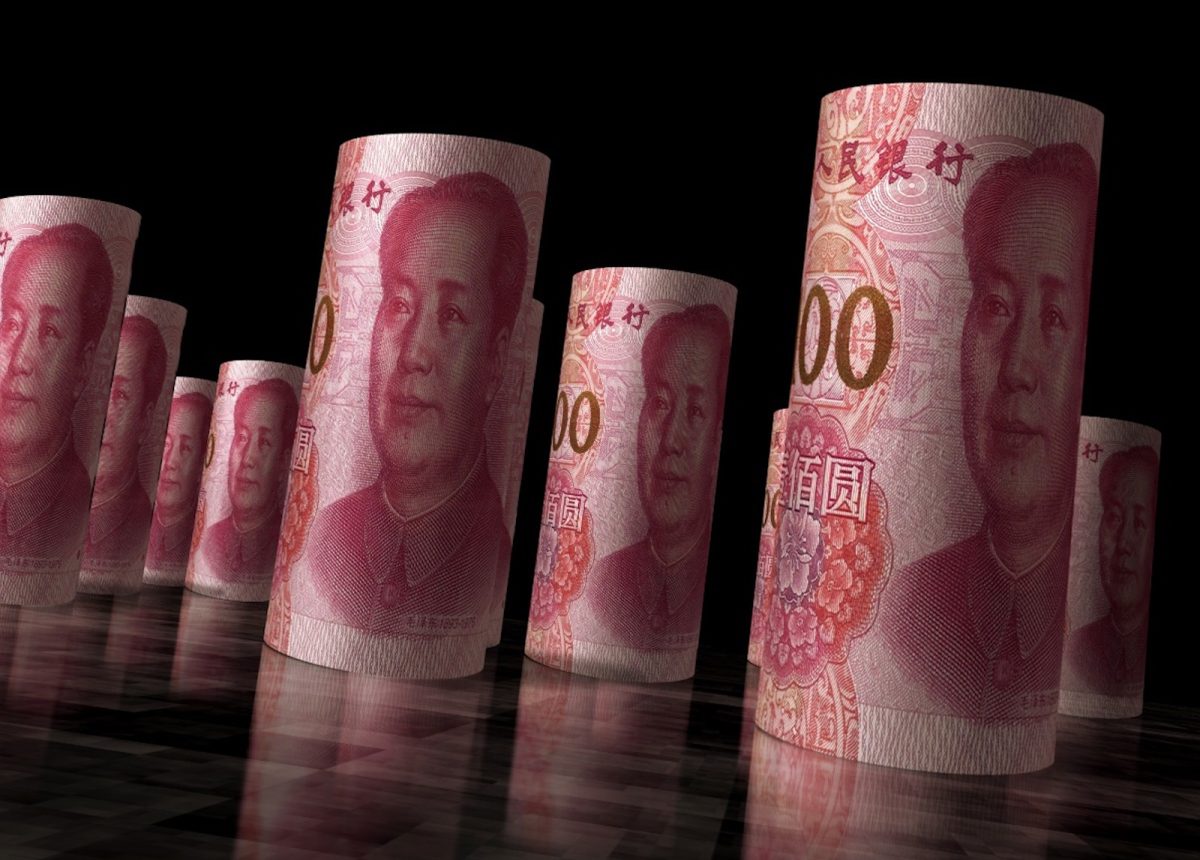
For nearly 20 years, Wall Street has operated under a pervasive, yet fundamentally flawed assumption about China’s long-term financial ambitions. The consensus held that Beijing ultimately sought the same global financial status as Washington: control of the world’s primary reserve currency, the deepest and most liquid capital markets on the planet, and the unmatched geopolitical leverage that comes with systemic financial dominance.
Today, that long-held consensus is looking increasingly misaligned with Beijing’s actual policy choices — and if the assumption is indeed wrong, global investors are likely underestimating one of the most consequential structural shifts unfolding in international finance right now.
Signs of this revised strategy were clearly on display at this month’s Lujiazui Forum in Shanghai, an annual gathering widely viewed as China’s equivalent of the Davos World Economic Forum, where top policymakers and financial leaders gather to outline official priorities. At the event, senior Chinese officials unveiled a new suite of policy measures aimed at expanding offshore renminbi markets, strengthening cross-border financing infrastructure, boosting international participation in China’s domestic capital markets, and solidifying Shanghai’s positioning as a leading global financial hub.
Key initiatives announced included a new renminbi repurchase facility open to foreign central banks and sovereign wealth institutions, expanded offshore renminbi trading frameworks, and additional programs to deepen cross-border liquidity and payment settlement channels. Most global investors interpreted the announcements through the same lens they have used for decades: as just another incremental step in China’s long-stalled push to fully internationalize the renminbi. The market reaction was muted, with the announcements dismissed as incremental progress on a familiar goal. But this reading may turn out to be a critical misjudgment.
What many observers are missing is that China is no longer seeking to displace the U.S.-led global financial system. Instead, its core goal is to eliminate its exclusive dependence on that system. These two objectives could not be more different. One requires an all-out push to unseat the dollar as the world’s leading reserve currency. The other focuses on reducing the strategic vulnerability that comes with operating entirely within a dollar-dominated global financial order.
This distinction carries far-reaching implications for nearly every dimension of global finance: from geopolitical power dynamics and cross-border capital flows to sanctions risk management, global reserve diversification, and the long-term pricing of all classes of international financial assets.
For decades, mainstream discussion of China’s financial ambitions has revolved around a single question: Can the renminbi ever replace the dollar? The data to date strongly suggests that answer remains no, at least for the foreseeable future. The U.S. dollar still makes up roughly 58% of global foreign exchange reserves, compared to just 2% for the renminbi. It is also involved in nearly 90% of all global foreign exchange transactions. U.S. capital markets remain unrivaled in their size, depth of liquidity, strong institutional frameworks, and broad global investor confidence. By every traditional metric, dollar dominance remains firmly intact.
But Beijing’s recent policy moves make clear that displacing the dollar may no longer be its goal. Instead, China is pursuing a far more achievable, and ultimately more market-shifting, objective: building a self-controlled financial ecosystem that can operate alongside the existing dollar-based system, rather than being entirely contained within it.
Crucially, this new ecosystem does not need to replace the dollar to succeed. A useful analogy is not found in 20th century monetary history, but rather in the development of China’s digital economy. For years, Western analysts assumed China’s internet sector would eventually converge with the global open internet. Instead, Beijing built a separate, self-governing domestic ecosystem, developing its own homegrown search engines, mobile payment platforms, social media networks, cloud infrastructure providers, e-commerce giants, and independent regulatory frameworks. China never replaced the global internet — it just built a parallel system that it fully controls. Increasingly, the same logic is shaping China’s modern financial strategy.
Over the past two decades, China has quietly assembled almost all the core components required for a parallel global financial architecture. Beijing has negotiated dozens of offshore renminbi clearing agreements and more than 40 bilateral currency swap deals with central banks around the world. It developed the Cross-Border Interbank Payment System (CIPS), which processed more than 175 trillion yuan ($24.5 trillion) in transactions in 2025, marking a 43% year-over-year increase. Today, more than 1,700 direct and indirect participants from nearly 190 countries and territories use the system.
China has also rapidly expanded cross-border renminbi settlement, advanced central bank digital currency pilot programs, and gradually opened targeted segments of its domestic capital markets to foreign investors. Meanwhile, China’s banking sector, with total assets exceeding $60 trillion, is now the largest national banking system in the world.
None of these individual developments threaten dollar dominance on their own — and they do not need to. Taken together, however, they achieve a fundamentally different strategic goal: they reduce China’s reliance on U.S.-controlled financial infrastructure, and create alternative channels for global trade, financing, liquidity provision, and investment in the event that geopolitical tensions escalate sharply.
In effect, China is building a parallel financial architecture. But unlike all previous challengers to dollar hegemony, Beijing does not seem to believe this system must replace the existing order to meet its core strategic needs.
This priority has grown far more urgent in recent years. Chinese policymakers have carefully studied the impact of Western sanctions on Iran, the financial restrictions imposed on Russia after the 2014 annexation of Crimea, and most notably, the freezing of more than $300 billion in Russian sovereign foreign exchange reserves following the 2022 invasion of Ukraine. Regardless of one’s perspective on these policy decisions, they made one reality undeniable: U.S. and Western financial power carries extraordinary global reach, and core components of the existing global financial system — reserve assets, payment networks, and clearing infrastructure — are no longer politically neutral.
From Beijing’s vantage point, excessive financial dependence on the West has become an unacceptable strategic vulnerability. For global investors, this shift signals that China is preparing for a future in which financial fragmentation, elevated sanctions risk, and persistent great power competition become permanent, structural features of global markets, rather than temporary disruptions.
This framework helps resolve the apparent contradiction that has long confused Western investors about China’s financial reforms. On one hand, Beijing actively courts greater international participation in its domestic capital markets. On the other, it refuses to cede control over capital flows, exchange rate policy, and critical financial infrastructure. The reality is that China may never have been pursuing traditional Western-style financial liberalization at all. Instead, it is prioritizing financial resilience — and for Beijing, resilience is a far more important goal than global financial dominance.
So while global investors continue to debate whether the renminbi will eventually displace the dollar as the world’s top reserve currency, Beijing is asking a very different question: Can China maintain stable trade financing, provide sufficient cross-border liquidity, support its global economic partners, and sustain domestic economic stability through a prolonged period of geopolitical confrontation with the U.S.?
These are fundamentally different objectives. China does not need to build a carbon copy of the U.S. financial system to reshape the global geopolitical balance, alter long-term global capital allocation, reduce the effectiveness of Western sanctions, and force markets to re-evaluate decades-old assumptions about financial globalization. It only needs to build a system that works well enough for its core needs when access to the U.S.-led system becomes uncertain.
For decades, global investors have priced assets based on the assumption that financial globalization and integration would continue to expand indefinitely. Beijing increasingly appears to be betting on the opposite outcome. While Wall Street continues to debate whether China can replace the dollar, Beijing has already concluded that it does not need to.
This analysis comes from Nigel Green, founder and chief executive officer of the deVere Group, a leading independent financial advisory firm.