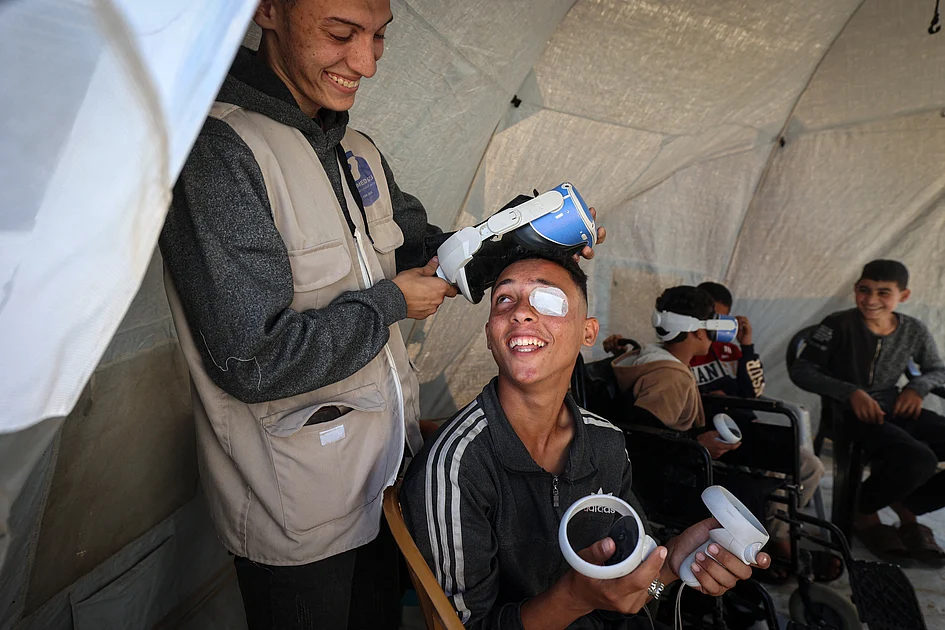
In the aftermath of prolonged conflict, innovative virtual reality therapy is providing psychological respite for children severely affected by the war in Gaza. At a temporary facility in Al-Zawayda, central Gaza, young trauma survivors are experiencing immersive therapeutic sessions through specialized VR headsets that transport them to peaceful virtual environments far removed from their war-torn reality.
Within a white tent erected on sandy terrain, children wearing TechMed Gaza headsets explore digitally created landscapes featuring serene beaches, lush gardens, and safe urban settings. The therapy sessions, observed by AFP journalists, show visibly engaged participants—one child reaches out to touch virtual elements, another reports seeing birds, while a wheelchair-bound boy describes encountering trees, grass, and flowers.
Mental health supervisor Abdalla Abu Shamale explains that the program extends beyond mere escapism. “Through specialized programming, we design games with therapeutic, preventive, and developmental objectives that help children develop effective coping mechanisms,” he stated. The technology has demonstrated particular effectiveness with war-amputee children, those with physical injuries, and those exposed to extreme traumatic events.
The urgency of mental health intervention in Gaza is underscored by UNICEF statistics indicating approximately one million children—effectively the entire child population of Gaza—require mental health and psychosocial support following two years of devastating conflict. According to the World Health Organization, conflict-related injuries carry significant mental health consequences, with survivors struggling with trauma and loss while psychosocial services remain scarce.
Clinical results show promising outcomes, with VR therapy achieving measurable improvements in significantly fewer sessions than traditional methods. Where conventional therapy typically requires 10-12 sessions, VR techniques can produce positive results within just 5-7 sessions, according to program operators. The technology allows therapists to create customized experiences that account for each child’s specific physical and psychological condition, helping rebuild positive perceptions of the world.
The therapy continues despite the fragile ceasefire that has held since October 10 between Israel and Hamas, offering a innovative approach to addressing the massive mental health crisis affecting Gaza’s youngest generation.