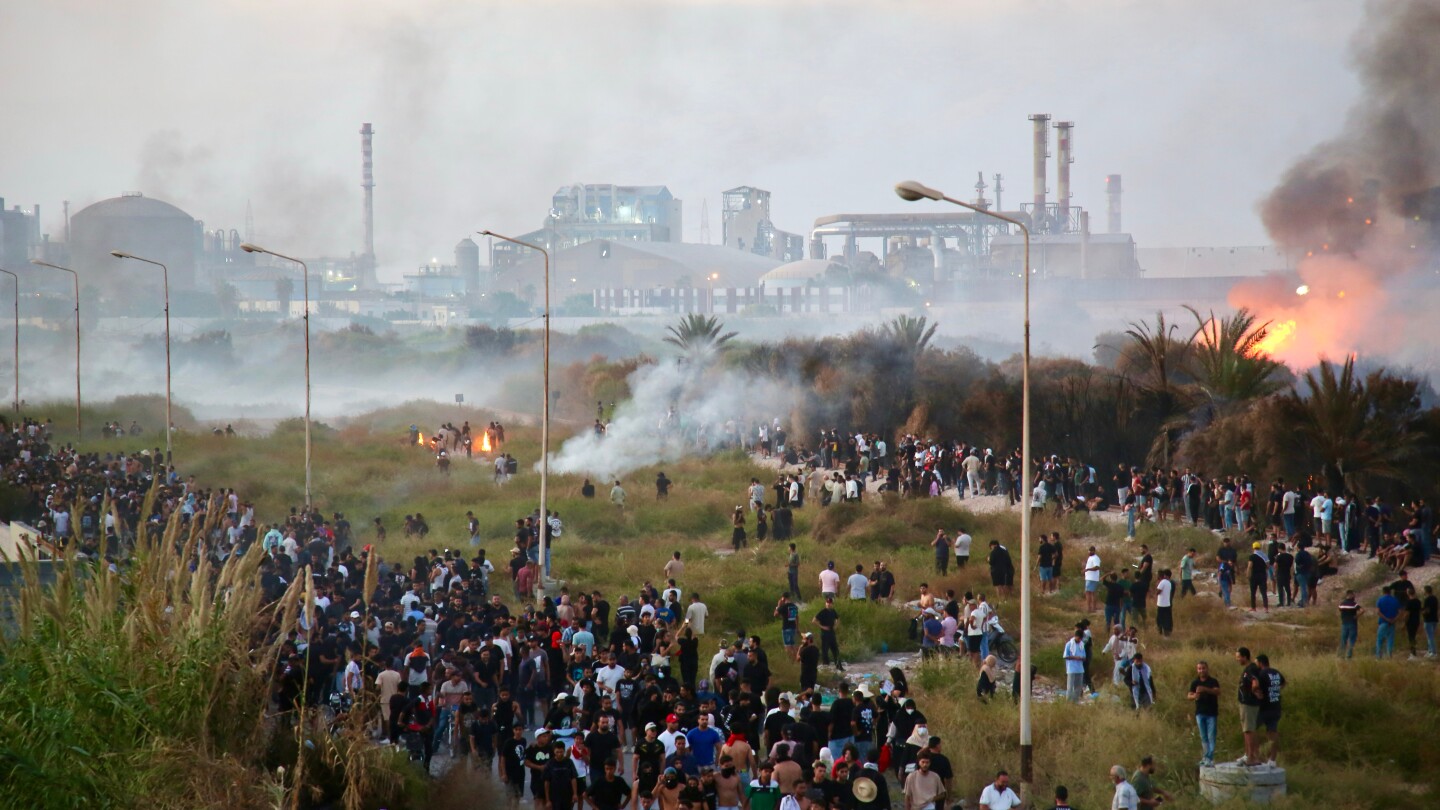
The southern Tunisian city of Gabes witnessed violent clashes on Wednesday as thousands of protesters took to the streets to demand action against worsening air pollution caused by a phosphate-processing plant. Riot police deployed tear gas to disperse the crowds, resulting in injuries to both demonstrators and officers. The protest, which escalated into chaos, was sparked by a recent gas leak near the state-owned Chemical Group of Tunisia (GCT) industrial complex, a facility that has long been a source of environmental and health concerns for the city’s 400,000 residents. Gabes, a hub of Tunisia’s phosphate industry, has suffered from decades of industrial activity that residents blame for rising cancer rates, respiratory illnesses, and the destruction of the region’s once-thriving ecosystem. The latest gas leak, which sent dozens of people, including children, to hospitals, reignited public outrage. Protesters blocked major roads, burned tires, and chanted against what they called “environmental crimes,” demanding the closure of the GCT’s phosphate units. The plant, which processes raw phosphate into fertilizer, has been discharging toxic waste directly into the Gulf of Gabes, devastating marine life and forcing generations of fishermen out of work. Despite repeated government promises to modernize or relocate the facility, activists say no meaningful action has been taken. Tunisian President Kais Saied recently announced the formation of a joint commission to address protesters’ demands, but residents remain skeptical, citing years of unfulfilled pledges. The GCT admitted to “major non-conformities” in a 2025 environmental audit, acknowledging excessive ammonia and other emissions that fall short of global standards. However, locals say no visible improvements have been made, leaving the community to endure the ongoing environmental and health crisis.
Violence erupts during anti-pollution protest as anger boils in Tunisia’s phosphate belt