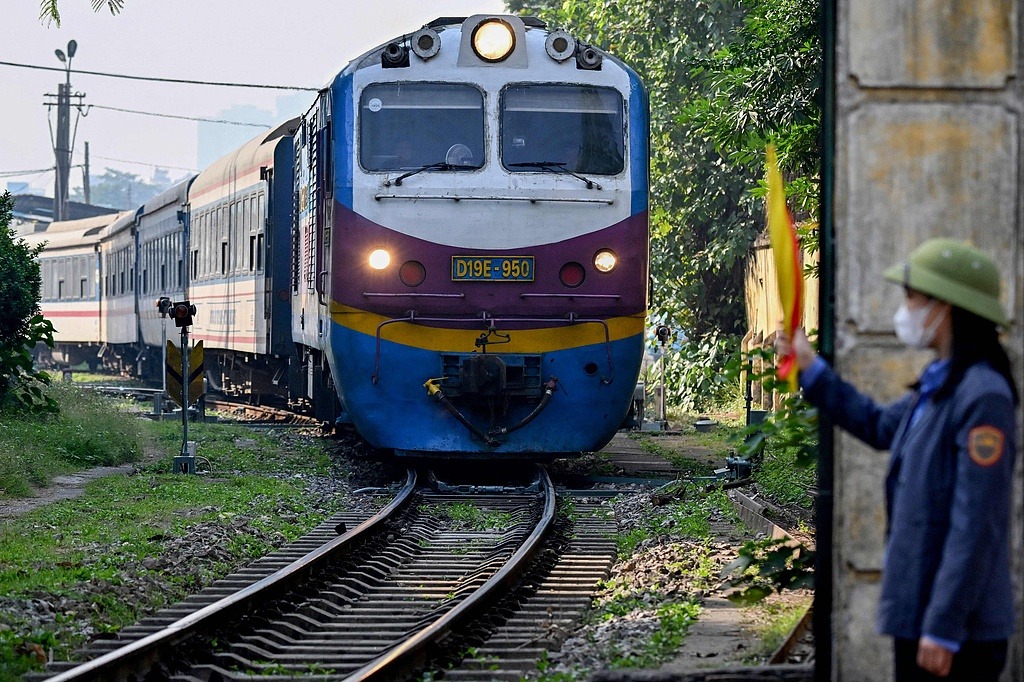
Vietnam is poised to commence construction on a transformative high-speed railway infrastructure project next month, marking a significant milestone in the nation’s transportation development strategy. The Hanoi-Quang Ninh high-speed rail line, scheduled for groundbreaking ceremonies on April 12, represents a critical component of Vietnam’s broader economic modernization agenda.
This advanced railway system will span approximately 120 kilometers, connecting four major provinces and cities: Hanoi, Bac Ninh, Hai Phong, and the strategically important port province of Quang Ninh. The fully electrified, double-track standard-gauge railway will achieve operational speeds up to 350 kilometers per hour, dramatically reducing travel time between the capital Hanoi and Quang Ninh from the current three-hour road journey to merely 30 minutes.
The project gains particular significance given Quang Ninh’s status as home to UNESCO World Heritage Site Halong Bay and its unique geographical position sharing both land and maritime borders with China’s Guangxi Zhuang autonomous region. This connectivity assumes greater importance within the context of Vietnam-China bilateral relations, where infrastructure linkages are increasingly viewed as strategic imperatives.
VinSpeed, the high-speed rail subsidiary of Vietnamese conglomerate Vingroup, has been designated as the primary investor and construction lead for this ambitious undertaking. The company has established a strategic partnership with German industrial giant Siemens for the supply of rolling stock and integrated subsystem technologies. Project timelines indicate targeted completion and operational readiness by 2028.
Concurrently, Vietnam is advancing additional railway initiatives, including the ongoing first-phase construction of the Lao Cai-Hanoi-Hai Phong line designed to interface directly with China’s rail network. These developments occur alongside progress on the national North-South high-speed line connecting Hanoi with Ho Chi Minh City, scheduled for investment before 2030.
At a recent meeting convened at Lang Son Province near the China-Vietnam border, General Secretary To Lam of the Communist Party of Vietnam Central Committee emphasized that enhanced railway connectivity must be recognized as a “strategic breakthrough” in bilateral economic cooperation. He articulated that strengthened rail ties would propel trade relations into a more substantive, effective, and sustainable phase while serving as a powerful catalyst for infrastructure modernization, logistics cost reduction, and enhanced global supply chain integration.