As Vietnam commences its 14th National Congress this week, economic analysts are spotlighting the nation’s remarkable resilience as an emerging Southeast Asian powerhouse. Defying significant trade headwinds, Vietnam achieved an impressive 8.02% GDP expansion in 2025, positioning it as the fastest-growing economy within ASEAN and among global leaders.
Burkhard Schrage, interim head of the Management Department at RMIT University Vietnam’s Business School, characterized the achievement as “a landmark accomplishment” and “a bright spot amid continued global volatility.” The congress, running through Sunday, is anticipated to mark a strategic pivot toward a quality-focused growth model emphasizing sustainability and technological sovereignty rather than pure quantitative expansion.
This transformational shift is reflected in the draft political report which, for the first time, positions science, technology, and innovation at the core of Vietnam’s national development strategy. Schrage described the gathering as “a historic turning point, marking the transition into a new era of national strength and self-reliance.”
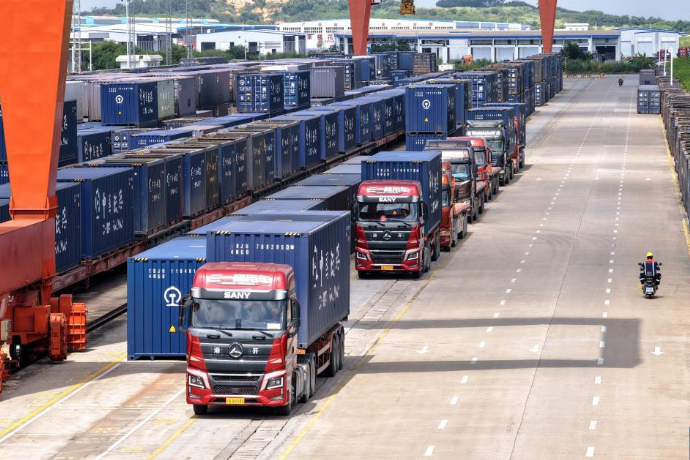
According to Le Hong Hiep, senior fellow at Singapore’s ISEAS-Yusof Ishak Institute, Vietnam’s economic momentum stems from multiple drivers: robust export performance, heightened foreign direct investment, accelerated infrastructure development, and diversified consumption strategies. Despite facing 20% tariffs imposed by the United States since August, Vietnam’s exports surged 20% year-on-year in the fourth quarter, reaching $475 billion annually—a 17% overall increase. Disbursed FDI inflows simultaneously rose 9% to $27.6 billion, marking a five-year high.
Hiep noted that 2026 will provide clearer insights into the tariffs’ comprehensive impact on exports and the broader economy. In response, Vietnamese authorities are implementing strategic countermeasures including export diversification away from the US market. “In these efforts, China is also featured significantly in Vietnam’s plans,” Hiep emphasized, noting Hanoi’s intention to increase exports to China to reduce its trade deficit and offset potential declines in shipments to Western economies.
Infrastructure development represents another critical frontier, with Vietnam increasingly collaborating with China on connectivity projects. Hiep highlighted the logical progression of integrating Vietnam’s infrastructure network with China’s robust systems, noting that such connections would “boost the efficiency and potential of these projects to contribute to the overall economic development of Vietnam.” The state-run Vietnam News Agency recently identified infrastructure breakthroughs as a “foundational pillar” for achieving double-digit growth in 2026.
Looking toward the future, Schrage projected that Vietnam is entering a “defining decade” that could reshape Southeast Asia’s economic hierarchy, potentially overtaking Thailand as ASEAN’s third-largest economy by 2026 or 2027. By 2030, Vietnam’s economic standing will likely be defined by its transition toward high middle-income status, solidifying its position as a regional economic leader.