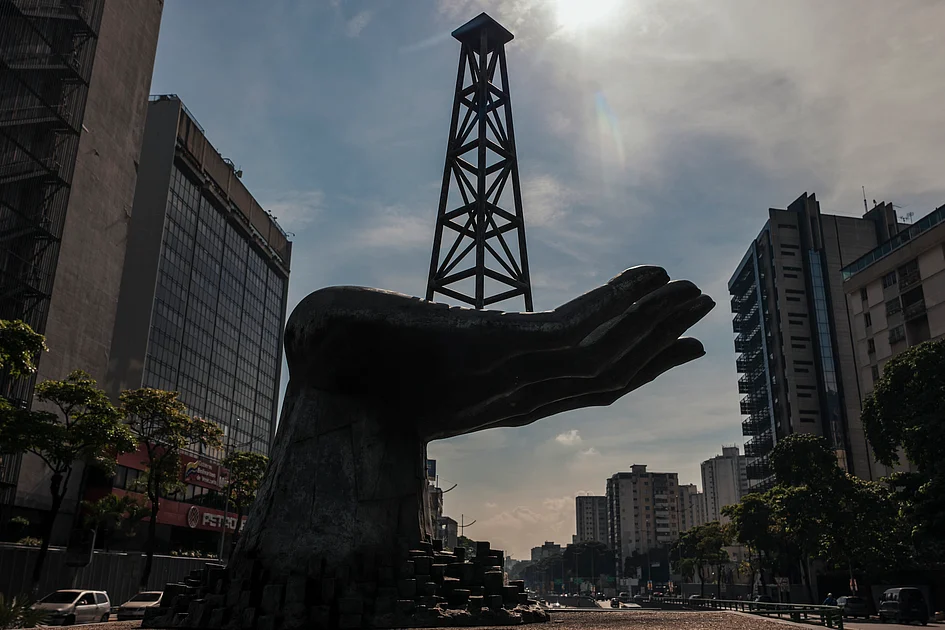
A strategic transformation of Venezuela’s beleaguered oil industry, championed by US President Donald Trump, is projected to unfold over several years rather than months. While the nation possesses immense hydrocarbon reserves capable of attracting significant investment—particularly as US shale production peaks and Russian resources face sanctions—immediate large-scale production increases remain improbable.
Initial beneficiaries of this geopolitical shift are already emerging. US energy giant Chevron, alongside European firms Repsol and Eni with established Venezuelan operations, stands to gain substantially. American Gulf Coast refineries, historically configured to process Venezuela’s heavy crude, also position themselves advantageously. Analysts from J.P. Morgan suggest Washington’s growing influence over these resources could recalibrate global energy dynamics, potentially stabilizing oil prices at historically lower ranges for the benefit of American consumers.
Conversely, nations and entities that capitalized on Venezuela’s previous isolation face potential losses. China, the primary destination for Venezuelan crude, may see discounted oil flows diminish, particularly impacting its independent ‘teapot’ refineries. Cuba, long dependent on Venezuelan oil subsidies, could face severe energy shortages. Furthermore, increased Venezuelan supply threatens to pressure global prices, potentially harming US shale drillers and other OPEC+ members who have meticulously managed market balances.
Industry leaders express cautious optimism tempered by practical realities. Exxon Mobil’s CEO Darren Woods labeled Venezuela ‘uninvestable’ without profound legal and commercial reforms. Current projections from S&P Global Energy indicate a plausible 50% production increase to 1.5 million barrels per day within two years—a meaningful but not market-shattering addition representing less than 0.5% of global supply.
The long-term outlook, however, appears more promising. Post-2030, Venezuela’s vast geological reserves could become highly attractive as other global fields decline. Successful US-led investment, in coordination with Caracas, might eventually establish Venezuela as a crucial supplier meeting enduring global demand, fundamentally altering energy geopolitics for decades to come.