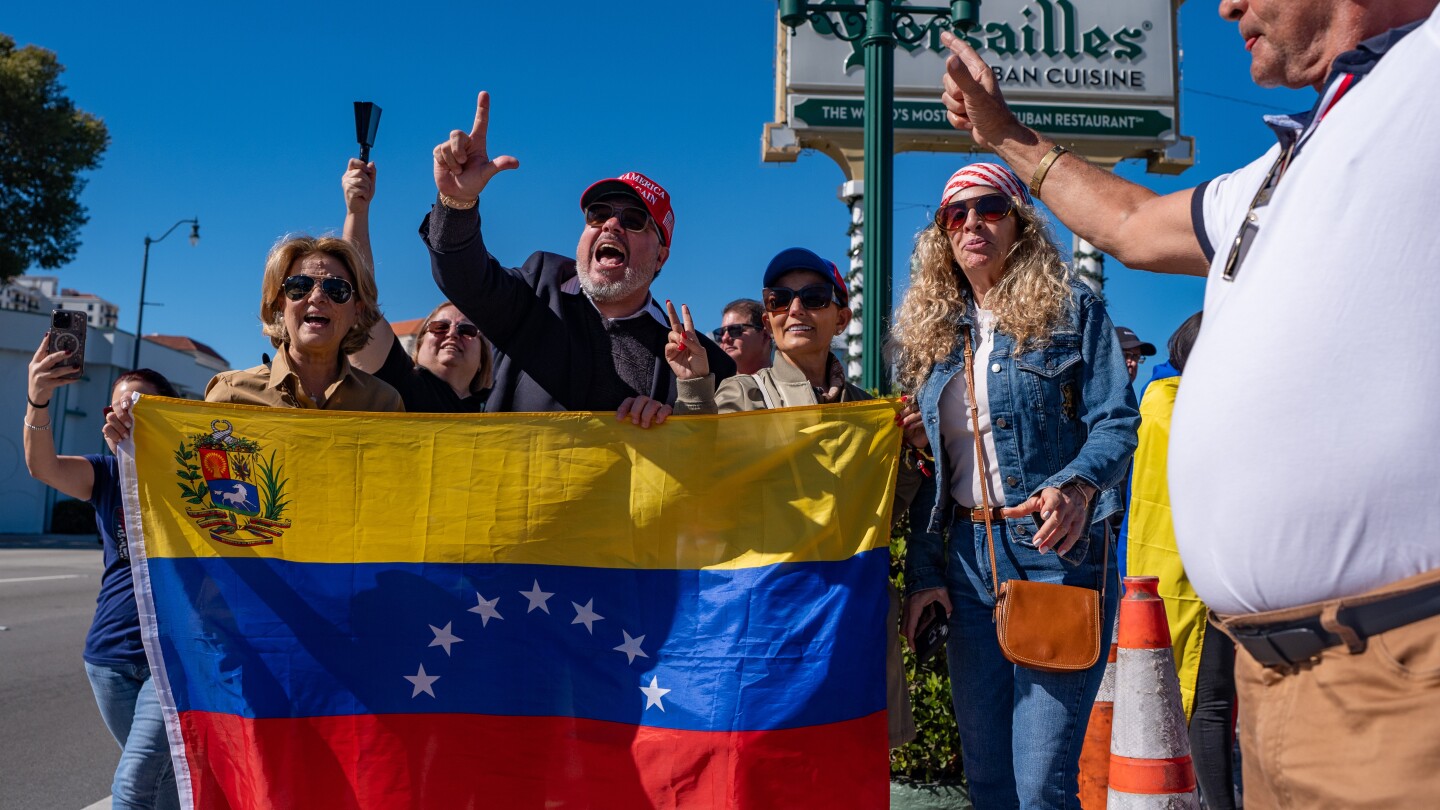
NEW YORK — Venezuelan migrants across the United States are experiencing complex emotional reactions to the recent military-led ousting of President Nicolás Maduro, expressing both hope and apprehension about their future. While celebrating the removal of the leader who presided over their country’s economic collapse, many remain deeply concerned about returning to a nation where Maduro’s political infrastructure remains intact.
The Trump administration’s forceful intervention has created a paradoxical situation for approximately 770,000 Venezuelans residing in the U.S. Many who fled political persecution and hyperinflation exceeding 1 million percent acknowledge the significance of Maduro’s removal while expressing reservations about the stability and safety of their homeland. This cautious optimism is tempered by the administration’s simultaneous efforts to revoke Temporary Protected Status (TPS) designations that had allowed many Venezuelans to remain in the country legally.
Interviews with Venezuelan communities from New York to Utah reveal little indication of an immediate rush to return. José Luis Rojas, a 31-year-old asylum recipient in New York City, described how economic conditions in Venezuela had made basic necessities like diapers unattainable before his 2018 departure. While welcoming Maduro’s ouster, Rojas noted the contradictory nature of Trump’s policies: “He’s done good things and he’s done bad things. It all depends on your point of view.
The complexity of these circumstances is further illustrated by Jesus Martinez, a 50-year-old asylum seeker in Utah, who described the situation as “obviously contradictory.” Despite relief at Maduro’s removal, Martinez emphasized that significant time would be required before Venezuela could transition to stable democracy, making potential deportation particularly troubling for those who faced persecution.
Advocates like Alejandra Salima, who works with the National TPS Alliance in Miami, describe a community suspended between optimism and uncertainty. Salima, who fled Venezuela three years ago with her young son, noted that while Maduro’s removal represents a “first step,” the persistent presence of his regime’s infrastructure means “returning would put me and my son at risk.”
The emotional seesaw continues for many Venezuelans who have built new lives in American suburbs from Florida to Utah, with their future prospects now hinging on both Venezuela’s political transformation and U.S. immigration policy developments.