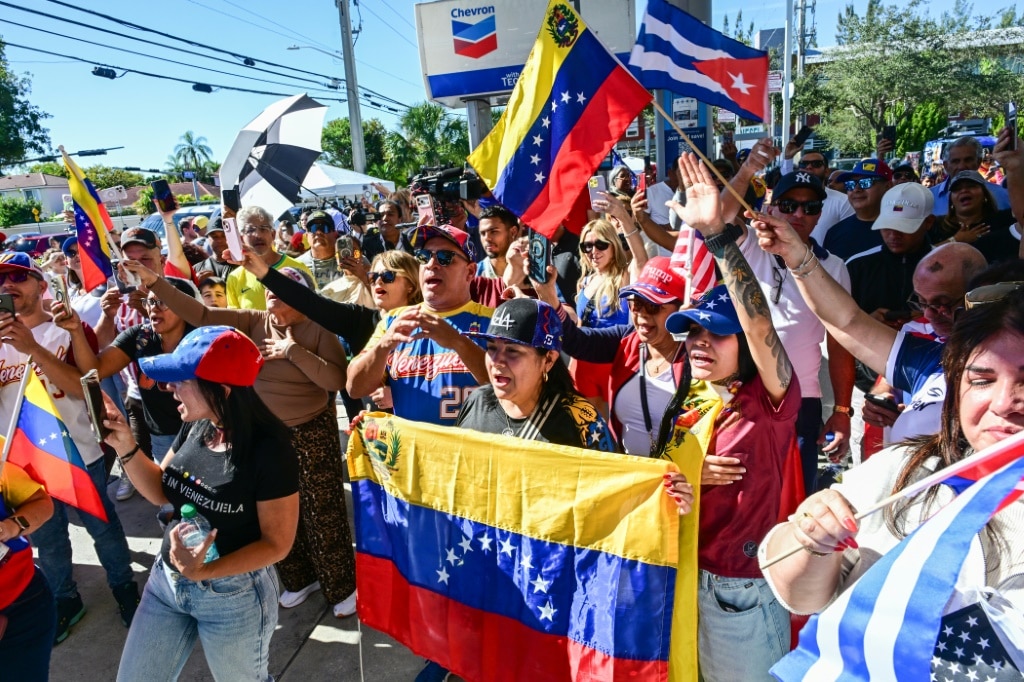
Venezuelan expatriates in Florida experienced a wave of emotional whiplash this weekend as celebrations over Nicolas Maduro’s dramatic capture by U.S. forces gave way to apprehension about their homeland’s political future. The community in Doral—where Venezuelans constitute over 40% of the population—initially erupted in spontaneous celebration upon learning of the pre-dawn military operation that apprehended the controversial leader.
The scenes outside El Arepazo restaurant reflected both catharsis and anxiety. Douglas Zarzalejo, a 55-year-old who fled Venezuela eleven years ago, captured the prevailing sentiment: “We woke to news that justice finally prevailed, yet we recognize our nation’s recovery has merely begun.” Many waved Venezuelan flags and embraced strangers, their celebrations representing years of pent-up frustration with Maduro’s administration, which they blame for transforming an oil-rich nation into an economic catastrophe characterized by widespread shortages and political repression.
President Trump’s subsequent remarks at Mar-a-Lago tempered the initial euphoria. His announcement that the U.S. would administer Venezuela temporarily and his endorsement of Maduro’s vice president, Delcy Rodriguez, as a cooperative partner generated concern. More startling was his dismissal of opposition leader Maria Corina Machado, whom the diaspora considers their legitimate representative. This contradicted international consensus that Edmundo Gonzalez Urrutia—Machado’s substitute candidate—had rightfully won the 2024 election.
The emotional complexity was palpable. Liz Vivas, 39, wept while recalling her husband who disappeared after criticizing Maduro’s government in 2018. “Though I never received closure,” she stated, “I finally feel justice has been served.” Yet others like Raul Chavez expressed reservations: “I possess conflicting emotions. While desperately wanting freedom for Venezuela, I equally value its independence from foreign control.”
The developments reveal a diaspora torn between gratitude for Maduro’s removal and skepticism about America’s subsequent intentions, particularly regarding Venezuela’s oil resources. The community now watches anxiously to see whether this intervention will yield genuine self-determination or merely substitute one form of external influence for another.