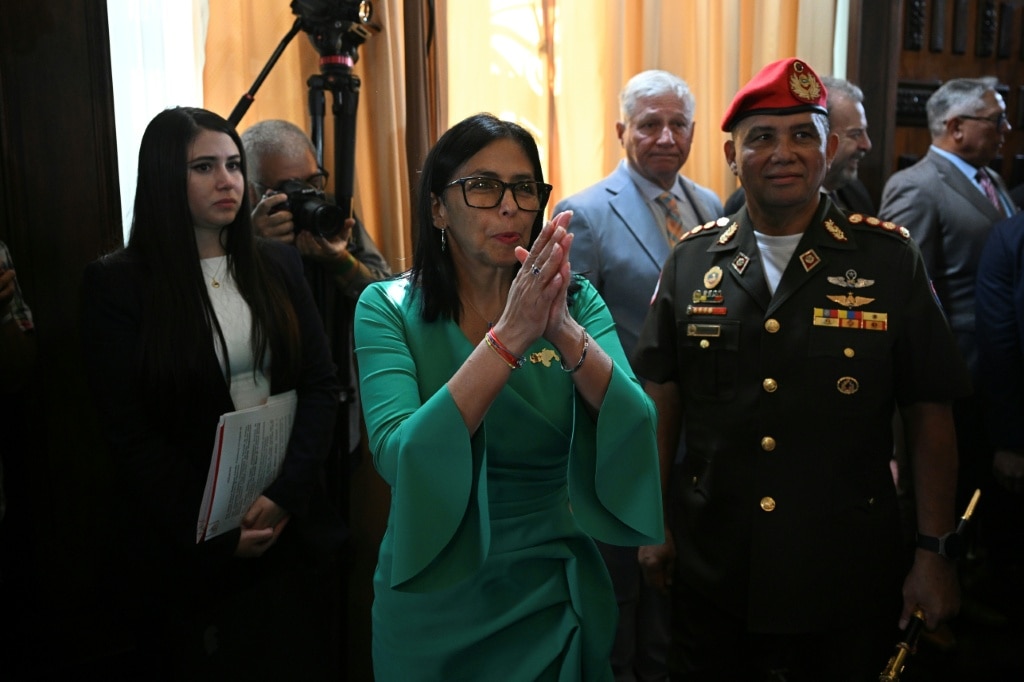
Venezuela’s political landscape underwent a dramatic transformation as the National Assembly formally appointed Delcy Rodríguez as interim president on Monday. This constitutional procedure follows the extraordinary capture of former president Nicolás Maduro by U.S. military forces, who now faces narcotics trafficking charges in New York alongside his wife, Cilia Flores.
During a charged parliamentary session, Rodríguez took the oath of office ‘in the name of all Venezuelans,’ simultaneously expressing profound distress over what she termed the ‘kidnapping of our heroes’ by United States authorities. The assembly unanimously condemned Maduro’s seizure during what they described as a military assault that has reverberated across international diplomatic circles.
The legislative body demonstrated consolidated support for the new leadership by reaffirming Jorge Rodríguez, the interim president’s brother, as parliamentary speaker. This consolidation of power places the influential siblings at the helm of both executive and legislative branches of government.
The session opened with lawmakers chanting campaign slogans from Maduro’s controversial 2024 election bid, which had been widely criticized by opposition groups and numerous nations as illegitimate. Senior legislator Fernando Soto Rojas delivered a vehement address, accusing U.S. President Donald Trump of assuming unjustified roles as ‘prosecutor, judge, and policeman of the world.’
The transition received judicial validation from Venezuela’s Supreme Court, which had ordered Rodríguez to assume presidential duties in an acting capacity on Saturday. This was followed by explicit military endorsement on Sunday, creating a unified front within the country’s power structures.
Maduro’s son, Nicolás Maduro Guerra, publicly pledged his family’s support to the interim administration, stating the nation remained ‘in good hands’ during his parents’ absence. He emphasized Venezuela’s desire for international relations ‘based on equality, mutual respect, and cooperation, without threats and without interference.’
The political shift occurs against the backdrop of a parliament dominated by the United Socialist Party of Venezuela (PSUV) and its allies, who control 256 of 286 seats following elections largely boycotted by opposition factions last May.
While Rodríguez initially maintained that Maduro remains the country’s ‘only’ president, she has subsequently extended offers of cooperation to Washington. This overture comes alongside warnings from President Trump that failure to comply with U.S. demands regarding policy reforms and oil access could result in consequences more severe than those faced by her predecessor.