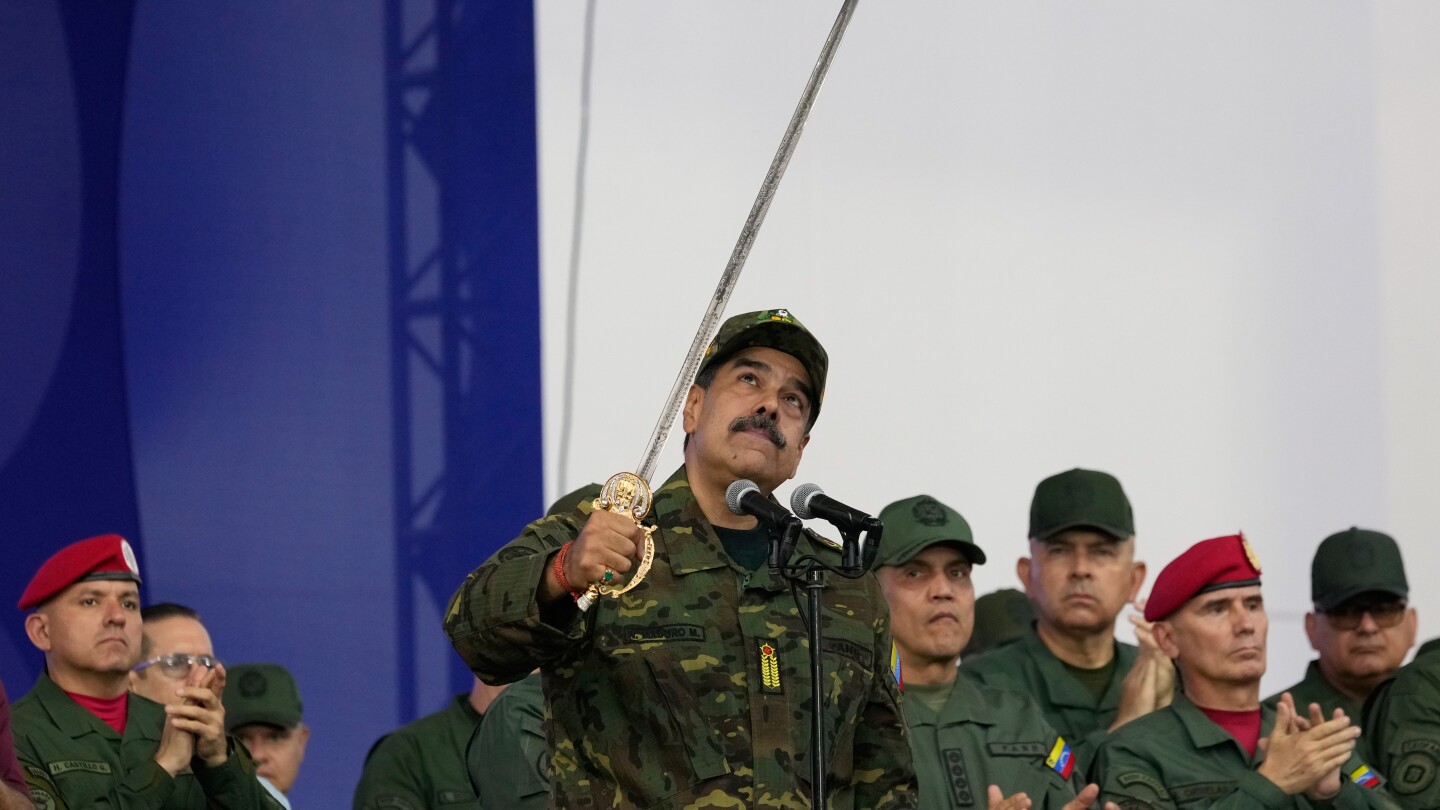
Venezuelan President Nicolás Maduro, who once publicly criticized the adoption of English terminology, has dramatically shifted his stance by incorporating Western cultural elements into his political messaging. Facing heightened military pressure from the United States, Maduro has recently performed John Lennon’s “Imagine” and promoted his English-language slogan “No War, Yes Peace” through musical remixes and public appearances. This unexpected transformation occurs as the White House contemplates potential military action against Venezuela’s government.
Analysts suggest Maduro’s staying power stems from a sophisticated system of rewards and punishments that maintains loyalty within his inner circle. According to Ronal Rodríguez of Colombia’s Universidad del Rosario, “The Bolivarian Revolution possesses a remarkable ability: the capacity for cohesion in the face of external pressure. When pressure comes from abroad, they manage to unite, defend and protect themselves.”
The government’s stability is underpinned by corruption networks established under the late President Hugo Chávez that allow loyal officials to enrich themselves while punishing dissent with imprisonment or torture. This system has proven particularly effective within military ranks, where Maduro has permitted drug trafficking, oil smuggling, and other illicit activities in exchange for loyalty.
Despite opposition leader María Corina Machado’s claims of electoral victory and efforts to secure military support for a transition, Defense Minister Vladimir Padrino López and other military leaders have remained steadfastly behind Maduro. This loyalty was demonstrated during a 2019 barracks revolt when military leadership supported Maduro over US-backed opposition figure Juan Guaidó.
The Trump administration has significantly increased pressure, doubling rewards for Maduro’s arrest to $50 million on narcoterrorism charges and designating Venezuela’s Cartel de los Soles as a foreign terrorist organization. Recent US military operations have included bombing suspected drug trafficking vessels in Caribbean waters, resulting in numerous casualties.
Maduro has framed these actions as “colonial threats” against Venezuelan sovereignty, using them to rally domestic support. His government recently staged a symbolic ceremony featuring Simón Bolívar’s jeweled sword, where officials swore oaths to defend peace and freedom.
Experts like Tulane University professor David Smilde argue that external pressure反而 strengthens regime cohesion: “This is exactly the type of thing that unifies them. What military officer would trust the U.S. government when the entire premise is that they’re a drug cartel?”
Despite widespread poverty and mass migration exacerbated by Maduro’s policies, some supporters like 60-year-old Zenaida Quintero remain loyal based on his connection to Chávez’s legacy: “I trust him. We have to remain united. We have to defend ourselves.”