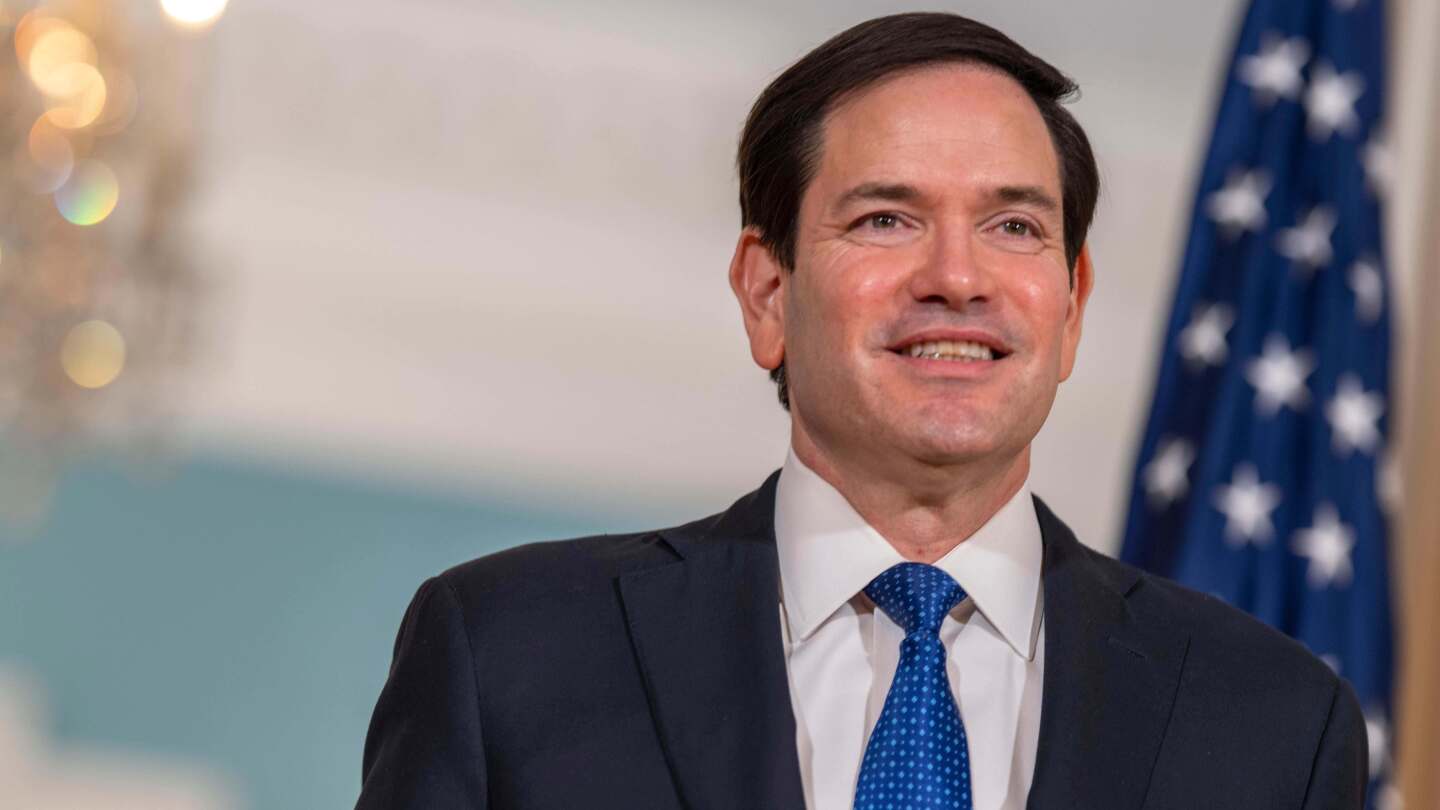
In the turbulent arena of the Trump administration’s foreign policy, Secretary of State Marco Rubio has assumed a pivotal role as a stabilizing force. The administration’s recent audacious moves—including the military operation that deposed Venezuelan President Nicolás Maduro and controversial musings about annexing Greenland—have sent shockwaves through the international community. Yet Rubio, a former Florida senator with deep personal and political ties to Latin America, has skillfully positioned himself as an interpreter and moderator of the President’s more incendiary rhetoric.
Drawing on his background as the child of Cuban immigrants and his collegiate football experience, aides now describe Rubio as the ‘quarterback’ of Trump’s advisory team. He operates at the intersection of Secretary of State and national security adviser, translating broad presidential directives into actionable, if contentious, policy. His influence extends across multiple hotspots, with key players including Defense Secretary Pete Hegseth, Energy Secretary Chris Wright, and Vice President JD Vance on Venezuela, while Vance, alongside special envoy Steve Witkoff and Jared Kushner, handle fragile peace efforts in Gaza and Ukraine.
Following the Caracas raid that extracted Maduro, President Trump’s vague declaration that the U.S. would ‘run’ Venezuela sparked fears of another prolonged occupation. Rubio moved quickly to clarify, emphasizing that American strategy would leverage oil sanctions and the threat of further military action rather than direct governance. Similarly, he has sought to reframe the Greenland discussion, stating the administration’s intent is purchase, not invasion.
On Capitol Hill, Rubio has taken the lead in closed-door briefings, facing lawmakers’ questions and criticisms. He outlined a three-phase plan for Venezuela: selling seized oil to fund reconstruction, restoring civil society, and transitioning to a new government—currently led by interim President Delcy Rodríguez with U.S. support.
However, Rubio’s strategy faces a tight timeline and bipartisan scrutiny. Lawmakers demand more details and public oversight, with Democrats expressing disappointment over the lack of consultation. For Rubio, whose family history and Miami upbringing deeply inform his views, Venezuela represents a long-standing personal crusade against what he sees as a continuation of Castro-style communism. His once-surprising partnership with Trump—following their 2016 primary rivalry—now appears seamless, with the President echoing Rubio’s decade-old rhetoric on the region.