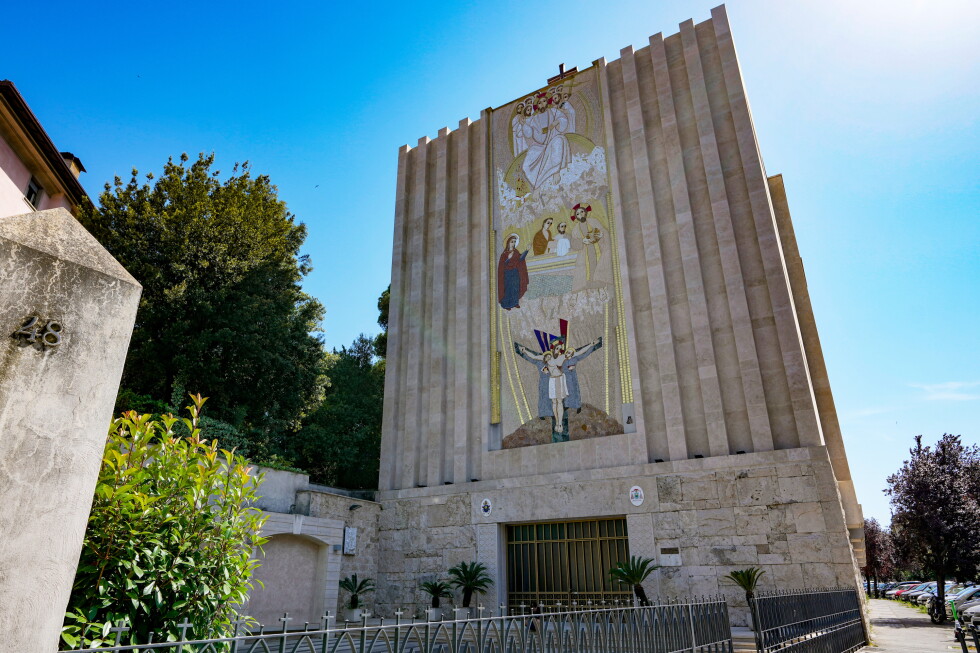
VATICAN CITY (AP) — In an official clarification Wednesday, the Holy See has confirmed that the canonical trial of high-profile former Jesuit priest Marko Ivan Rupnik — accused of widespread spiritual, sexual and psychological abuse against multiple women — remains actively underway, pushing back against recent Italian media reports that an acquittal had already been issued. The Vatican also defended the strict secrecy surrounding the proceedings, framing it as a necessary guardrail to protect the integrity of the church’s internal judicial process.
Rupnik, a renowned Slovenian artist whose mosaic works adorn Vatican chapels and major Catholic basilicas across the globe, first became the center of a global clerical abuse scandal in late 2022, when multiple women and nuns came forward with abuse allegations dating back to the 1990s. The claims detailed decades of alleged dismissal of their complaints by senior Catholic leaders, a revelation that sparked intense criticism of the Vatican’s handling of adult abuse cases and drew questions about whether senior church officials, including Pope Francis, had shielded Rupnik due to his celebrity status within the church.
The case has emerged as one of the most sensitive abuse matters facing the Holy See amid the global #MeToo reckoning over clergy misconduct. Church records show Rupnik was briefly excommunicated in 2020 after being found guilty of one of the Catholic Church’s most severe offenses: using the sacrament of confession to absolve a woman he had been sexually involved with. The Jesuit order expelled Rupnik from its ranks in 2023, following growing public pressure over the allegations.
For months after the scandal went public, the Vatican declined to prosecute additional abuse claims from other women, citing the age of the allegations and noting that all the accusers were adults at the time of the reported abuse — a distinction rooted in longstanding Vatican policy that only classifies sexual abuse of adults as a criminal offense under church law if the victim is deemed incapable of rational consent. Facing mounting backlash over claims that the church had protected Rupnik, Pope Francis waived the church’s statute of limitations on the older allegations earlier this year, clearing the way for a full canonical trial to proceed. Rupnik retains his status as a priest, and his supporters have repeatedly denied all wrongdoing, dismissing the accusations as unproven defamation and what they have called a media “lynching.”
Recent speculation over the case’s outcome was triggered by an Italian blog report Monday claiming judges had already issued an acquittal verdict. That report prompted a harsh rebuke from Laura Sgro, the attorney representing five of Rupnik’s accusers, who issued a scathing condemnation of the Vatican’s secretive canonical legal system. In an open letter Tuesday to the head of the Vatican’s Dicastery for the Doctrine of the Faith — the body overseeing the trial — Sgro said her team had received no response to two years of requests for basic updates on the case’s progress. She added that the unconfirmed acquittal report had left her clients deeply discouraged and shaken, particularly since none of the accusers have ever been interviewed by the tribunal about their claims.
In its Wednesday statement, the Vatican press office dismissed the blog’s acquittal report as “totally unfounded,” noting that judges are still in the process of reviewing evidence submitted by participating dioceses, the Jesuit order, the parties involved and public media reports. The Holy See defended its policy of confidentiality, arguing that withholding information during proceedings is required to protect the integrity of the process and prevent unnecessary harm to all individuals involved. The statement added that if the judicial panel requires additional evidence to reach a ruling, it will take proactive steps to obtain it, a comment that left open the possibility that accusers may still be called to testify.
Responding to Sgro’s complaints about the lack of transparency — a standard expectation in public civil and criminal courts — the Vatican noted that canonical trials only address internal church matters governed by canon law, and are not intended to replace external civil or criminal judicial processes. Under the current structure of canonical abuse investigations, accusers are only classified as third-party witnesses, rather than active parties to the case. They are barred from attending secret proceedings, denied access to case files, and have no inherent right to be notified that an investigation has even been opened, let alone receive regular updates on its status. A 2019 reform by Pope Francis only grants victims the right to receive the final verdict once it is issued, with no other access to procedural information.
Notably, the church’s canonical system has drawn repeated condemnation from independent international abuse investigations, which have consistently found that the culture of secrecy and lack of basic procedural rights for victims retraumatizes survivors. Critics point out that canon law was never designed to address the needs of abuse survivors or support their healing; the core purpose of the system is centered on protecting the institutional church, with stated goals of restoring internal order, reforming the offender and managing public scandal. Accused priests also face limited procedural protections in canonical trials, and have long raised their own concerns about secrecy and the absence of the due process rights guaranteed in public court systems.