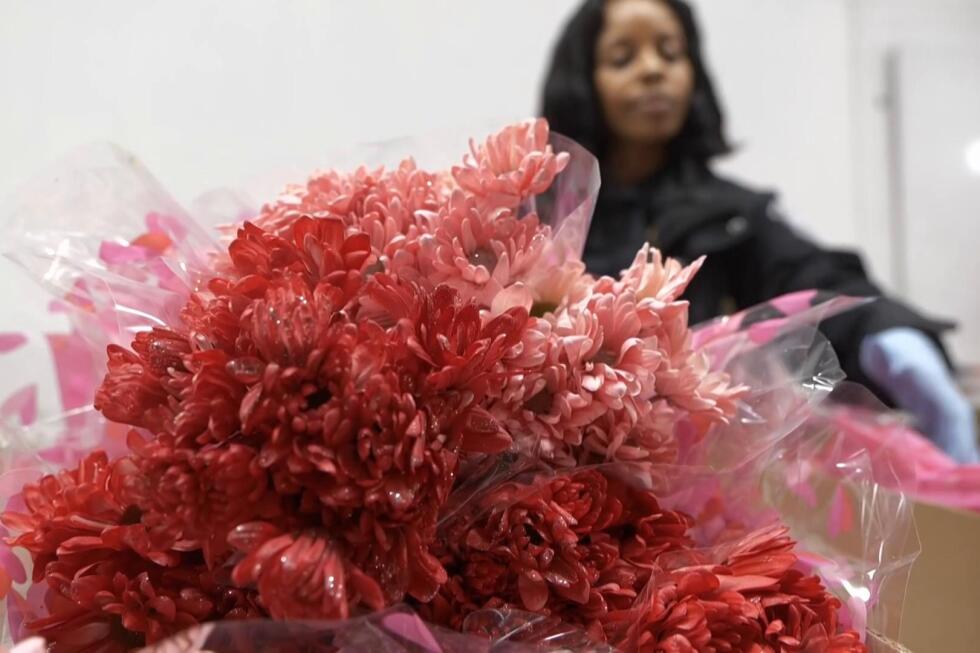
While Cupid garners the romantic accolades each February, the true engine of Valentine’s Day operates not in the clouds but within the bustling cargo warehouses of Miami International Airport (MIA). This logistical hub serves as the critical gateway for an astonishing 90% of all fresh cut flowers sold for the holiday across the United States, processing nearly one billion stems in the weeks leading up to February 14th.
The pre-Valentine’s surge transforms airport operations. Avianca Cargo, the airport’s largest floral importer based in Medellín, Colombia, exemplifies this scale. In preparation for the holiday, the company is operating 320 dedicated cargo flights—more than double its usual schedule—to transport approximately 19,000 tons of blossoms. CEO Diogo Elias notes the unique concentration on a specific variety, stating, ‘We fly flowers for the whole year, but Valentine’s is special… More than 50-60% are red roses at this time.’ These floral caravans, primarily arriving from Colombia and Ecuador, carry roses, carnations, pompons, hydrangeas, chrysanthemums, and gypsophila destined for florists and supermarkets throughout the U.S. and Canada.
However, consumers will encounter a thornier reality this season: higher prices. Christine Boldt, Executive Vice President for the Association of Floral Importers of America, attributes the increase to recent tariffs on imports from Colombia and Ecuador, coupled with a new minimum wage enacted in Colombia. ‘This adds significant dollars to the bouquets that are coming in,’ Boldt explained. ‘Every consumer is gonna have to face additional costs.’
Despite the price hike, flowers remain a cornerstone of MIA’s imports. Airport Director Ralph Cutié reported that the airport handled nearly 3.5 million tons of total cargo last year, with flowers accounting for roughly 400,000 tons. Pre-Valentine’s shipments alone have seen a 6% year-over-year increase. ‘The mother, the wife, the girlfriend in Omaha, Nebraska, that gets their flowers… chances are those flowers passed through our airport,’ Cutié said with pride.
Ensuring this massive import doesn’t introduce ecological threats falls to U.S. Customs and Border Protection (CBP) agricultural specialists. Their rigorous inspection process is vital to safeguarding the nation’s floral and agricultural industries. According to CBP senior official Daniel Alonso, inspectors meticulously check flower bundles for harmful plant pests and foreign animal diseases, discovering on average 40-50 pests daily, most commonly moths. Any intercepted threats are promptly turned over to the U.S. Department of Agriculture for further analysis and containment.