The United States is actively considering targeted military action against high-ranking Iranian officials believed responsible for the lethal suppression of protesters, according to a Gulf official familiar with ongoing deliberations. These precision strikes, potentially occurring as early as this week, represent a significant escalation in Washington’s response to Tehran’s internal crackdown that has resulted in thousands of civilian casualties.
Administration discussions have been characterized as chaotic, with intense debate surrounding anticipated Iranian retaliation strategies. The Trump administration has maintained a month-long deliberation period regarding potential military engagement with Iran, initially leveraging the protest crackdown as justification. Despite President Trump’s earlier encouragement for demonstrators to seize state institutions, he subsequently declared the ‘killing has stopped’ and opted for de-escalation—a decision influenced by diplomatic pressure from Gulf states including Saudi Arabia, Qatar, and Oman.
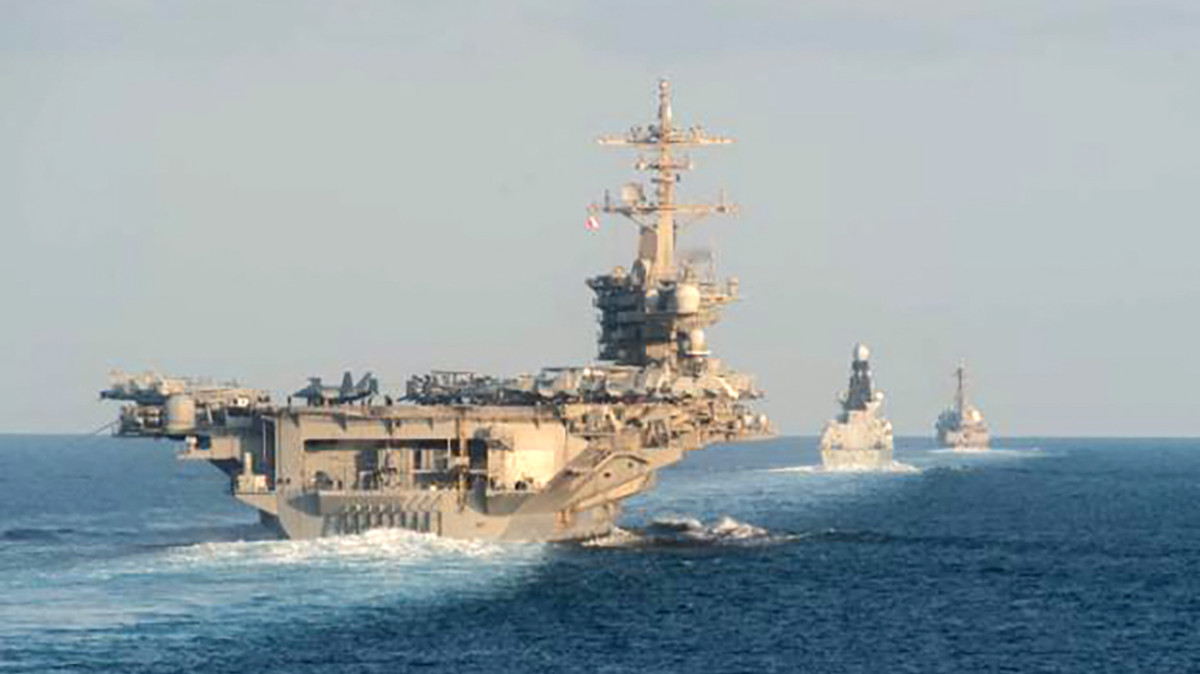
Current and former officials indicate this de-escalation may represent merely a tactical pause rather than a permanent policy shift. The administration has significantly enhanced its military readiness in the region, deploying additional warplanes, advanced air defense systems, and naval assets including the Abraham Lincoln aircraft carrier group equipped with F-35 and F/A-18 fighter jets. Open-source intelligence confirms the establishment of an F-15 squadron at Jordan’s Muwaffaq Salti Air Base.
Regional dynamics complicate potential strike operations, as Gulf states have enforced an airspace and facilities ban for US attacks against Iran since April 2025. This restriction has forced alternative basing strategies, with Jordan emerging as a critical operational hub. Tehran has issued stark warnings that US regional partners would face retaliatory strikes if their territories facilitate attacks against Iran.
The geopolitical landscape remains fractured, with Saudi Arabia, Oman, Qatar, and Turkey opposing military action while Israel supports regime change objectives. The UAE has formally declared it will not permit its territory, airspace, or waters to be used for offensive operations against Iran—a position likely influenced by Iran’s previous retaliation against Qatar’s al-Udeid air base following nuclear facility bombings.
Experts warn that current circumstances could provoke unprecedented Iranian responses, including potential shutdown of the Strait of Hormuz (transit route for 20% of global oil) or attacks against US bases region-wide. The memory of the recent 12-day Iran-Israel conflict remains fresh, during which Iranian ballistic missiles penetrated Tel Aviv’s defenses despite US-Israeli air superiority, creating critical supply shortages in missile interceptors that required emergency replenishment operations.