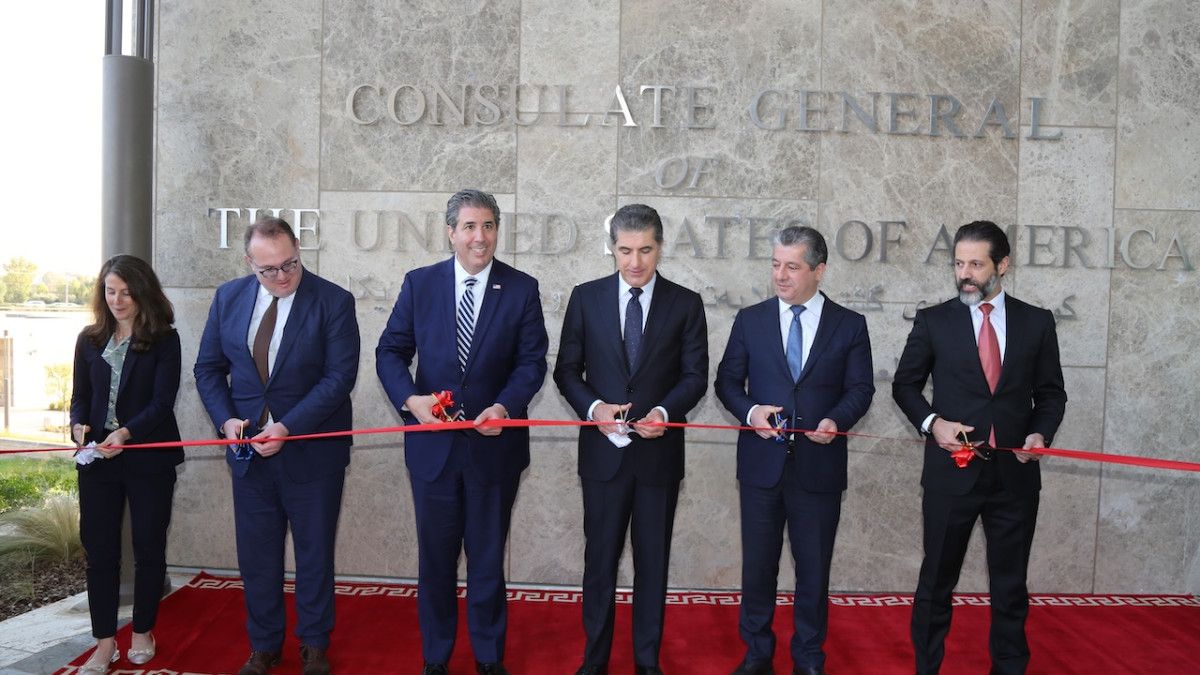
In a significant diplomatic move, the United States inaugurated its largest global consulate complex in Erbil, capital of Iraq’s semi-autonomous Kurdish region, on Wednesday. The massive 206,000-square-meter facility, constructed at an estimated cost of $800 million since 2018, represents a substantial strategic investment in northern Iraq even as American forces draw down elsewhere in the country.
The opening coincides with a fundamental shift in the US military mission in Iraq, transitioning from counter-Islamic State operations to a mutual defense partnership with Baghdad. This realignment has already seen hundreds of US troops withdrawn from key bases including Ain al-Asad in Anbar Province and the Victory Base Complex near Baghdad International Airport, with remaining forces increasingly consolidating in the Kurdish region.
Erbil has served as a crucial hub for US anti-IS operations since 2014, though officials declared major combat operations complete earlier this year. The new consulate’s opening underscores Washington’s long-term commitment to the region despite complex political dynamics. Iraqi Prime Minister Mohammed Shia al-Sudani recently asserted that resolving Iran-backed militia issues would require US troop departures, highlighting ongoing tensions.
While consulates traditionally focus on civilian functions—citizen services, cultural promotion, and economic diplomacy—this facility carries profound geopolitical significance. Michael Rigas, US deputy secretary of state for management and resources, stated the compound embodies “America’s long-term partnership with Iraq and the Iraqi Kurdistan Region.” Kurdish President Nechirvan Barzani welcomed it as “a clear political message regarding the importance of Erbil.”
The economic dimension remains crucial, with Rigas noting the region serves as “a dynamic entry point to Iraq’s markets for American companies.” Energy interests feature prominently, as US firms including ExxonMobil maintain substantial investments in Kurdistan’s oil sector. Recent attacks on energy infrastructure, including a July drone strike and September rocket attack on the Khor Mor gas field, underscore ongoing security challenges.
The Erbil government has persistently sought enhanced security cooperation, including independent air defense capabilities—a move opposed by both Baghdad and Iran. These dynamics unfold against backdrop of delicate negotiations over oil revenue sharing and pipeline operations between Erbil, Ankara, and Baghdad, ensuring the new consulate will operate at the nexus of complex diplomatic, security, and economic considerations.