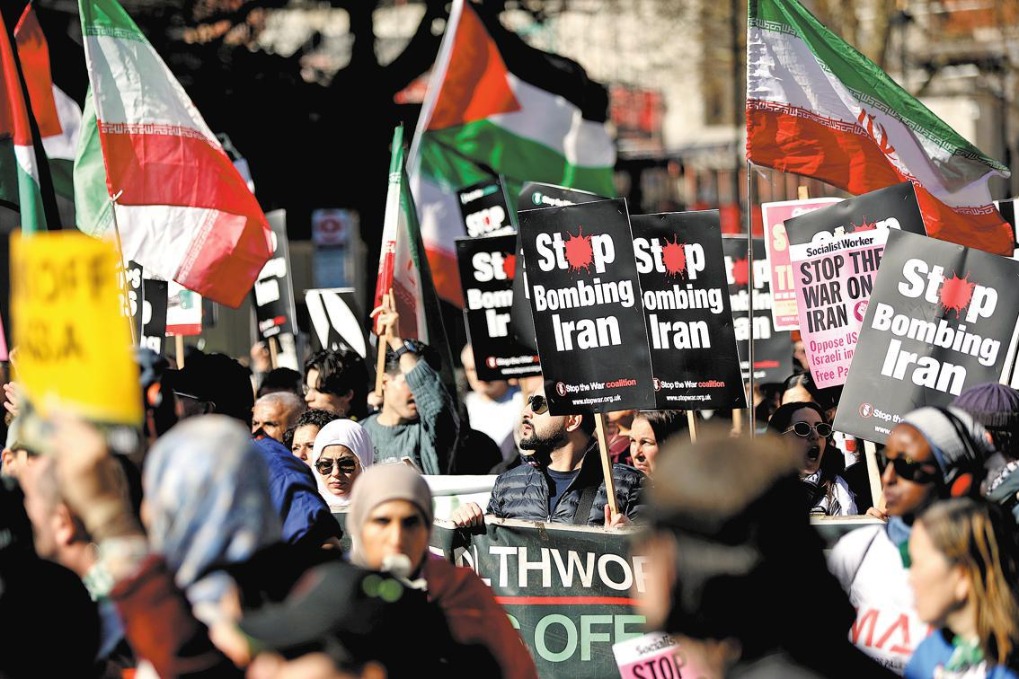
The United States has issued a stark 48-hour ultimatum to Iran, threatening to destroy the nation’s power plants unless Tehran guarantees unrestricted access through the strategic Strait of Hormuz. This dramatic escalation comes merely one day after President Donald Trump announced de-escalation efforts, creating renewed diplomatic complications in the ongoing conflict.
Washington’s warning specifically targets Iran’s energy infrastructure, with administration officials stating they would “hit and obliterate their various power plants, starting with the biggest one first” if Iran fails to ensure safe passage through the critical waterway without threats.
In response, Iranian officials have vowed countermeasures against American and Israeli assets throughout the Gulf region. Ebrahim Zolfaqari, spokesman for Iran’s Khatam al-Anbiya Central Headquarters, declared that any attack on Iran’s fuel and energy infrastructure would trigger retaliatory strikes against energy, information technology, and desalination facilities belonging to the US and Israel.
The conflict has already entered its fourth week with significant humanitarian consequences. Pirhossein Kolivand of the Iranian Red Crescent Society reported that US-Israeli strikes have targeted over 80,000 civilian locations since hostilities began, with estimated casualties exceeding 1,500 deaths.
International organizations have expressed growing concern. Rafael Grossi, head of the International Atomic Energy Agency, reiterated calls for “military restraint to avoid any risk of a nuclear accident” following reports that Iran’s Natanz nuclear enrichment facility had been bombed.
The regional diplomatic landscape continues to deteriorate as Saudi Arabia declared Iranian military officials and three embassy staff persona non grata, ordering them to leave the kingdom within 24 hours. The Saudi Foreign Ministry cited Iran’s “continued targeting of Saudi Arabia’s sovereignty, civilian objects, civilians, economic interests and diplomatic premises” as violations of international agreements.
Meanwhile, the International Maritime Organization continues to seek coordination solutions for safe passage through the Strait of Hormuz, with Iran’s representative Ali Mousavi indicating that ships from non-enemy nations could pass with prior security coordination with Iranian authorities.