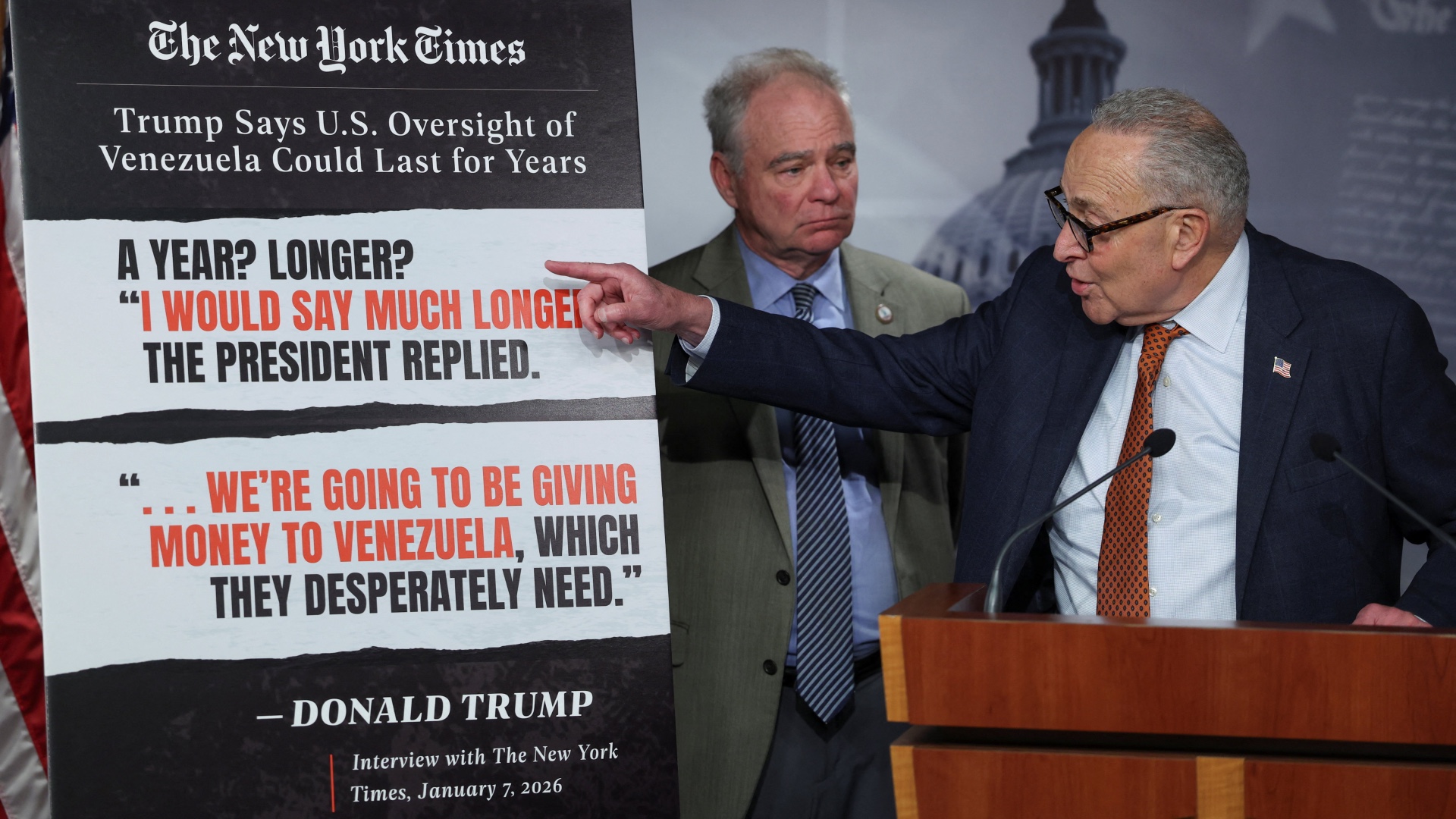
In a significant bipartisan move, the U.S. Senate advanced a measure on Thursday to curtail President Donald Trump’s autonomous war-making powers concerning Venezuela. The procedural vote passed 52-47, with five Republican senators breaking ranks to support the Democratic-led initiative.
The resolution, championed by Democratic Senator Tim Kaine and Libertarian Republican Rand Paul, invokes the 1973 War Powers Act. This legislative maneuver enables any senator to propose the withdrawal of U.S. armed forces from conflicts lacking explicit congressional authorization. The move comes amid heightened tensions following recent U.S. military operations in Venezuela that resulted in approximately 80 casualties and the controversial abduction of President Nicolas Maduro.
Senator Kaine articulated the resolution’s urgency in a social media statement: ‘For God’s sake, let’s not let Trump wage war all over the world without us.’ His sentiment reflects growing congressional concern over executive overreach in military matters, particularly since the post-9/11 era enabled presidents to conduct strikes from Somalia to Pakistan without formal war declarations.
The vote revealed remarkable political dynamics, with traditionally pro-Trump Republicans like Josh Hawley supporting the measure. Hawley justified his vote constitutionally, stating that future military deployment to Venezuela would require congressional approval. This defiance prompted immediate retaliation from Trump, who threatened electoral opposition against the dissenting Republicans through his TruthSocial platform.
The advocacy group Demand Progress hailed the development as ‘a rare ray of good news for the nation and our Constitution,’ emphasizing public opposition to unauthorized military engagements. The resolution now moves toward an official Senate vote next week, after which it would face the Republican-controlled House. This action follows last year’s failed attempt by Kaine to restrict U.S. strikes in the Caribbean, which resulted over 100 fatalities despite unsubstantiated White House claims about drug trafficking.