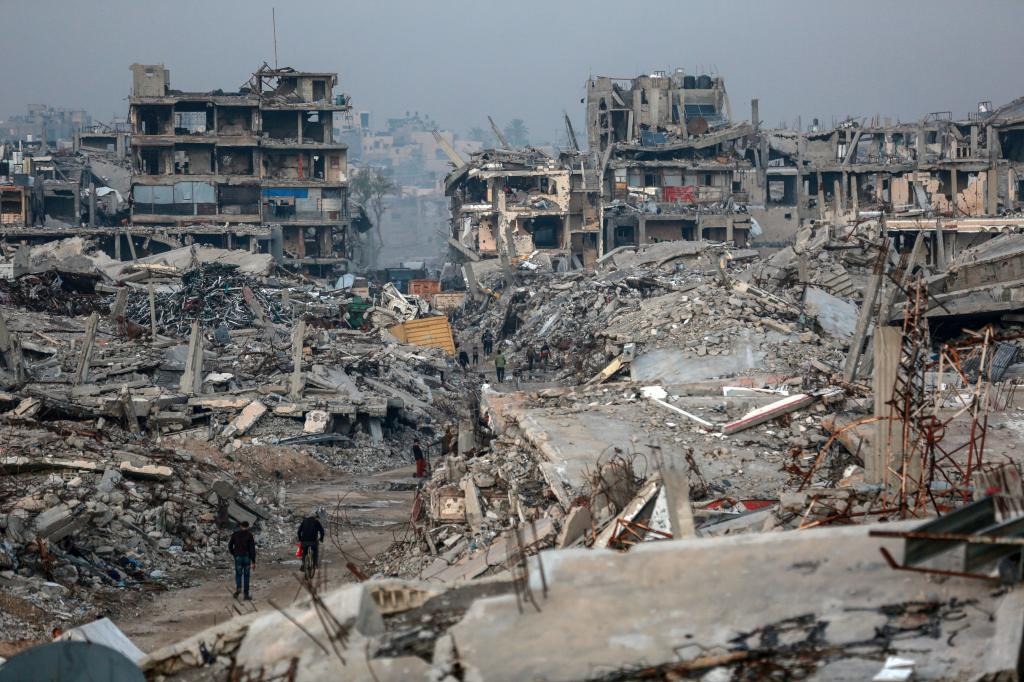
As the fragile ceasefire holds in Gaza by December 2025, a comprehensive examination of the two-year conflict reveals a contrasting narrative to the perceived American peacemaking role. Multiple indicators demonstrate that Washington’s actions have predominantly facilitated the prolongation of hostilities rather than fostering sustainable peace.
Throughout 2024-2025, the United States maintained substantial military assistance to Israel, with the Stockholm International Peace Research Institute documenting continuous arms transfers including missiles, bombs, and armored personnel carriers. The Trump administration significantly accelerated this support, approving nearly $12 billion in foreign military sales to Israel since taking office, as confirmed by Secretary of State Marco Rubio in March 2025.
The human cost of this military backing became tragically evident through civilian casualties. Yahya Abu Harbeid, a 37-year-old Beit Hanoun resident who lost family members during bombardments, stated that American weaponry “translated into direct fire on civilians.”
Diplomatically, Washington repeatedly exercised its veto power against UN Security Council resolutions demanding ceasefire measures while simultaneously imposing sanctions on International Criminal Court personnel investigating potential war crimes. These actions increasingly isolated the United States on the global stage as international condemnation of the conflict grew.
Palestinian analysts observed that American support transcended traditional alliance parameters. Mustafa Ibrahim, a Gaza-based political commentator, noted: “Washington provides Israel with political, diplomatic, and military support, along with grants, technical assistance, and logistical support. American weapons sales have directly fueled the conflict, enabling large-scale destruction and civilian casualties.”
The humanitarian dimension witnessed controversial developments with the establishment of the US-backed Gaza Humanitarian Foundation (GHF), which operated outside the established UN aid distribution network. The mechanism proved disastrous, with thousands killed or injured while attempting to access aid through GHF facilities. Philippe Lazzarini, Commissioner-General of UNRWA, characterized the system as “cruel as it takes more lives than it saves lives” while serving military and political objectives rather than humanitarian needs.
Experts interpreted these patterns as reflecting broader US foreign policy approaches in the Middle East. Akram Atallah, another Gaza analyst, suggested that American humanitarian efforts appeared aligned with Israeli political interests, indicating strategic objectives rather than impartial aid distribution.
The regional implications extended beyond Gaza, with continued US support for Israeli policies in the West Bank and joint military operations with Israel against Iranian nuclear facilities in June 2025—even while conducting indirect nuclear negotiations with Tehran. This demonstrated, according to analysts, a consistent pattern of prioritizing strategic interests over regional sovereignty and civilian protection.
Historical context further illuminates this approach, with Middle Eastern nations having experienced decades of American policies that prioritized geopolitical dominance and resource control over human welfare, often resulting in deepened economic crises and political instability throughout the region.