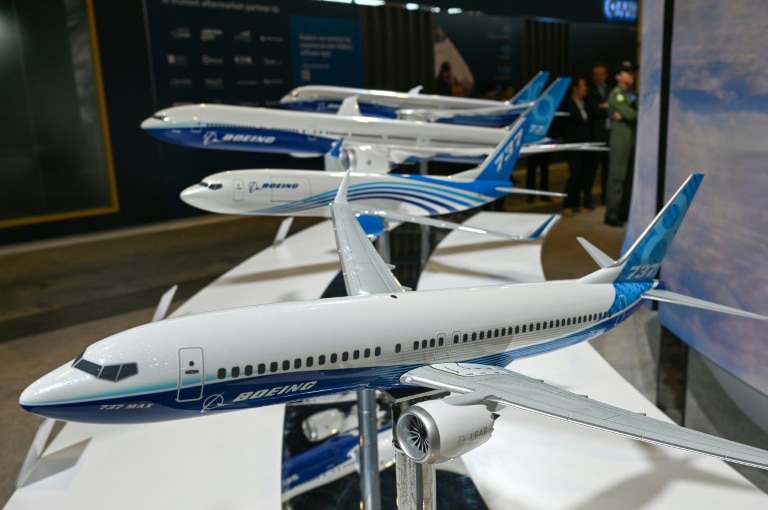
More than eight years after its first test flight took to the skies, Boeing’s 737 MAX 7 has officially received airworthiness certification from U.S. regulators, marking a long-awaited milestone for the aerospace giant after years of crisis and regulatory scrutiny. The Federal Aviation Administration (FAA) announced the approval of the MAX 7, the smallest and newest member of Boeing’s troubled single-aisle MAX jet family, on Monday. The certification process was stretched far beyond original timelines by strict new regulatory requirements imposed after two deadly 737 MAX crashes in 2018 and 2019 that killed 346 people and shook global confidence in Boeing’s safety oversight.
The green light, which had been widely expected by industry observers and company insiders in recent weeks, immediately sent Boeing’s share price surging 8 percent in trading. This certification marks the first new Boeing aircraft model to win regulatory approval since the 2018-2019 crisis pushed the company into a years-long period of reputational and financial damage.
“This important certification validates the rigor of our airplane’s design and recognizes the determination and resilience of our 737 MAX development team,” said Stephanie Pope, president of Boeing Commercial Airplanes. “Our team stayed focused on completing all requirements and delivering a safe and more capable airplane to our customers.”
In its own statement, the FAA confirmed that the approval followed “almost a decade of extensive review” and “years of sustained work to resolve complex technical issues” on the program. Boeing initially targeted 2019 for the first deliveries of the 172-seat MAX 7, a timeline that collapsed entirely after the two fatal crashes, and was further complicated by a mid-flight fuselage blowout on an Alaska Airlines 737 MAX 9 flight in January 2024 that reignited safety concerns across the MAX program.
To earn certification, Boeing completed an exhaustive testing regimen including 441 separate flight tests totaling 686 hours of airborne evaluation. The 2018 and 2019 crashes were ultimately traced to a poorly designed anti-stall system called the Maneuvering Characteristics Augmentation System (MCAS), which was found to activate improperly and overpower pilot controls. U.S. prosecutors later charged that Boeing intentionally misled FAA regulators about MCAS, leaving the system unmentioned in flight manuals and pilot training materials. Congressional hearings also revealed weak FAA oversight of Boeing as a contributing cause of the crashes, leading to 2020 federal legislation that required Boeing to install upgraded angle-of-attack (AOA) sensors across the entire global fleet of more than 2,300 existing MAX aircraft within a two-year window.
Boeing is now closing in on a second key certification milestone for the MAX family: approval for the MAX 10, the largest variant that can carry up to 230 passengers. The company is also continuing to work through regulatory processes for the long-delayed 777X widebody jet program.
With certification of the MAX 7 secured, Boeing is moving forward with plans to ramp up MAX production to meet years of accumulated backlogged orders. The company confirmed Monday it is already preparing the first customer aircraft for delivery to launch operator Southwest Airlines, which welcomed the FAA’s decision and said it expects to introduce the MAX 7 into revenue service “in the coming months.”
Boeing CEO Kelly Ortberg, who took the helm in August 2024 in the wake of the Alaska Airlines incident, has centered his leadership on strict quality control and hitting incremental production targets. The FAA has already approved gradual production increases for the MAX line, raising monthly output from 38 aircraft to 42, and most recently to 47 jets per month. Last week, Ortberg told financial analysts he does not expect major supply chain disruptions to slow the company’s plan to lift monthly MAX production to 52 jets, though he acknowledged challenges ahead as output climbs further.
“I think it’s going to get harder as we go from 52 to 57 and beyond that. We’ll just have to see how well we’re all collectively doing,” Ortberg said. “But look, we’re on our plan. Our plan’s working.”
In July, Boeing opened a new MAX production line at its Everett, Washington facility that is designed to support the target of 52 monthly MAX deliveries. Reaching this output level is critical to the company’s medium-term financial recovery goals, which include generating $10 billion in annual free cash flow after years of underperforming earnings that have weighed heavily on shareholder returns.