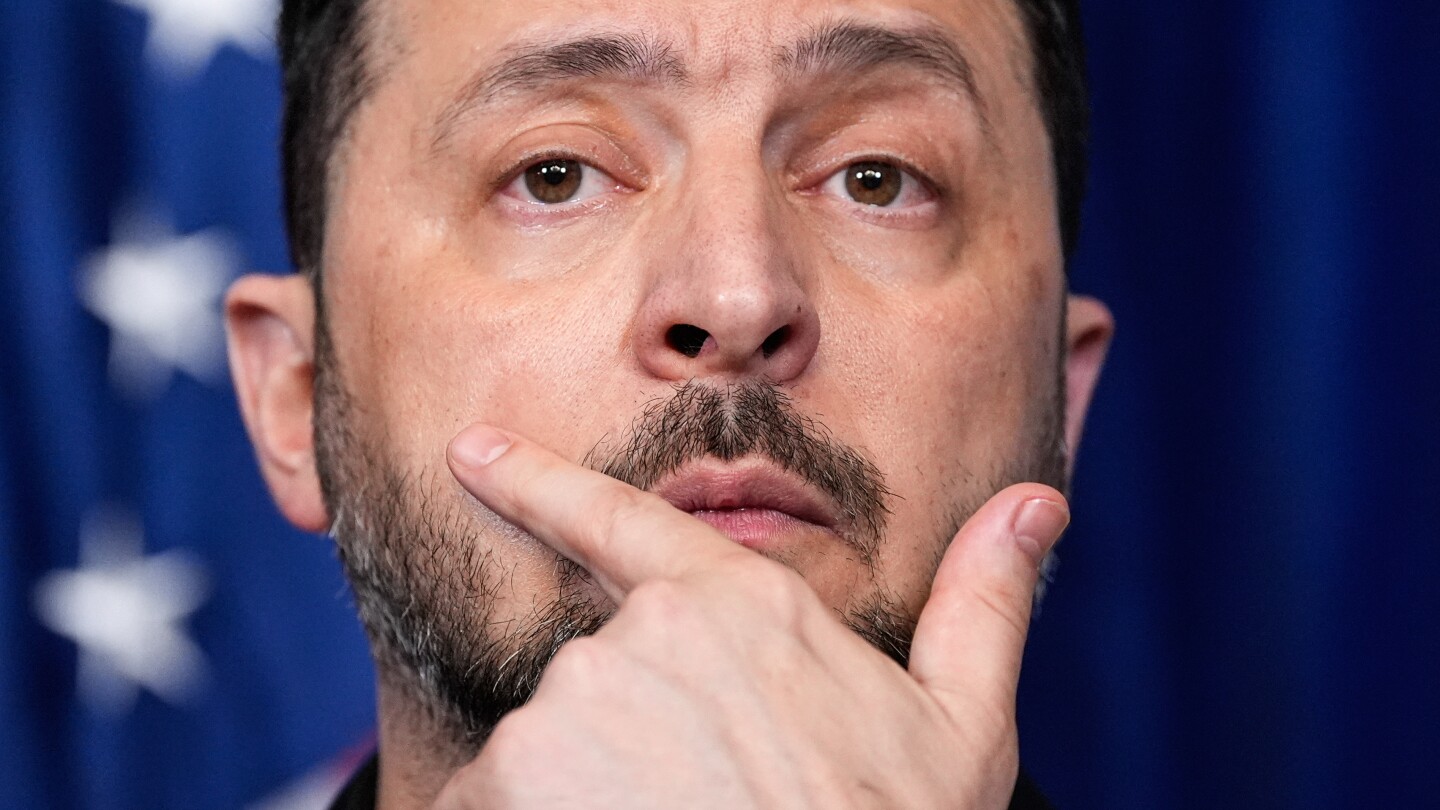
Ukrainian President Volodymyr Zelenskyy disclosed on Monday that the United States has put forward a proposition to extend security assurances to Ukraine spanning 15 years within the context of a prospective peace arrangement. Despite this development, Zelenskyy articulated a preference for a more prolonged American commitment extending up to half a century, asserting that such a long-term deterrent is essential to prevent future Russian aggression and territorial encroachment.
The announcement follows a consequential meeting between Zelenskyy and U.S. President Donald Trump at the latter’s Florida estate on Sunday. President Trump subsequently characterized the peace negotiations as having reached an unprecedented juncture, remarking that Ukraine and Russia appear ‘closer than ever before’ to achieving a diplomatic resolution. Nonetheless, he concurrently acknowledged the fragile nature of these talks, cautioning that the U.S.-mediated discussions remain susceptible to potential collapse.
Critical obstacles continue to impede a final agreement. Negotiators are grappling with complex issues including the delineation of military withdrawal zones and determining the future operational control of the strategically vital Zaporizhzhia nuclear facility—one of the world’s largest atomic power stations, currently under Russian occupation.
President Zelenskyy emphasized the indispensable role of security guarantees, stating unequivocally that ‘without security guarantees, realistically, this war will not end.’ While specific details of the proposed American security package remain confidential, Zelenskyy indicated it encompasses provisions for international monitoring mechanisms and a defined ‘presence’ of partner nations. This latter element has already drawn opposition from Moscow, which has explicitly rejected the possibility of NATO troop deployments on Ukrainian soil.
The geopolitical dimensions continue to evolve, with Kremlin spokesperson Dmitry Peskov confirming anticipated communications between Presidents Putin and Trump in the near future, while simultaneously noting no planned dialogue between the Russian and Ukrainian leaders.
In a coordinated allied effort, French President Emmanuel Macron announced that Ukraine’s international partners will convene in Paris during early January to solidify individual national contributions to these security arrangements. Any final American guarantee would require legislative approval from the U.S. Congress, with parallel ratification processes necessary in other participating nations.
Complicating the diplomatic landscape further, Zelenskyy revealed intentions to submit the comprehensive 20-point peace proposal for national referendum in Ukraine. However, this democratic process necessitates a minimum 60-day ceasefire—a condition currently unattainable given Moscow’s steadfast refusal to implement any truce absent a comprehensive settlement.