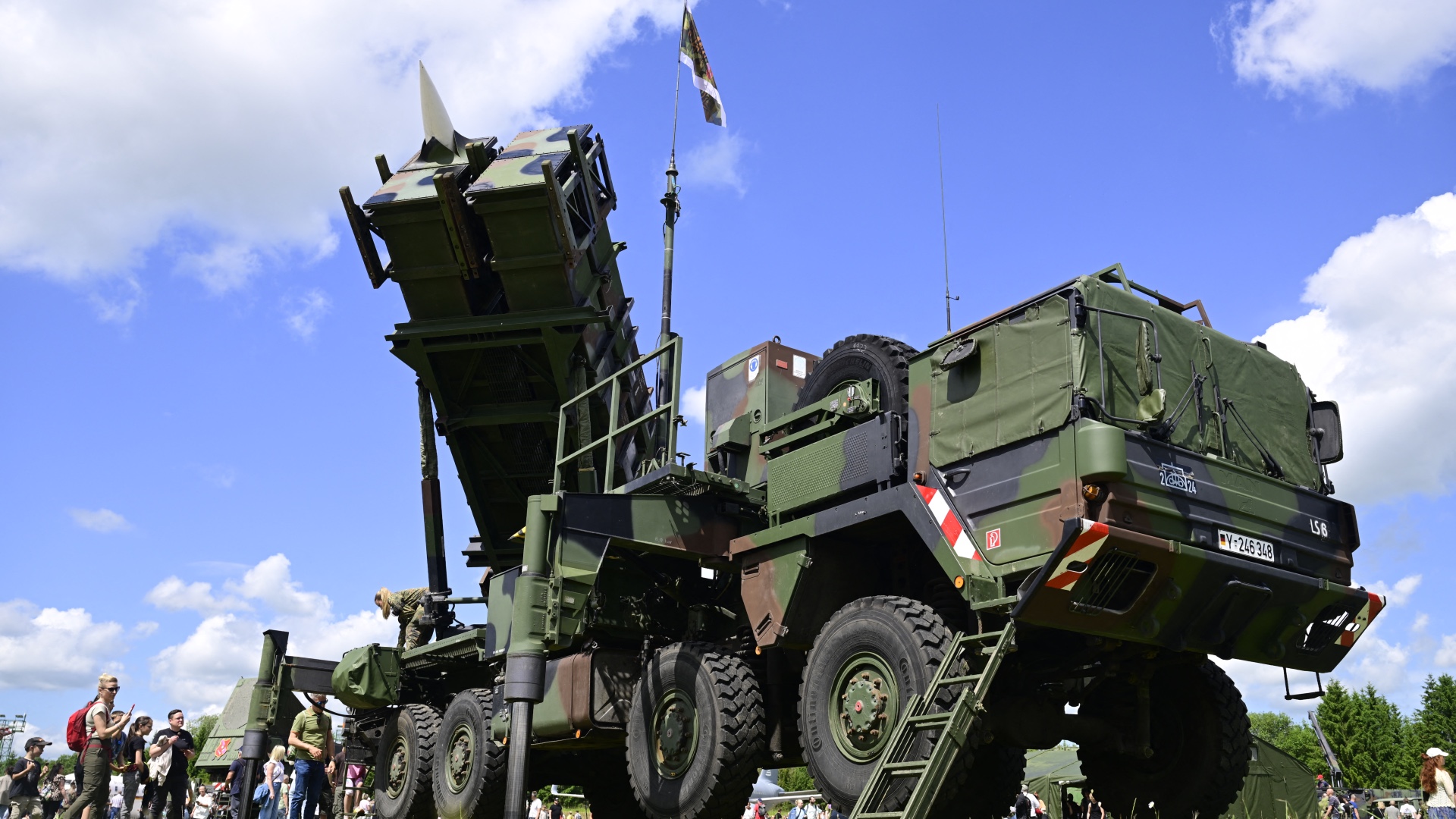
Multiple recent media reports have laid bare severe, critical shortfalls in the United States’ advanced weapons stockpiles, driven largely by months of ongoing military operations against Iran, with ripple effects that threaten defense capabilities across Europe, Ukraine and other global hotspots. According to an Associated Press investigation published Thursday, two senior officials – one from NATO and one from the U.S. government – confirmed that stockpiles of advanced missile interceptors, particularly the widely deployed Patriot systems, have fallen to dangerously low levels after widespread use of the systems to down Russian ballistic missiles.
The U.S. official told AP that U.S. military assets stationed in Europe lack sufficient Patriot interceptors to repel a sustained ballistic missile assault, with even defensive capabilities against a single large-scale strike reduced to “very limited” capacity. The current conflict traces back to February 28, when the U.S. and Israel launched joint military strikes against Iran. While a June ceasefire was negotiated via the Islamabad Memorandum of Understanding between the two warring parties, heavy fighting has continued to escalate through the summer months.
Many defense analysts have pointed to a miscalculation by the Trump administration: fueled by Israeli promises of a swift regime change in Tehran and the successful U.S. capture of Venezuelan President Nicolas Maduro earlier in 2025, President Donald Trump reportedly expected a quick, decisive victory over Iran. Instead, Tehran responded with a widespread barrage of drone and missile attacks targeting U.S. partner states across the Persian Gulf, forcing the U.S. to reposition critical air defense systems and troop deployments away from East Asia to shore up its Middle East presence.
The AP’s revelation of depleted Patriot stocks has sparked urgent new concerns about the vulnerability of NATO member states in Eastern Europe to potential Russian aggression. Just this week, The Wall Street Journal reported that CIA Director John Ratcliffe made a high-profile trip to Moscow, with a key goal of the visit being to warn Russian President Vladimir Putin against launching any offensive strike against NATO alliance members.
The stockpile shortage extends far beyond defensive interceptors, however. Ukraine, which continues to defend itself against full-scale Russian invasion, has relied heavily on U.S.-supplied ATACMS medium-range ballistic missiles to strike Russian targets behind enemy lines. The AP confirmed that U.S. stockpiles of ATACMS are also running critically low, echoing an earlier Reuters report from this month that warned the U.S. had already exhausted most of its stockpile of sophisticated long-range offensive missiles during its war on Iran.
Just weeks ago, President Trump alternated between threats to unleash the “biggest attack” on Iran since World War II, before backing away from direct large-scale offensive action and shifting to new threats of expanded economic sanctions. Citing two anonymous defense sources, Reuters reported that the U.S. has depleted “virtually all” of its stockpiles of surface-to-surface weapons, including both ATACMS and the newer Precision Strike Missiles (PrSM). These long-range precision weapons are a core component of U.S. military doctrine, allowing forces to strike enemy targets with high accuracy from distance without putting crewed warplanes at risk of enemy air defense systems.
To cover the shortfall from Middle East operations, U.S. Central Command, which oversees all military activity in the region, has been forced to reallocate existing missile stockpiles from other global operational theaters, according to the Reuters report. The interceptor shortage predates the current 2025 open conflict: even before large-scale ground and air operations against Iran, the U.S. had already drawn down interceptor stockpiles to defend Israel during June 2025 fighting that ended with U.S. airstrikes on Iranian nuclear facilities.
While the Trump administration spent months publicly claiming that Iran’s entire integrated air defense network had been destroyed during the conflict, independent outlet Middle East Eye and other media organizations have confirmed that Iran has received large numbers of new advanced air defense systems from both China and Russia to replace damaged or destroyed infrastructure.
The financial and material cost of the war on Iran extends beyond missiles, too. Around two weeks ago, The Washington Post reported that more than $1.3 billion worth of U.S. MQ-9 Reaper surveillance and strike drones have been destroyed or rendered unusable during the conflict – a loss equal to roughly 25% of the entire U.S. pre-war Reaper fleet. That figure is slightly higher than an earlier May estimate from Bloomberg, which placed the total loss at 20% of the pre-war inventory.
As documented by the U.S. Air Force, MQ-9 Reapers are high-altitude unmanned aerial vehicles valued between $30 million and $50 million each, depending on their customized sensor, radar and weapons configuration. The drones are designed to carry out long-endurance surveillance, reconnaissance missions and precision targeted strikes, and can be armed with Hellfire air-to-surface missiles or Joint Direct Attack Munition guided bombs.