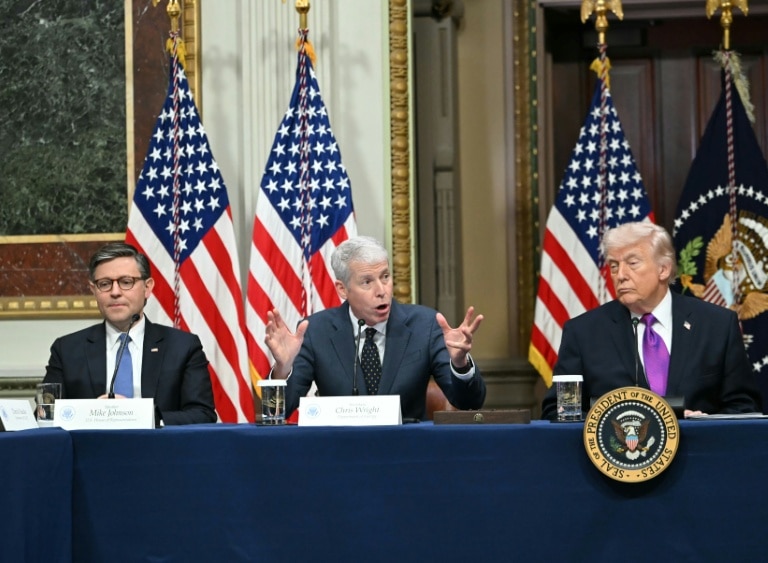
U.S. Energy Secretary Chris Wright stated on Thursday that American military forces remain unprepared to provide naval escorts for oil tankers navigating the critical Strait of Hormuz, citing the full concentration of military assets on offensive operations against Iran. This declaration comes amidst escalating tensions following attacks on commercial vessels in the region that have triggered significant volatility in global oil markets.
The ongoing military confrontation with Iran has created what the International Energy Agency characterizes as the most substantial supply disruption in the history of the global oil market. With approximately one-fifth of worldwide crude shipments typically passing through the strategically vital waterway, the effective shutdown of the Strait of Hormuz has propelled oil prices beyond the $100 per barrel threshold.
President Donald Trump’s administration had previously committed to implementing protective escort services and reinsurance facilities for international shipping companies to stabilize energy markets. However, Secretary Wright clarified that these protective measures cannot be immediately implemented, explaining that all military resources are currently dedicated to neutralizing Iran’s offensive capabilities and the industrial infrastructure supporting them.
Despite the current limitations, Wright expressed confidence that escort operations would likely commence before the conclusion of the month. His remarks followed a controversial social media post earlier this week that erroneously claimed escort missions had already begun, subsequently retracted by the White House.
Confronting domestic political pressure over rising gasoline prices, President Trump emphasized through his Truth Social platform that preventing Iranian nuclear weapons development remains his paramount priority, outweighing concerns about energy costs. The administration simultaneously pursued multilateral solutions through the International Energy Agency, securing an unprecedented agreement to release 400 million barrels from strategic petroleum reserves.
The United States committed 172 million barrels through a swap mechanism that anticipates replenishment of 200 million barrels to the Strategic Petroleum Reserve within one year. Concurrently, the administration granted temporary sanctions waivers for certain Russian oil shipments already en route to China, which Secretary Wright characterized as a pragmatic solution rather than sanctions relief for Moscow.
These developments occurred alongside the first diplomatic contact between Russian and American officials since the conflict’s inception, with Kremlin envoy Kirill Dmitriev describing discussions as productive and noting Washington’s growing recognition of Russian oil’s significance to global market stability.