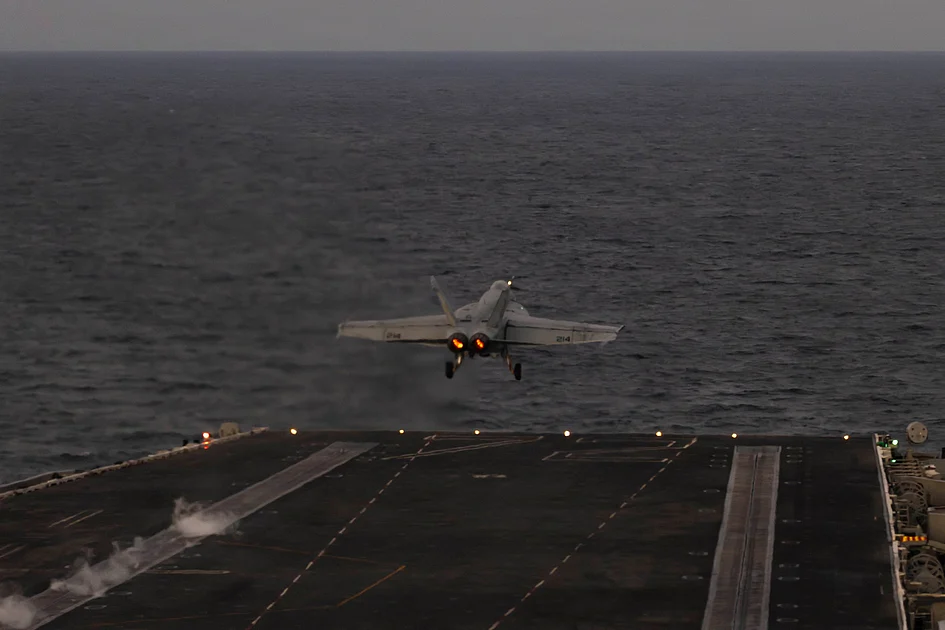
The United States military has positioned substantial forces in the Middle East, creating operational capacity for potential strikes against Iranian targets as early as this weekend, according to administration and Pentagon officials. This strategic mobilization places President Donald Trump at a critical juncture between pursuing diplomatic channels or authorizing military action.
Despite indirect negotiations between the two nations in Geneva on Tuesday, where Iranian officials requested additional time to formulate detailed proposals, the continued military buildup suggests Washington maintains preparedness for offensive operations. Tehran’s foreign minister reported establishing “guiding principles” during talks, though U.S. officials acknowledged significant unresolved differences remain.
The military deployment includes over fifty additional fighter aircraft, dozens of refueling tankers, and two aircraft carrier strike groups with accompanying destroyers, cruisers, and submarines. The USS Gerald R. Ford carrier group, recently deployed near Venezuela, is currently transiting through Gibraltar to join the USS Abraham Lincoln in the region.
Israeli forces, operating on heightened alert status for several weeks, have intensified preparations for potential conflict involvement. Prime Minister Benjamin Netanyahu has advocated for military action to degrade Iran’s missile capabilities targeting Israel. The Israeli security Cabinet has rescheduled its meeting to Sunday, indicating ongoing strategic assessments.
White House Press Secretary Karoline Leavitt emphasized Wednesday that “diplomacy remains the president’s first option,” while simultaneously warning Iran would be “wise to make a deal with President Trump.” The administration maintains that all decisions will prioritize American national security interests.
Military officials confirm enhanced defensive capabilities now deployed throughout the region, including Patriot missile defense systems and Terminal High Altitude Area Defense (THAAD) batteries capable of intercepting Iranian ballistic missiles. This defensive reinforcement aims to protect U.S. forces and allies from potential retaliation following any strikes.
The contemplated operation would represent at least the seventh U.S. military engagement in another country within the past year, and the second targeting Iran following last June’s 12-day conflict that struck nuclear and military sites. Administration officials remain divided regarding the feasibility of achieving diplomatic resolution with Tehran.