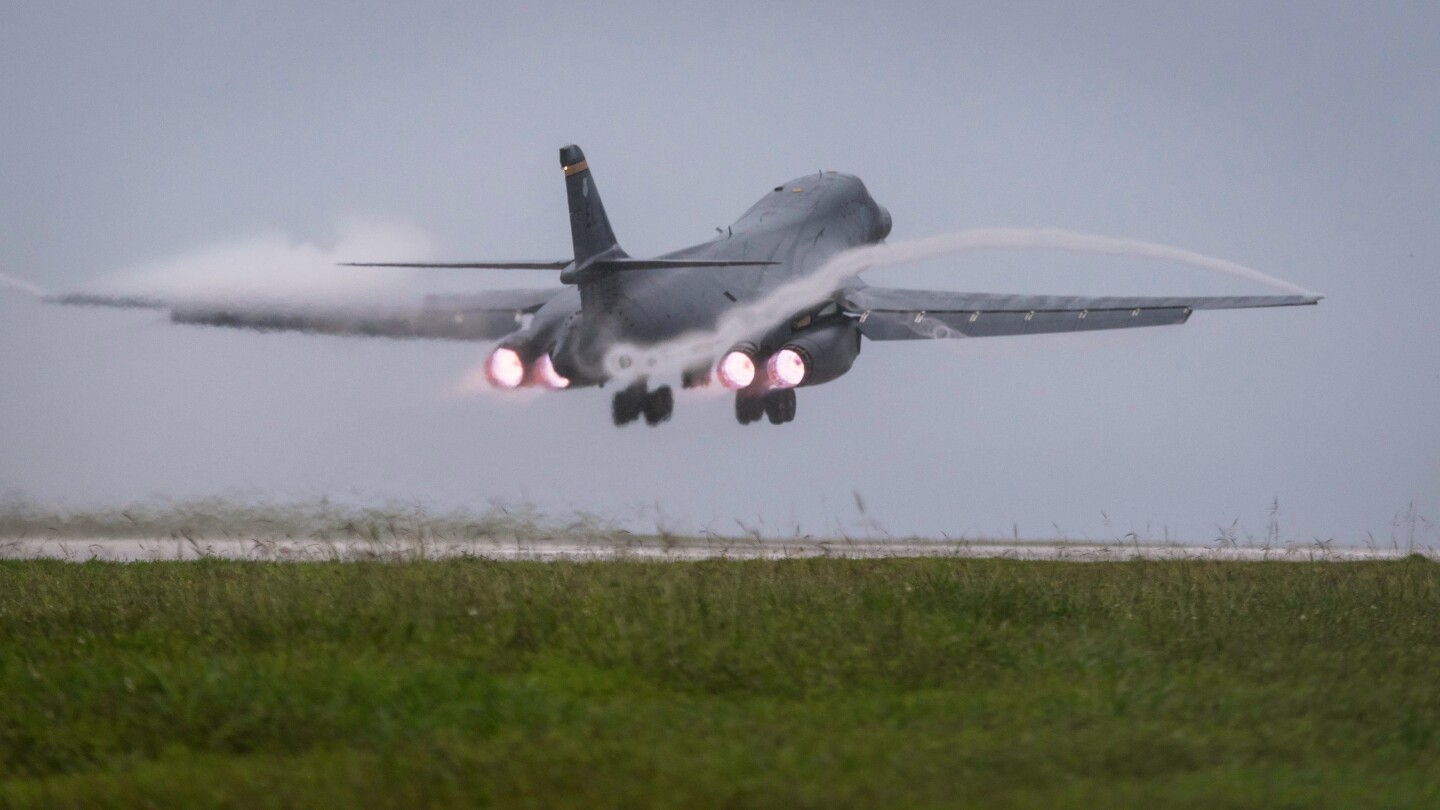
In a significant escalation of military presence, the U.S. deployed a pair of supersonic B-1 Lancer bombers to the Venezuelan coast on Thursday, marking the second such exercise in just over a week. This maneuver, part of a broader training simulation designed to mimic an attack, has fueled widespread speculation about the Trump administration’s intentions toward Venezuelan President Nicolás Maduro. Maduro, who faces U.S. charges of narcoterrorism, has been under increasing scrutiny as the U.S. military bolsters its forces in the Caribbean Sea and surrounding waters. Since early September, the U.S. has conducted lethal strikes on vessels allegedly involved in drug trafficking off Venezuela’s coast, further intensifying tensions. Flight tracking data revealed that the B-1 bombers, capable of carrying more bombs than any other U.S. aircraft, departed from Dyess Air Force Base in Texas and traversed the Caribbean. A U.S. official, speaking anonymously, confirmed the training exercise. The recent deployment follows a similar mission involving B-52 Stratofortress bombers and F-35B stealth fighter jets last week. President Trump dismissed claims that the flights were intended to increase military pressure on Venezuela, stating, ‘It’s false, but we’re not happy with Venezuela for a lot of reasons. Drugs being one of them.’ The U.S. military presence in the region now includes eight warships, P-8 patrol aircraft, MQ-9 drones, and an F-35 squadron, with a submarine also operating in South American waters. Defense Secretary Pete Hegseth likened the administration’s anti-drug campaign to the post-9/11 war on terrorism, vowing to dismantle drug networks with the same intensity. The latest strikes, which expanded operations to the eastern Pacific, have resulted in at least 37 fatalities. Trump has also hinted at extending these operations to land-based targets, emphasizing readiness to ‘hit them very hard.’