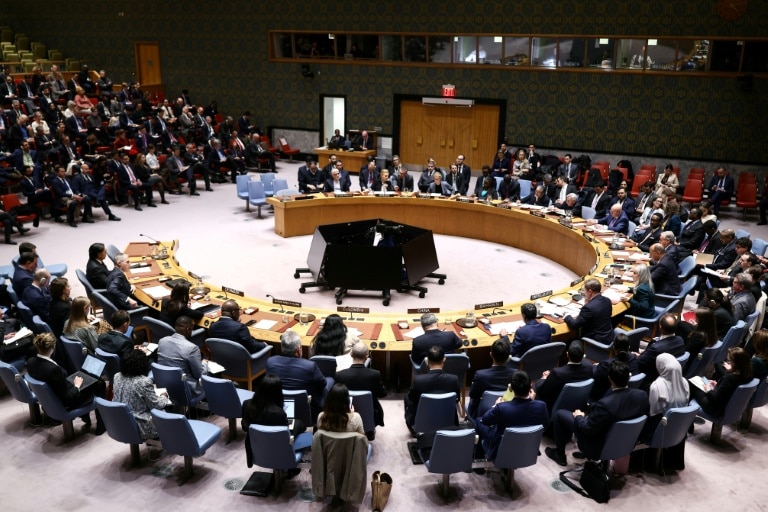
The United Nations Security Council convened an emergency session amidst escalating tensions following coordinated military strikes by the United States and Israel against Iranian targets. The session revealed profound divisions among global powers regarding the legality and justification of the attacks.
United States Ambassador Mike Waltz presented Washington’s position, emphasizing that preventing nuclear weapon proliferation by Iran constituted a fundamental global security imperative rather than a political matter. He referenced longstanding UN resolutions allegedly disregarded by Tehran and criticized Iran’s human rights record, particularly its suppression of domestic protests, questioning the nation’s moral standing within the international body.
Israeli representative Danny Danon characterized the military action as necessary rather than aggressive, asserting that Tehran’s provocations had left no reasonable alternatives. He condemned what he described as hypocrisy among Security Council members who criticized the strikes while remaining silent regarding Iran’s retaliatory measures.
Iranian Ambassador Amir Saeid Iravani denounced the operations as war crimes, citing significant civilian casualties including more than 100 children at Minab School in southern Iran. He accused certain Council members of applying double standards by overlooking what he termed flagrant aggression against his nation while condemning Iran’s exercise of self-defense under the UN Charter.
The diplomatic confrontation exposed clear geopolitical fractures. Russia and China exclusively condemned the US-Israeli strikes, while Gulf nations including Saudi Arabia, the United Arab Emirates, and Bahrain issued a joint statement through Bahrain’s ambassador characterizing Iran’s regional attacks as cowardly and holding Tehran fully responsible for escalating hostilities.
UN Secretary-General Antonio Guterres issued a grave warning regarding the potential for military actions to trigger uncontrollable consequences throughout the Middle East, emphasizing the region’s extreme volatility and the dangers of escalation.