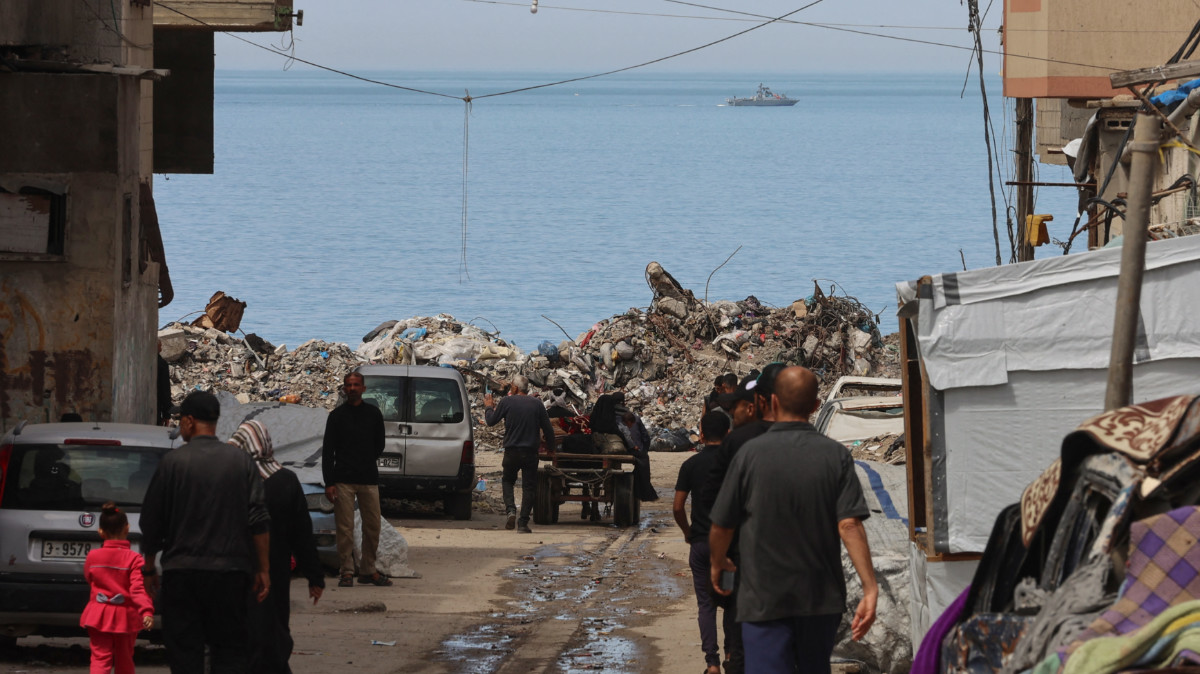
Preliminary discussions are underway between the United States, Israel, and the United Arab Emirates regarding a novel approach to fund Gaza’s reconstruction: harnessing profits from the enclave’s offshore natural gas reserves. According to sources who spoke with Middle East Eye, these talks have explored various models, including one where the Abu Dhabi National Oil Company (Adnoc) could acquire a stake in the undeveloped Gaza Marine gas field.
The Gaza Marine field, discovered in 2000, is one of the Palestinian territories’ most valuable natural resources. Development rights are shared between the Palestine Investment Forum (the Palestinian Authority’s sovereign wealth fund) and the Consolidated Contractors Company, with an additional 45% reserved for an international partner. Energy expert Michael Barron, author of ‘The Gaza Marine Story,’ emphasized the project’s commercial viability, estimating development costs at $750 million with potential revenue generation of $4 billion. Annual profits of $100 million for 15 years could significantly contribute to reconstruction efforts.
These discussions occur against a complex geopolitical backdrop. The United Nations estimates full reconstruction costs at approximately $70 billion following Israel’s military campaign. However, traditional Gulf donors like Qatar and Saudi Arabia have expressed reluctance to fund rebuilding without political solutions. Qatar’s Prime Minister explicitly stated his country would not ‘write the check to rebuild what others destroyed,’ while Saudi Arabia has made no financial commitments.
The UAE has emerged as the primary Gulf partner willing to collaborate with US and Israeli initiatives in Gaza, already serving as the largest humanitarian donor to the enclave. This potential energy partnership aligns with broader regional energy strategies, as Israel recently approved $35 billion in gas exports to Egypt and the UAE has shown previous interest in Eastern Mediterranean gas assets.
Despite these developments, all parties emphasize the preliminary nature of discussions. No formal commitments have been made, and significant political obstacles remain, including Gaza’s divided governance and Hamas’s continued presence. The proposal represents part of the Trump administration’s broader approach to international conflicts, framing diplomatic solutions through commercial transactions and resource development.