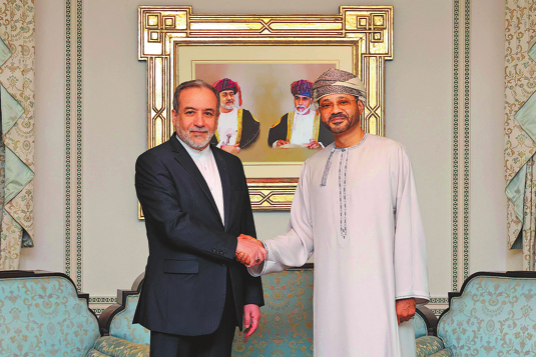
Diplomatic channels between the United States and Iran reopened on Friday in Muscat, Oman, marking the first bilateral discussions on Tehran’s nuclear program since June. The talks, initially planned as a multilateral meeting in Istanbul, were reconfigured at Iran’s insistence into a direct dialogue within the neutral territory of the Gulf sultanate.
The negotiations commenced under a cloud of mutual distrust and sharply divergent agendas. Iranian Foreign Minister Seyed Abbas Araghchi emphasized prerequisites for successful diplomacy through a social media statement, declaring that ‘equal standing, mutual respect and mutual interest are not rhetoric—they are a must and the pillars of a durable agreement.’
Meanwhile, the United States maintained its pressure campaign alongside diplomatic efforts. President Donald Trump issued vague warnings about potential consequences should negotiations fail, while the State Department reiterated its advisory for American citizens to depart Iran immediately. The military dimension remained prominently visible with the USS Abraham Lincoln carrier strike group positioned in regional waters.
Regional security concerns dominated the backdrop of discussions. Gulf Arab nations expressed apprehension that any military confrontation could escalate into a broader regional conflict. These fears gained credibility following recent incidents including the US downing of an Iranian drone and Tehran’s attempted interception of a US-flagged vessel in the strategically vital Strait of Hormuz.
According to multiple reports, a proposal mediated by Egyptian, Qatari, and Turkish diplomats suggested Iran halt uranium enrichment for three years, export its highly enriched uranium stockpiles, and commit to non-initiation of ballistic missile attacks. However, Tehran maintained that discussions would exclusively address its nuclear activities, which it insists remain peaceful despite longstanding accusations from Washington and Tel Aviv.
Analytical perspectives ranged from skeptical to pessimistic regarding the talks’ potential outcomes. Former Iranian diplomat Nosratollah Tajik cited ‘structural issues, the gap between goals and expectations’ as fundamental obstacles. Edmund Fitton-Brown of the Foundation for Defense of Democracies think tank suggested military conflict appeared more likely than diplomatic breakthrough given the significant concessions required from Iran.