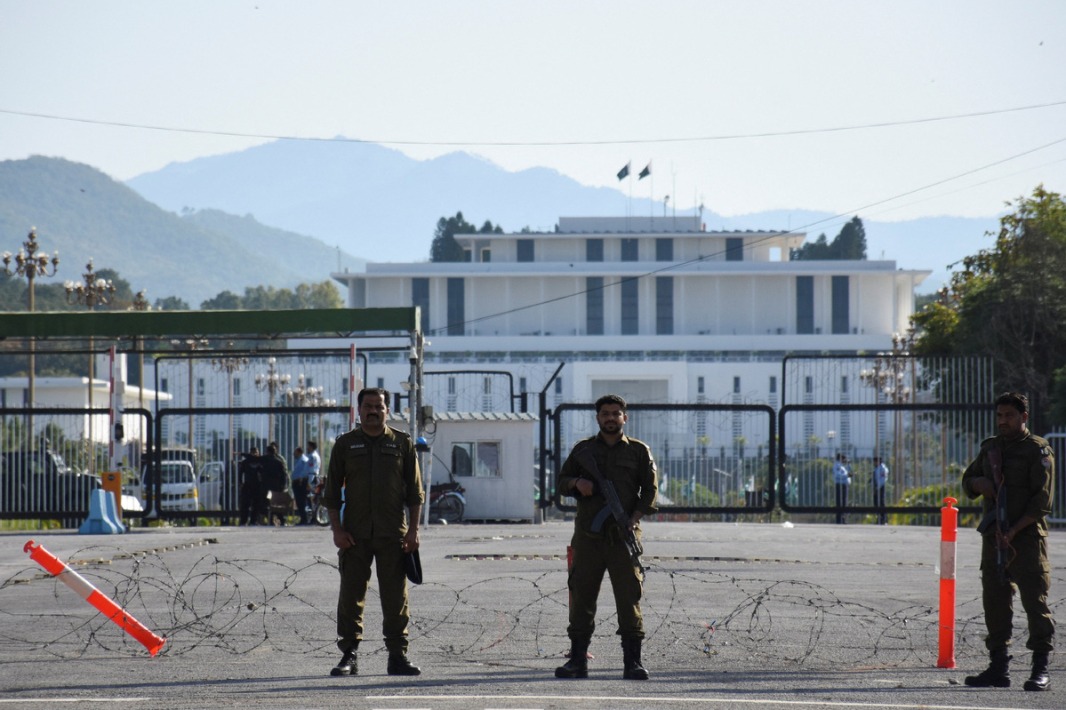
As Pakistan finalizes security preparations for a high-stakes diplomatic gathering in Islamabad, negotiators from the United States and Iran are gearing up for what may prove one of the most consequential international negotiations of the year, set to open Saturday April 11, 2026. The talks aim to shore up a fragile two-week-old ceasefire that has already been pushed to the breaking point, undermined by ongoing Israeli military operations in Lebanon and intractable disagreements over core truce terms between Washington and Tehran.
The negotiations, which are scheduled to run for up to 15 days, will tackle a series of explosive, long-simmering issues beyond the immediate ceasefire, including constraints on Iran’s nuclear enrichment program and unimpeded commercial navigation through the strategically critical Strait of Hormuz — the chokepoint through which roughly 20% of the world’s daily oil shipments pass. Even as Islamabad has ramped up security across the capital to safeguard the delegations, Iran has explicitly tied its continued participation in the talks to an immediate end to Israeli attacks on Lebanese territory.
Leading the American delegation is US Vice President JD Vance, while Iran has kept details of its negotiating team closely held. Top Iranian officials have already gone as far as to argue that ongoing Israeli strikes in Lebanon render the entire diplomatic process in Pakistan meaningless. “The holding of talks to end the war is dependent on the US adhering to its ceasefire commitments on all fronts, especially in Lebanon,” Esmaeil Baqaei, Iran’s Foreign Ministry spokesman, confirmed this week.
The fragile truce faced a fresh wave of uncertainty Thursday, when US President Donald Trump publicly questioned its effectiveness in a social media post, accusing Iran of failing to uphold its commitments to allow free oil passage through the Strait of Hormuz. “Iran is doing a very poor job, dishonorable some would say, of allowing oil to pass through the Strait of Hormuz. That is not the agreement we have!” Trump wrote.
Early Friday, ship-tracking data highlighted the growing volatility around the strait, which Iran effectively controls. A Botswana-flagged liquefied natural gas tanker that had begun moving toward the exit of the Persian Gulf along a route approved by Iran’s Islamic Revolutionary Guard Corps unexpectedly reversed course mid-voyage, stoking market jitters over potential further disruptions to global energy supplies.
On Thursday, Iran’s Supreme Leader Mojtaba Khamenei announced that Tehran would shift management of the strait into what he called a “new phase,” framing the move as a reflection of the Iranian people’s “decisive victory” in the ongoing conflict. The announcement came 40 days after the death of former supreme leader Ali Khamenei, who was killed in US-Israeli airstrikes at the outbreak of hostilities.
The de facto partial closure of the strait has already sent global energy prices skyrocketing, rippling through global supply chains to raise costs for gasoline, food, and essential consumer goods far beyond the Middle East. As of Friday, the spot price of Brent crude, the global benchmark for oil, traded near $96 per barrel — a 35% jump since the start of the conflict.
International economic officials have already sounded the alarm over the conflict’s far-reaching impact. Kristalina Georgieva, Managing Director of the International Monetary Fund, warned Thursday that the Iran war has darkened the outlook for the global economy, regardless of whether the current fragile ceasefire survives. “Had it not been for this shock, we would have been upgrading global growth,” Georgieva told reporters ahead of next week’s joint IMF-World Bank spring meetings. “But now, even our most hopeful scenario involves a growth downgrade.”
Tensions continued to climb Friday, after Israel carried out fresh airstrikes targeting 10 rocket launchers in Lebanese territory. The strikes came just two days after Israel launched its heaviest bombardment of Lebanon since February 28, an attack that killed more than 300 people and delivered a major blow to ceasefire hopes. Iran’s parliament speaker Mohammad Bagher Qalibaf, who is widely tipped as a potential lead negotiator for Tehran in talks with Vance, warned Thursday that continued Israeli attacks on the Iran-aligned militant group Hezbollah in Lebanon would carry “explicit costs and strong responses.”
In a separate development Thursday, Kuwait announced it had faced a drone attack overnight and blamed Tehran for the strike, though Iran’s Revolutionary Guard quickly issued a denial of any involvement in the incident.
Despite the headwinds facing the Islamabad talks, there is a parallel diplomatic track in the works: a US State Department official confirmed Friday that Israel-Lebanon negotiations are scheduled to kick off next week in Washington, a development that could offer a small boost to regional ceasefire efforts. Still, many analysts remain deeply skeptical that any breakthrough is imminent.
Abid Abou Shhadeh, a Jaffa-based Israeli political analyst and activist, described the US-Iran ceasefire talks as “extremely problematic” from Israel’s perspective. According to a report from Al Jazeera, Shhadeh noted that Israeli leadership has no interest in any diplomatic settlement with Lebanon, a position aligned with public opinion: recent polls published in Israeli media show 79% of the Israeli public supports continuing military operations against Hezbollah in Lebanon.