Financial markets across Asia and the United States exhibited divergent reactions Monday following a landmark Supreme Court decision that struck down the majority of former President Donald Trump’s sweeping tariff policies. The ruling, which dismantled a key component of Trump’s trade architecture, triggered a complex recalibration of market positions globally.
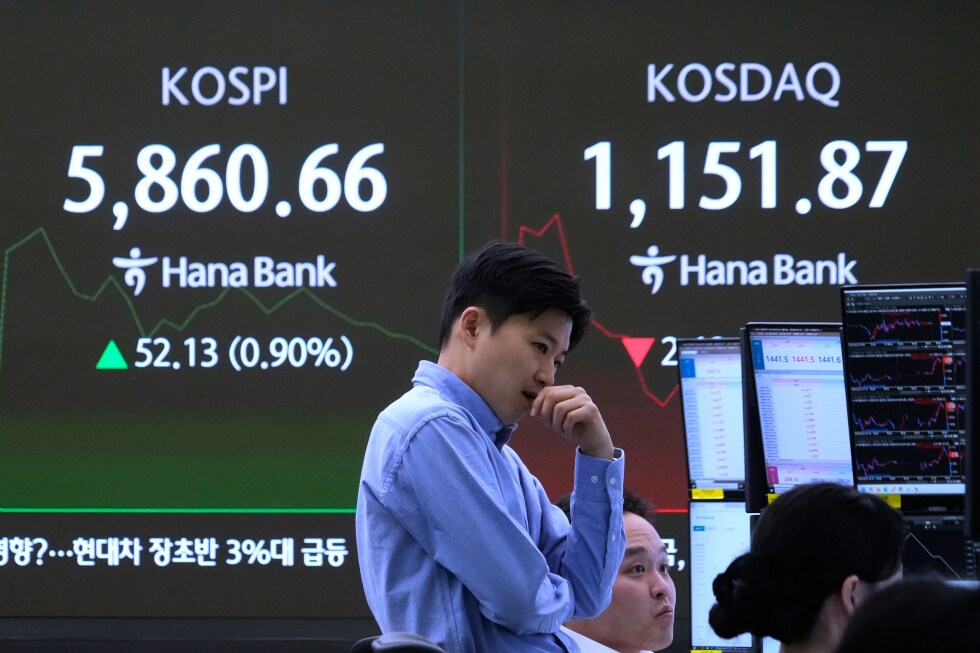
Asian markets largely celebrated the judicial intervention, with Hong Kong’s Hang Seng Index leading regional gains by surging 2.2% to 27,003.47. South Korea’s Kospi advanced 1.1% to 5,873.07 while Taiwan’s Taiex jumped 1.4%. Conversely, China’s Shanghai Composite bucked the regional trend by declining 1.3% to 4,082.07, and Australia’s S&P/ASX 200 shed 0.4% to 9,041.00. Tokyo markets remained closed for a national holiday.
The contrasting performances illustrated what Rabobank strategist Benjamin Picton described as “the winners-and-losers effect of shifts in tariff policy,” noting that the decision “delivered a boost to countries who previously had a comparatively bad deal.”
U.S. futures signaled caution ahead of the Wall Street opening, with S&P 500 futures dropping 0.7%, Dow Jones Industrial Average futures falling 0.6%, and Nasdaq composite futures declining 0.8%. This contrasted with Friday’s relatively calm reaction on Wall Street itself, where the S&P 500 had actually risen 0.7% to 6,909.51 following the ruling.
Despite the court’s decision, trade policy uncertainty persists as Trump announced alternative measures to maintain import taxes, including a potential 15% global tariff through executive action. “We have tariffs, we just have them in a different way,” Trump told reporters, indicating he would pursue tariffs through other legal avenues requiring Commerce Department investigations.
Individual stocks reflected the ongoing market adjustments, with Akamai Technologies plummeting 14.1% despite strong earnings, as its profit forecast disappointed investors. The company plans increased spending on equipment investments, potentially reflecting broader economic impacts from AI-driven memory shortages.
Meanwhile, economic indicators continued to present a complex picture with reports showing slowing U.S. economic growth alongside accelerating inflation. Traders maintained expectations of at least two Federal Reserve rate cuts this year, though Fed officials emphasized the need for further inflation reduction before supporting additional rate reductions.
In commodity markets, U.S. benchmark crude declined 53 cents to $65.95 per barrel while Brent crude dropped 51 cents to $70.79. Precious metals rallied sharply with gold rising 1.9% and silver surging 5.5%, as currency markets saw the U.S. dollar soften against the yen and euro.