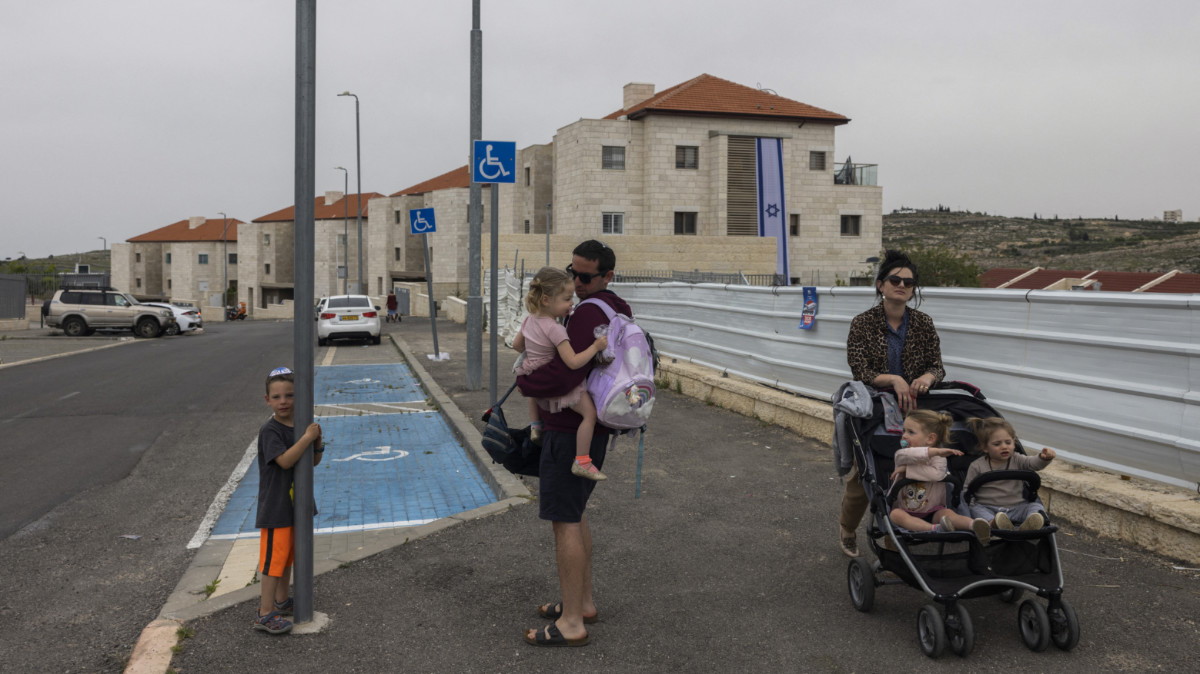
In a significant policy development, the US State Department has announced it will begin providing on-site consular services to Israeli settlers residing in West Bank settlements for the first time. The US Embassy in Jerusalem confirmed that consular officers would offer routine passport services in Efrat, an Israeli settlement south of Bethlehem in the occupied West Bank, on February 27.
The embassy further revealed plans to expand these services to additional Israeli cities, the West Bank city of Ramallah, and the settlement of Beitar Illit near Bethlehem. This move represents a notable departure from previous US diplomatic practice, marking the first public offering of consular services directly to settlers in territory considered illegal under international law.
The announcement follows controversial remarks by US Ambassador to Israel Mike Huckabee during an interview with Tucker Carlson. Ambassador Huckabee stated he would be “fine” with Israeli control extending across much of the Middle East, including Syria, Jordan, Saudi Arabia, Iraq, and Egypt. More significantly, he asserted that Area C of the occupied West Bank constitutes part of Israel, directly contradicting longstanding US policy that recognizes no Israeli sovereignty over these territories.
This diplomatic shift coincides with increased Israeli efforts to consolidate control over the West Bank. The Israeli government recently approved plans to extend its civilian authority into Areas A and B, directly challenging Palestinian Authority control established under the Oslo Accords. These agreements originally designated Area A under full PA control, Area B under shared control, and Area C under Israeli military occupation pending final status negotiations.
Approximately 400,000 Israeli settlers currently reside in Area C, which comprises about 60% of the West Bank, enjoying services and political representation denied to Palestinians. Analysts view the US consular services expansion as potentially signaling acceptance of de facto Israeli annexation, despite official US statements supporting a two-state solution and refusing recognition of Palestinian statehood absent a final agreement.