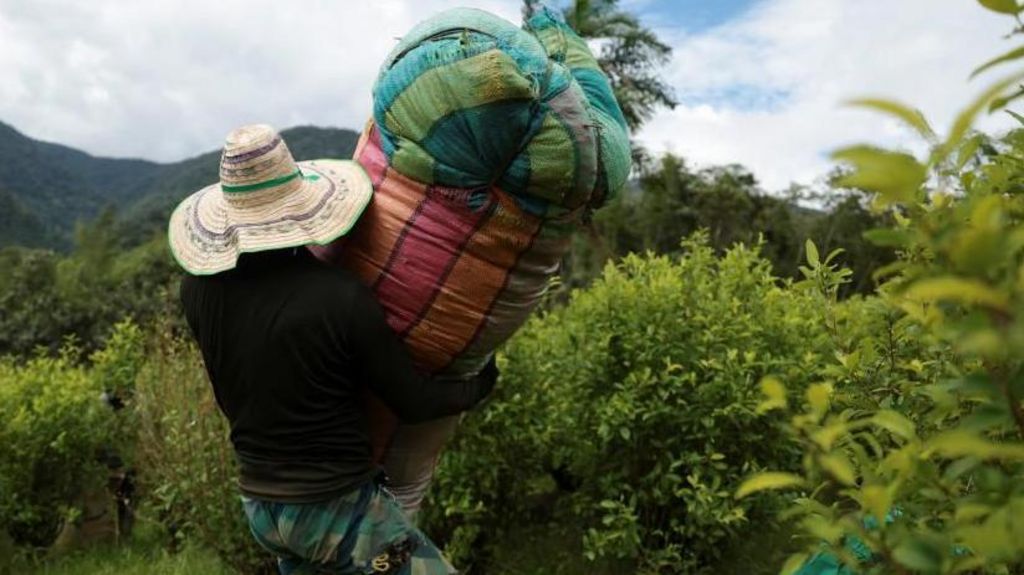
The United States has officially designated Colombia as a country that has ‘demonstrably failed’ to meet its obligations in combating drug trafficking. This decision, announced on Monday, marks the first time since 1997 that Colombia has been added to the list of nations deemed non-compliant with U.S.-led counternarcotic efforts. Despite this, the U.S. has opted not to cut off aid to Colombia, a move that could have further strained bilateral relations. The Trump administration criticized Colombia’s left-wing President Gustavo Petro, attributing a surge in cocaine production to his leadership. Petro, however, refuted these claims, pointing to his predecessor Iván Duque’s tenure as the period when coca cultivation expanded significantly. In a retaliatory gesture, Colombia announced it would cease purchasing weapons from the U.S., with Interior Minister Armando Benedetti declaring the decision effective immediately. The U.S. also named Afghanistan, Bolivia, Myanmar, and Venezuela as countries failing to meet drug control targets. The decertification of Colombia comes amid heightened U.S. efforts to combat ‘narco-terrorism,’ highlighted by a recent military strike on a suspected Venezuelan drug vessel in the South Caribbean, which resulted in three fatalities. While the U.S. acknowledged the ‘skill and courage’ of Colombia’s security forces, it placed the blame squarely on the political leadership for the country’s drug control shortcomings. The U.S. left open the possibility of recertifying Colombia if it takes more aggressive action against coca cultivation and cocaine production. Despite the diplomatic friction, Colombia remains a key recipient of U.S. aid, a fact that may temper the immediate fallout from this decision.