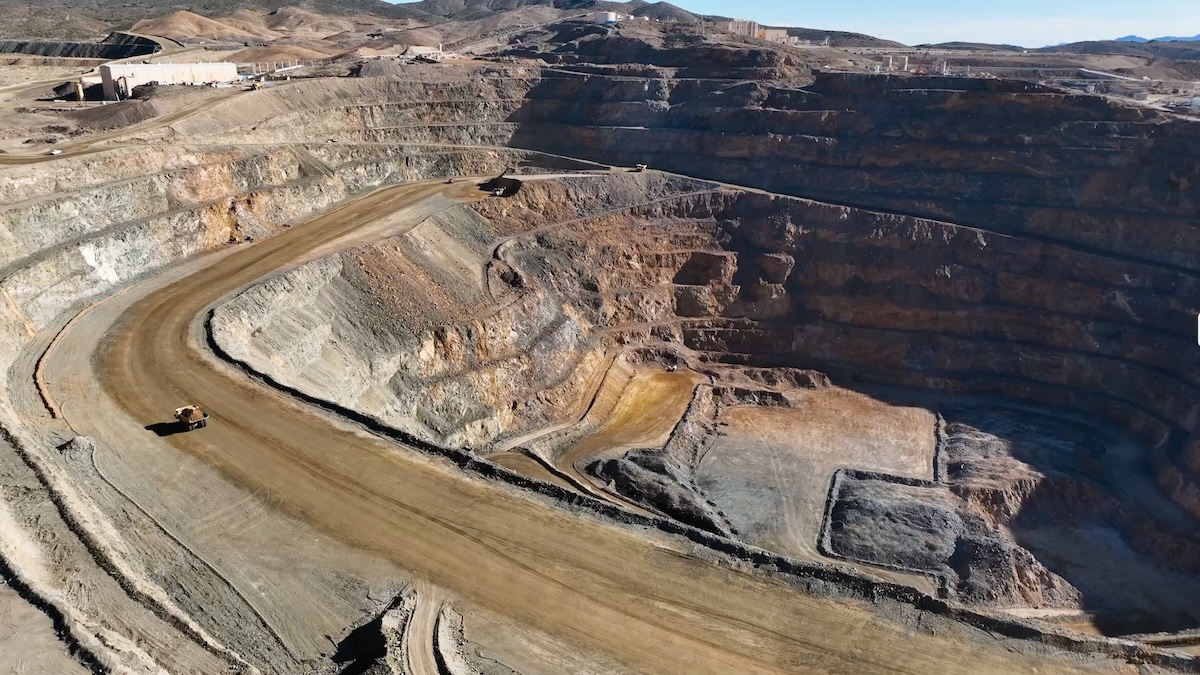
In 1992, during a visit to Baotou’s rare earth mines in Inner Mongolia, Deng Xiaoping made a prophetic declaration: ‘The Middle East has oil. China has rare earths.’ This statement, initially overlooked by the international community, would ultimately foreshadow China’s ascent as the undisputed global leader in critical mineral resources that underpin modern technology.
Rare earth elements—17 metallic components from the periodic table—form the fundamental building blocks of contemporary technological advancement. These minerals enable functionality in smartphones, electric vehicles, wind turbines, military drones, and sophisticated aerospace systems including the F-35 fighter jet. Despite their name, these elements are relatively abundant in nature but occur in dispersed formations that require complex, environmentally challenging extraction processes.
While the United States led global rare earth production throughout the 1980s, Western nations gradually offshored mining operations to China, attracted by lower environmental standards and reduced labor costs. Regulatory changes by the Nuclear Regulatory Commission and International Atomic Energy Agency further accelerated this transition by classifying rare earths as ‘source material,’ dramatically increasing compliance costs for domestic operations.
China capitalized on this strategic opportunity, investing heavily in developing a comprehensive rare earth ecosystem despite environmental consequences. By 2024, China controlled 44 million metric tons of reserves (the world’s largest), 70% of global mining production, 85% of refining capacity, and 98% of processing capabilities. The nation further solidified its dominance through intellectual property control, holding 80% of rare earth patents while establishing 39 university programs specializing in rare earth studies and seven institutions focused exclusively on processing technologies.
This strategic positioning granted China significant geopolitical leverage during the 2025 trade war. When the White House imposed 145% tariffs on Chinese goods, Beijing responded with export controls on seven critical rare earth types and magnets. Although representing a small percentage of overall exports, these materials proved essential to American defense manufacturing and technological innovation.
A RAND Corporation study revealed that a 90-day supply disruption could halt production at 78% of U.S. defense contractors. This vulnerability extends beyond military applications to next-generation computing, robotics, medical devices, and quantum hardware—effectively giving China a ‘kill switch’ over American technological advancement.
The United States now faces a monumental challenge in rebuilding its rare earth infrastructure. Estimates suggest requiring a decade and $10-15 billion to establish a self-sufficient supply chain. Even with successful mineral discovery in locations like Greenland’s Kanana region (containing rich deposits of dysprosium and terbium), developing complete extraction, refining, and application ecosystems remains extraordinarily complex.
China’s four-decade investment has enabled unprecedented purity standards advancement from 98% to 99.9999%—a critical factor in cutting-edge technology applications. As the global economy transitions toward AI and automation, rare earth elements have supplanted oil as the fundamental resource shaping geopolitical power structures, with China positioned as the dominant force controlling innovation pace through supply chain management.