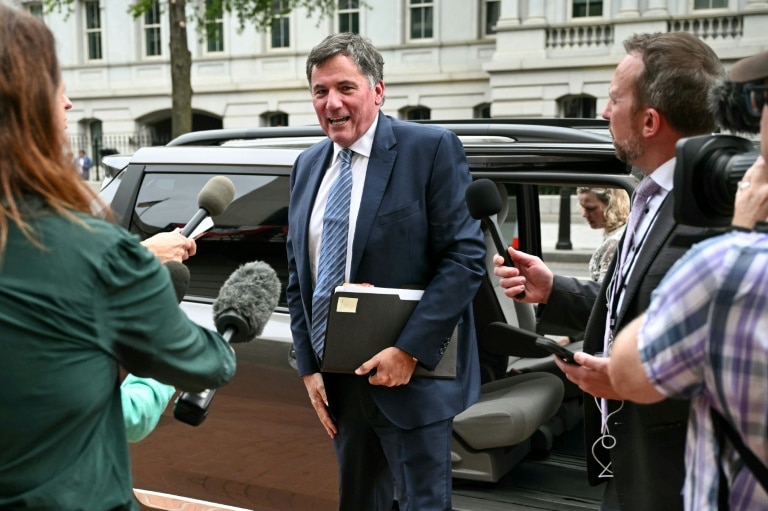
Fresh off a three-hour negotiating session with a top US trade official in Washington D.C., Canada’s lead representative for bilateral trade Dominic LeBlanc announced Thursday that the two neighboring nations are “very close” to wrapping up a final trade agreement amid efforts to avoid steep new tariffs that former president Donald Trump threatened to impose.
LeBlanc, Canada’s minister overseeing US-Canada trade relations, met behind closed doors with US Trade Representative Jamieson Greer as both sides work frantically to lock in a deal that could de-escalate months of bitter trade friction sparked by Trump’s earlier punishing levies on Canadian goods. Speaking to reporters immediately after exiting Greer’s office, LeBlanc reaffirmed that steady progress is still being made, noting the Canadian negotiating team would remain in Washington to continue working until a final agreement is reached.
Just one day prior, both sides already signaled they had edged close to a finished pact. This round of progress comes after Trump announced a last-minute 72-hour delay to a planned 50 percent tariff on Canadian imports that was scheduled to go into effect Wednesday, citing signs that a deal was imminent.
While full details of the draft agreement have not been released to the public, Canadian Prime Minister Mark Carney held a briefing this week with the leaders of Canada’s provinces and territories to update them on the status of negotiations and outline specific demands Washington has presented that require provincial action.
Nova Scotia Premier Tim Houston told reporters that one core US demand is for Canadian provinces to restock American wine and liquor on retail shelves. Several provinces pulled US alcohol products after Trump imposed tariffs on Canadian automobiles, steel, aluminum and lumber as a retaliatory measure. “The prime minister has asked us, as premiers, as provinces, to return the US alcohol to the shelves,” Houston said, adding that the removal of US alcohol has been a persistent point of tension that has greatly troubled US negotiators.
Houston also acknowledged the deep public frustration across Canada over Trump’s trade policies, including his past comments about annexing parts of Canada, which have left lasting resentment among many Canadians. Even if provincial governments reverse the alcohol ban, he noted there is no guarantee consumers will choose to purchase American products. “Beyond the provisions in any trade deal, there’s ‘the emotional impact of what Canadians have experienced,’” Houston said, describing the prolonged trade dispute as “emotionally draining.”
Quebec Premier Christine Frechette, whose province has been disproportionately harmed by Trump’s tariffs, said she will review the full terms of any final deal before deciding whether to comply with the demand to restock US alcohol. In contrast, Manitoba Premier Wab Kinew, a left-wing leader, said he is prepared to restore US alcohol to retail shelves even as he maintains Canada should stand its ground in negotiations. Kinew argued that the US is in a weaker position globally than it was one year ago, predicting Trump will lose heavily in the upcoming US midterm elections and saying “I think we’ve got the upper hand.”
A second key US demand outlined in the briefing is for provinces to remove explicit language banning US companies from public procurement contracts. While provincial governments will still be allowed to prioritize Canadian suppliers, they can no longer formally exclude US companies from bidding on public projects.
Canadian media reports indicate the US has also tabled additional demands to the federal government in Ottawa, including new commitments on defense procurement and supplies of critical minerals used in clean energy and technology manufacturing.
Provincial leaders declined to share details of what US tariff reductions are on the table, but confirmed that some Canadian goods will still face import duties when entering the US even after a deal is finalized. Saskatchewan’s conservative Premier Scott Moe, who received the briefing from Carney, noted that returning to the trade status quo of two years ago is no longer possible, but described the draft deal as “best-in-class.” Houston echoed that assessment, calling the draft agreement “the best possible outcome we can hope for in dealing with this administration.”