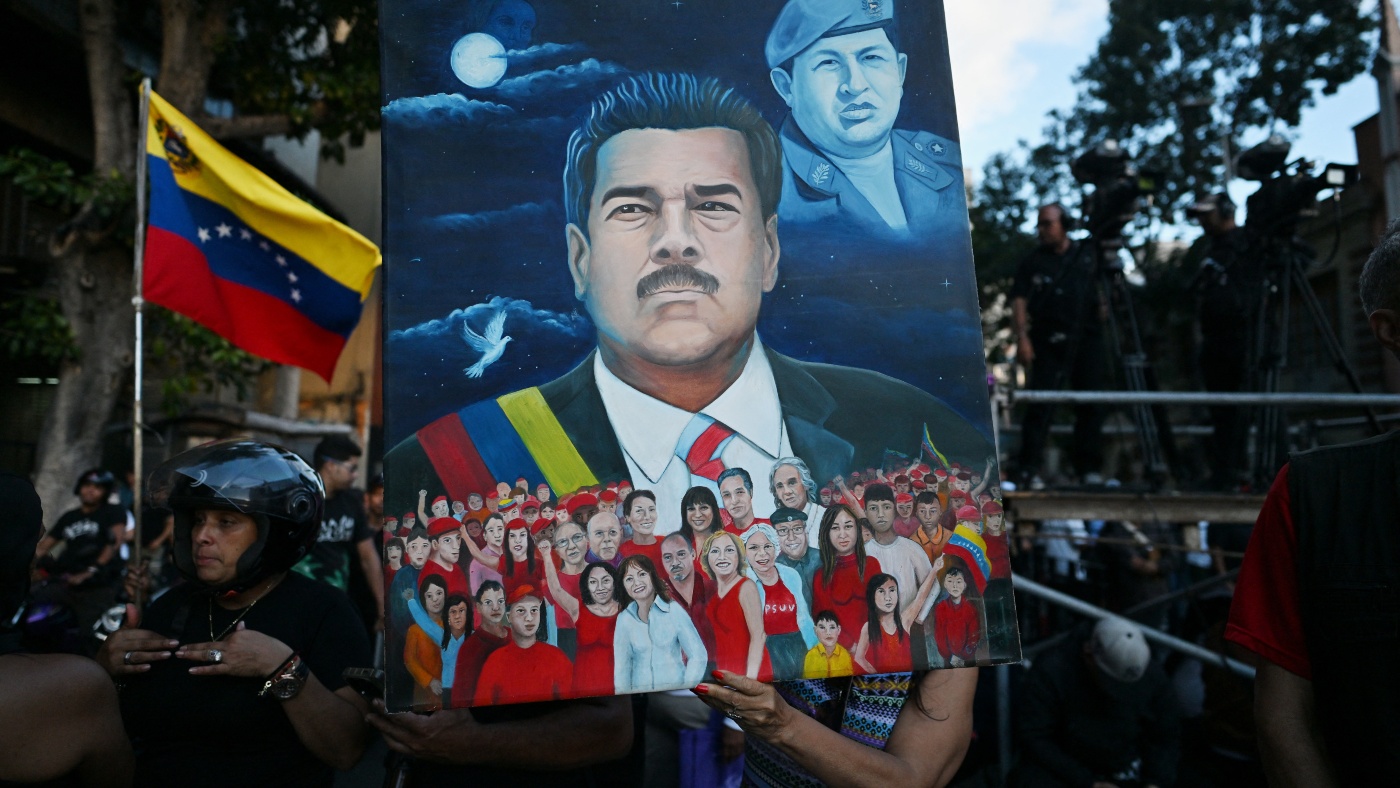
A dramatic US military operation has resulted in the capture of Venezuelan President Nicolas Maduro and a mounting death toll, plunging the South American nation into a severe political crisis and drawing sharp international condemnation. According to a senior Venezuelan official cited by The New York Times, the casualty count has reached 80, encompassing both civilians and security personnel, with warnings that the number may yet increase.
The assault commenced early Saturday when US special forces extracted Maduro from the presidential palace in Caracas. The operation was supported by American fighter jets, which conducted airstrikes on key military installations across Venezuela. In the power vacuum, the nation’s Supreme Court swiftly decreed that former Vice-President Delcy Rodriguez would assume interim control of the government.
From her new position, Rodriguez delivered a televised address condemning the US intervention, characterizing it as an act of foreign aggression with ‘Zionist undertones.’ She issued a stark warning, stating, ‘The extremists who have promoted armed aggression against our country – history and justice will make them pay.’
The US action has fractured the international community. While several European nations expressed relief at Maduro’s removal, they simultaneously questioned the operation’s legality. Spanish Prime Minister Pedro Sanchez captured this dichotomy, stating, ‘Spain did not recognise the Maduro regime. But neither will it recognise an intervention that violates international law.’ Conversely, the assault was met with near-universal condemnation from neighboring South American countries, including Brazil, Colombia, and Chile.
The geopolitical stakes are immensely high, centered on Venezuela’s vast oil reserves—the largest in the world, estimated at 303 billion barrels. Following the capture, US President Donald Trump explicitly linked the intervention to economic gain, telling reporters, ‘We’re going to be taking out a tremendous amount of wealth out of the ground,’ and promising American companies greater access.
US Secretary of State Marco Rubio outlined a strategy of an oil ‘quarantine,’ enforced by US naval power, to cripple Venezuela’s primary industry and force compliance with American demands. He framed the action as necessary to counter adversarial influence, declaring Venezuela an ‘operating hub for Iran, for Russia, for Hezbollah, for China’ in the Western Hemisphere. The US intends to block these nations, particularly China—the primary recipient of Venezuelan oil exports—and Russia, a key financial and technical partner, from extracting regional resources.
The operation has triggered domestic unrest within Venezuela, with crowds of pro-government supporters marching through Caracas waving national flags and calling for unity against foreign aggression. Meanwhile, the move has been criticized as ‘illegal’ by US Democratic lawmakers, highlighting deep domestic political divisions over the administration’s aggressive foreign policy.