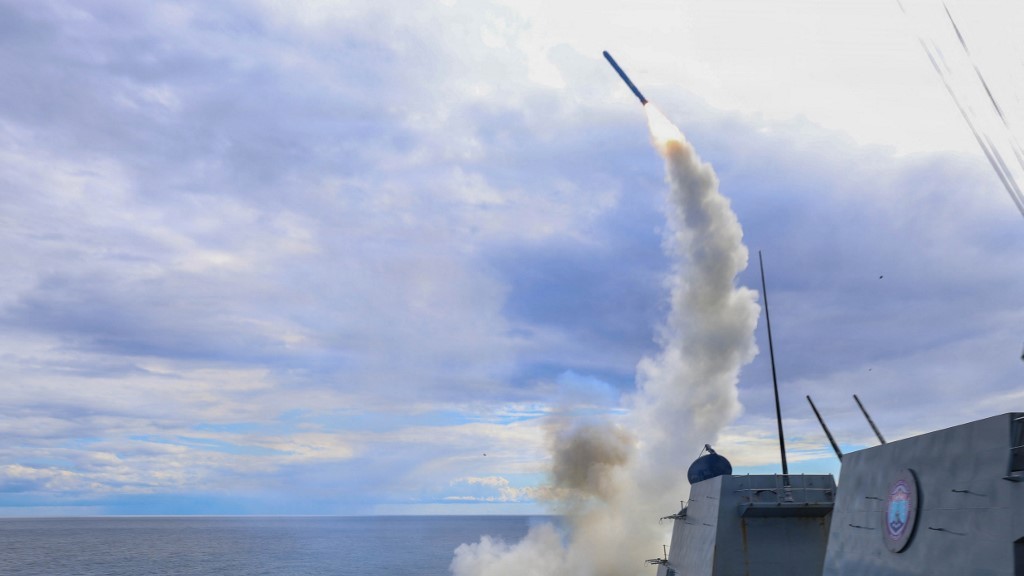
Pentagon officials are expressing grave concerns as the United States and Israel rapidly deplete their strategic missile arsenals in the ongoing military engagement with Iran. According to confidential sources cited by the Washington Post, American forces have launched over 850 Tomahawk cruise missiles within just four weeks of combat operations.
The Tomahawk missile system, capable of striking targets beyond 1,000 miles without risking pilot casualties, represents a cornerstone of American long-range precision warfare. However, current production capabilities fall severely short of wartime consumption rates, with annual manufacturing output numbering only in the hundreds. One defense official characterized remaining Middle East inventories as “alarmingly low.”
British security analysis group RUSI has quantified the unprecedented scale of munitions expenditure. Their recently published assessment reveals that US-Israeli forces deployed 11,294 munitions during the conflict’s initial sixteen days alone, incurring an estimated $26 billion in operational costs. The think tank specifically warned that long-range interceptors and precision strike weapons are “nearing exhaustion,” projecting a minimum five-year timeline to replenish the expended Tomahawk missiles.
The logistical strain has prompted Secretary of War Pete Hegseth to personally pressure defense contractors to accelerate weapons delivery schedules. This munitions crisis emerges despite extensive aerial campaigns and targeted eliminations of Iranian leadership figures, including Supreme Leader Ali Khamenei—measures that have thus far failed to achieve strategic objectives against the Islamic Republic.
Humanitarian organization Iranian Red Crescent reports devastating casualties, with approximately 1,900 fatalities and 20,000 injuries recorded since hostilities commenced in February. Recent diplomatic developments indicate potential de-escalation efforts, with President Donald Trump announcing a temporary suspension of plans to target Iranian energy infrastructure and referencing backchannel negotiations mediated through Pakistan. Iranian authorities, however, continue to publicly deny any diplomatic engagement and have rejected Washington’s proposed 15-point peace framework.