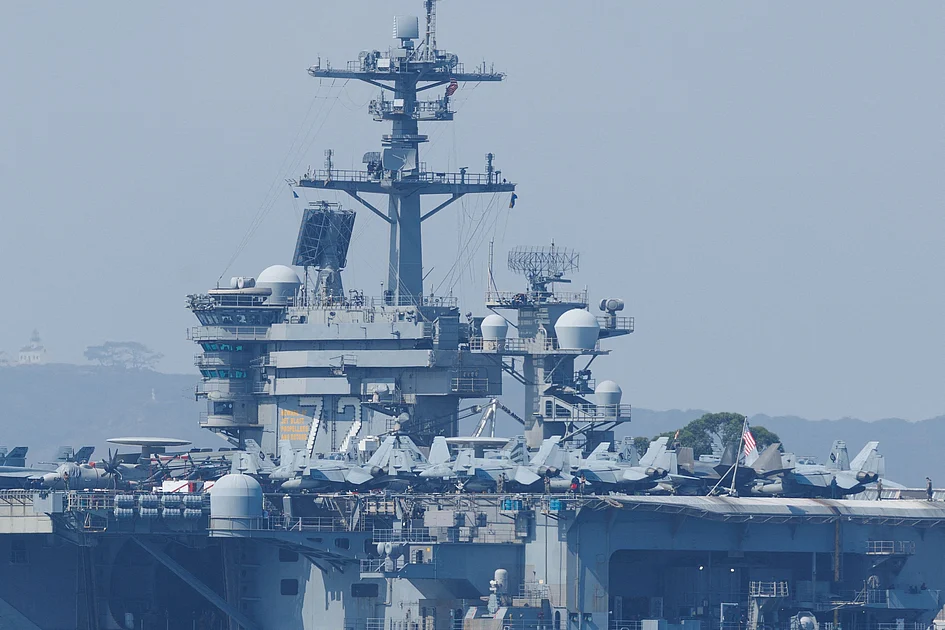
The United States has significantly enhanced its military footprint in the Middle East with the arrival of the USS Abraham Lincoln carrier strike group. This deployment, confirmed by US Central Command on Monday, occurs against a complex backdrop of regional instability and ongoing tensions with Iran.
While the official statement from CENTCOM characterizes the mission as one to ‘promote regional security and stability,’ the deployment was initially ordered during a period of intense internal crisis within Iran. The nation has been gripped by widespread protests that began in late December over economic discontent, evolving into a broader movement challenging the Islamic republic’s clerical leadership. International rights organizations have documented a severe governmental crackdown, including allegations of lethal force against demonstrators and widespread internet blackouts.
President Donald Trump’s administration has sent mixed signals regarding its stance. The President had previously issued stark warnings to Tehran, threatening military intervention if protesters were killed and publicly encouraging Iranians to challenge state institutions. However, he has since refrained from authorizing strikes, claiming diplomatic pressure from Washington compelled Iran to halt hundreds of planned executions. Despite this pullback, the President maintains that ‘all options remain on the table,’ a statement underscoring the persistent state of uncertainty.
Tehran has responded with defiance. Iranian foreign ministry spokesman Esmaeil Baghaei issued a warning against external intervention, asserting national confidence in Iran’s defensive capabilities. He explicitly dismissed the strategic significance of the carrier’s arrival, stating it would not influence Iran’s resolve to protect its sovereignty.
The situation presents a precarious stalemate. The decades-old clerical regime continues to hold power, facing one of the most significant popular challenges since the 1979 revolution. Meanwhile, the visible bolstering of American naval power in the region signals continued Washington involvement, keeping the potential for escalation alive.