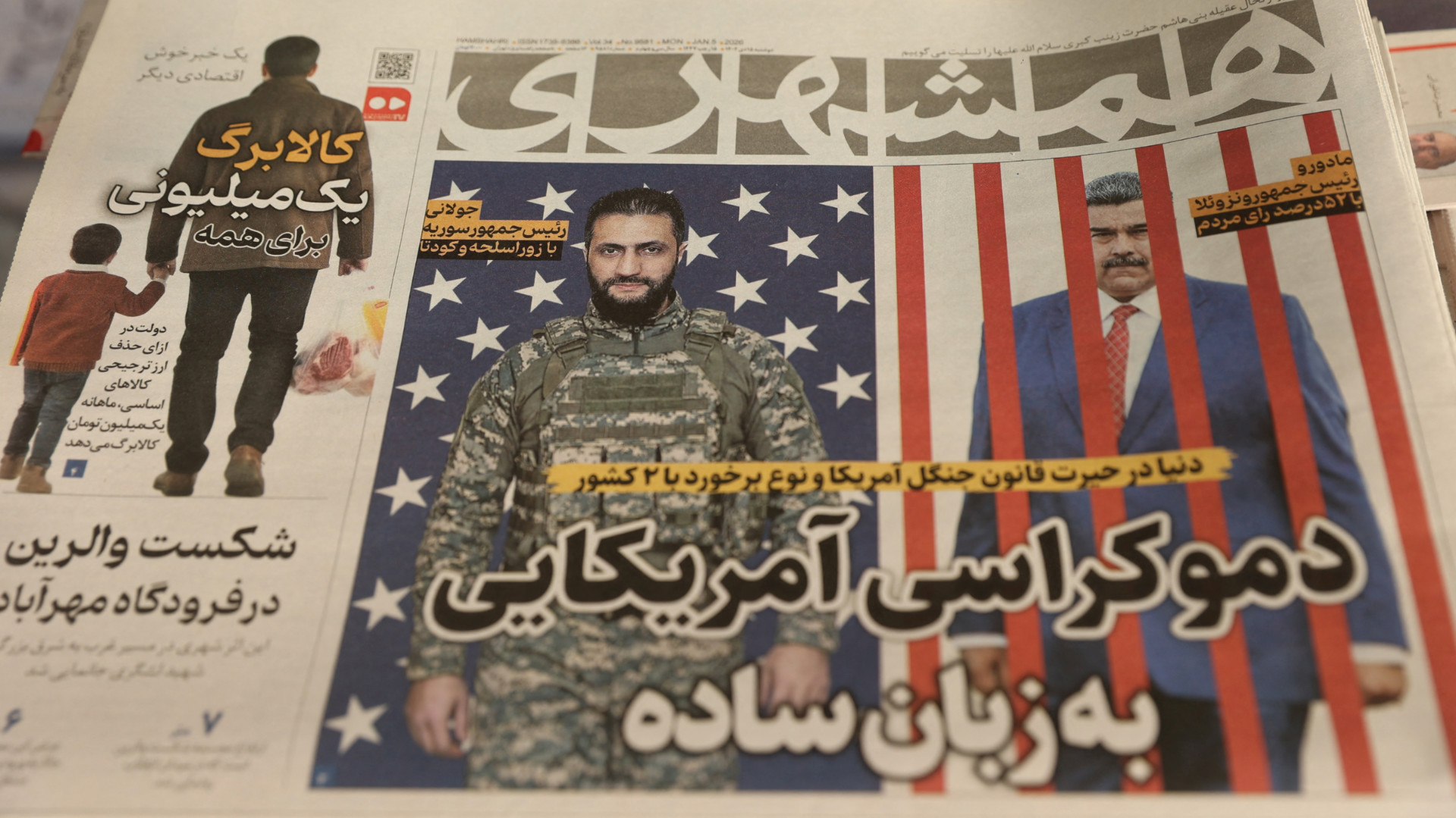
The political crisis surrounding Venezuela has ignited intense discourse within Iran, generating widespread analysis across state media and Persian-language social platforms. Beyond Tehran’s formal condemnation of the U.S. involvement with President Nicolás Maduro, the situation has prompted serious examination of Iran’s own geopolitical vulnerabilities and international standing.
This reaction underscores the deep-rooted political and economic alliance between Tehran and Caracas, particularly their energy collaboration developed despite comprehensive U.S. sanctions. While government-aligned media outlets vehemently criticized Washington’s actions, more reformist-leaning publications focused on the implications for Iran’s domestic and foreign policy challenges.
The timing amplified the debate’s significance, coinciding with recent anti-establishment protests in Iran that began on December 28th in Tehran over economic conditions before spreading to other cities. The convergence of events gained additional gravity when U.S. President Donald Trump threatened to support Iranian protesters if security forces employed violence against them.
On Sunday, Iranian newspapers prominently featured the Venezuela situation. Hafte Sobh, a pro-government daily, evoked Gabriel García Márquez’s ‘News of a Kidnapping’ to frame its coverage, asserting that U.S. objectives included controlling energy flows, containing China and Russia, and weakening Iran’s international position.
Hamshahri, aligned with Tehran’s ultra-conservative mayor, published comparative photographs of Maduro and Syrian President Bashar al-Assad to highlight Washington’s treatment of both leaders. Meanwhile, conservative daily Farhikhtegan depicted Trump wearing a pirate’s hat under the headline ‘Chief of Thieves,’ characterizing the events as recalling ‘the darkest moments of military intervention in Latin American history.’
Reformist publications struck a more cautionary tone. Etemad analyst Hassan Beheshtipour emphasized the critical importance of national unity and public support for leadership, warning that ‘ignoring domestic reforms and inefficient management can pave the way for foreign intervention.’ Arash Maleki in Hammihan was more direct, questioning whether Iran should ‘push the reset button based on national interest’ to overcome historical challenges with the United States.
The Iran-Venezuela relationship, dating back decades and peaking during the presidencies of Mahmoud Ahmadinejad and Hugo Chávez, included significant trade, energy cooperation, and joint projects. In 2020, Iran sent five oil tankers carrying 1.5 million tonnes of fuel to Venezuela, with reports suggesting payment was made in gold.
Social media has become a battleground between Iranian authorities and their opponents. Reza Pahlavi, son of Iran’s last shah, expressed solidarity with Venezuela’s opposition while drawing parallels with Iran’s situation. Government supporters countered by highlighting Iran’s military capabilities as a deterrent, arguing ‘Iran will never be Venezuela’ due to its missile power, Revolutionary Guard, and Basij paramilitary forces.
Analyst Ali Asghar Zargar reinforced this perspective, noting Iran’s distinct position in resources, power, and military capability, suggesting any crisis in the Strait of Hormuz could trigger global consequences that would deter similar U.S. action against Iran. Nonetheless, some conservative commentators renewed calls for Iran to acquire nuclear weapons, with Yousef Azizi arguing that nuclear deterrence would prevent such vulnerabilities for mid-level powers in global struggles.