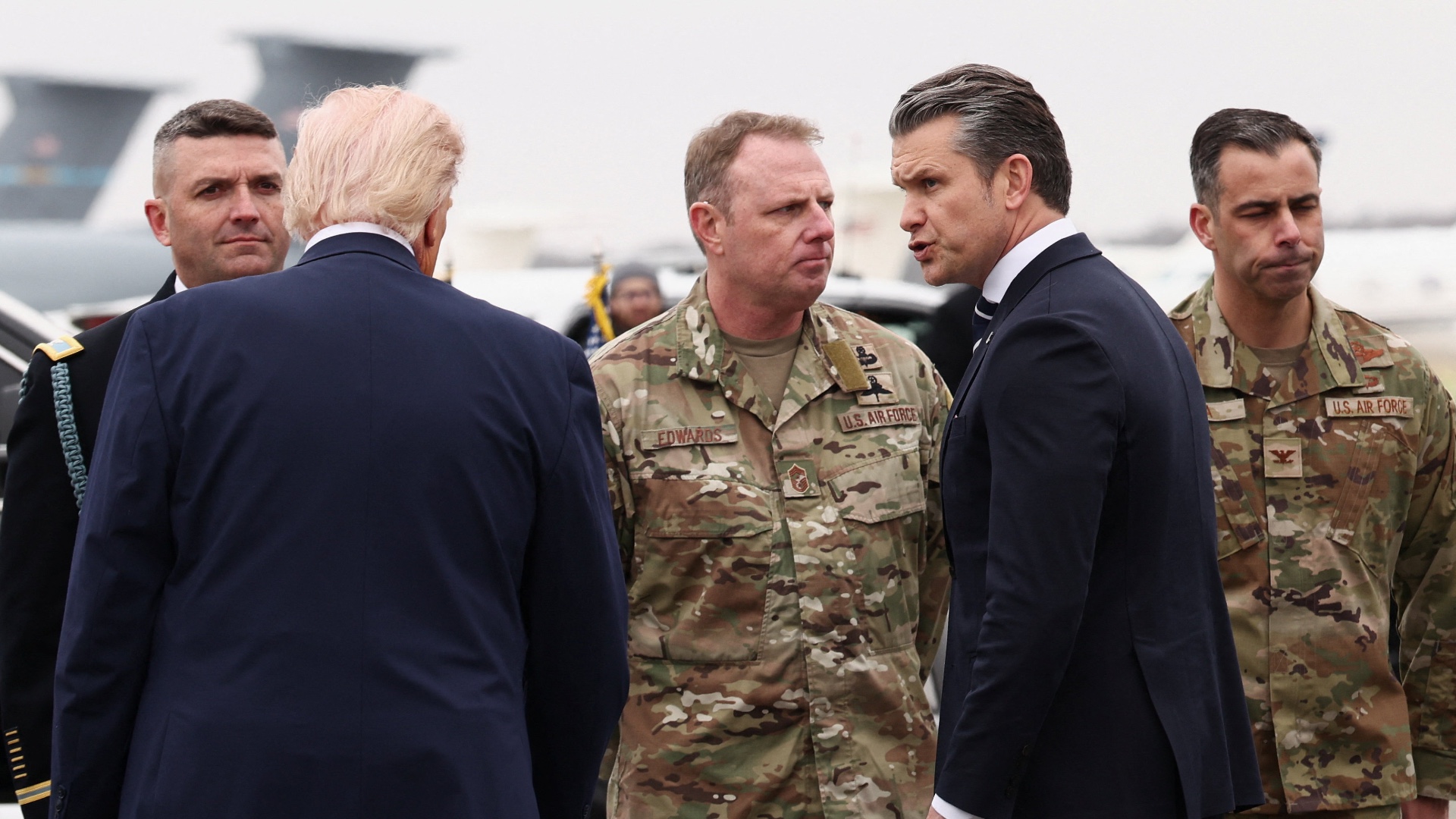
The United States is significantly escalating its military footprint in the Middle East with the deployment of an additional 5,000 marines and sailors, according to a Wall Street Journal report citing unnamed officials. This strategic reinforcement follows a formal request approved by US Secretary of War Pete Hegseth from US Central Command (Centcom).
The deployment includes a complete amphibious ready group and an attached Marine expeditionary unit, comprising three warships and approximately 2,500 US Marines. The unit is equipped with advanced F-35B Lightning II stealth jets and MV-22B Osprey tiltrotor aircraft. The USS Tripoli, previously stationed in Japan, is now en route to the region—a journey typically requiring two weeks.
This military expansion signals Washington’s commitment to prolonging its offensive against Iran, despite previous claims of operational successes including the elimination of Supreme Leader Ayatollah Ali Khamenei and the destruction of 60 Iranian naval vessels. The conflict has resulted in substantial casualties, with over 1,400 Iranian fatalities reported since February 28.
President Donald Trump reaffirmed the administration’s hardline stance on social media, declaring, “We are totally destroying the terrorist regime of Iran, militarily, economically, and otherwise.”
The war has grown increasingly unpopular domestically, with public disapproval mounting well before US casualties reached double digits. Current reports indicate at least 150 American personnel wounded and 13 confirmed killed in action, including six service members who died in a KC-135 refueling aircraft crash in western Iraq on March 12. Centcom confirmed the incident occurred during Operation Epic Fury over friendly airspace, stating the crash was not caused by hostile or friendly fire while the investigation remains ongoing.
At a Pentagon press briefing, Secretary Hegseth acknowledged the grim reality of combat, stating “War is hell, war is chaos.” When pressed for specific casualty figures and locations, officials provided conflicting information, with Chairman of the Joint Chiefs of Staff Dan Caine vaguely referencing casualties “in Kuwait, Jordan, down across the southern flank” without providing concrete numbers. The administration’s unclear messaging on casualties has further complicated public understanding of the conflict’s human cost.