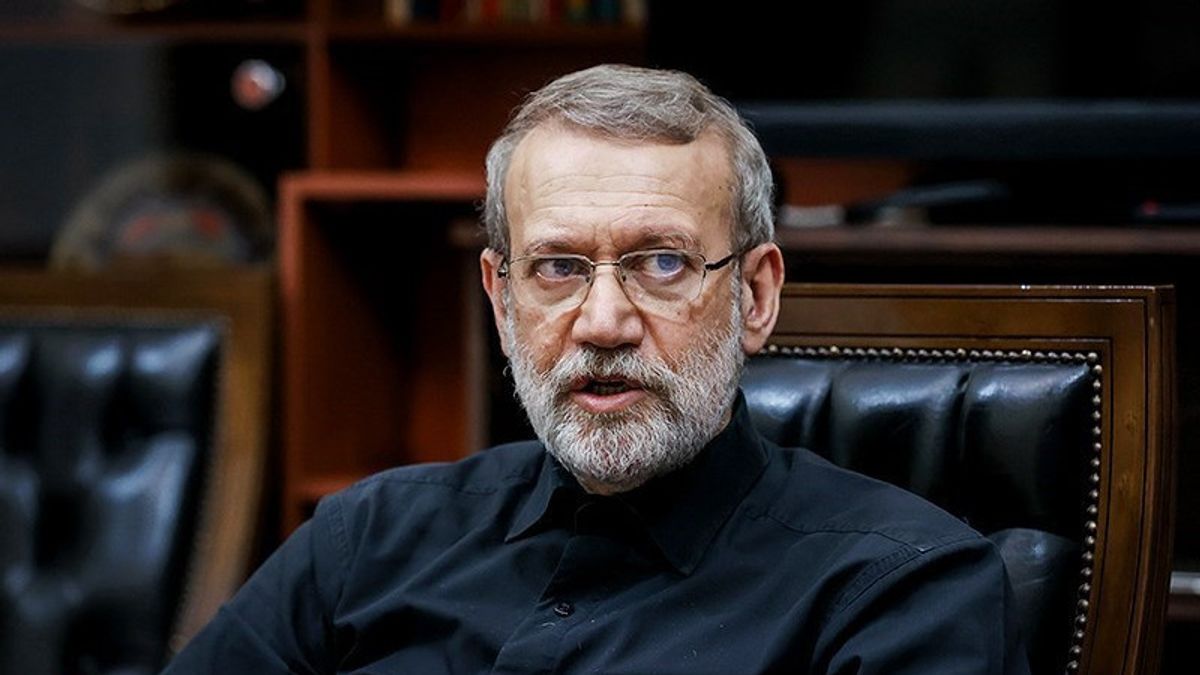
Amid escalating military actions initiated by the United States, Iranian security chief Ali Larijani has declared Tehran’s preparedness for an extended military confrontation while questioning Washington’s readiness for sustained warfare. The statement came following coordinated U.S.-Israeli airstrikes that targeted senior Iranian officials, including Supreme Leader Ayatollah Ali Khamenei, in operations described by observers as ‘carpet bombing’ of civilian areas.
Larijani, Secretary of Iran’s Supreme National Security Council, utilized social media platforms to accuse former President Donald Trump of plunging the region into chaos through ‘delusional fantasies’ and prioritizing Israeli interests over American security. ‘With his delusional actions, he turned his self-made ‘America First’ slogan into ‘Israel First’ and sacrificed American soldiers for Israel’s power-hungry ambitions,’ Larijani stated.
The current escalation follows a reportedly conciliatory pre-strike proposal from Iran that offered complete abandonment of enriched uranium stocks and full cooperation with international nuclear inspectors—terms exceeding those in the original nuclear agreement that Trump abandoned during his presidency. However, with diplomatic channels now severed, Iran has shifted toward maximizing military costs for the U.S. and Israel while deterring regional allies from joining the coalition.
The conflict has already produced significant casualties, with four U.S. military personnel killed and four others seriously wounded in attacks at Kuwait bases. Iranian missile and drone strikes have affected all six Gulf nations hosting U.S. military installations, including Saudi Arabia, UAE, Qatar, Oman, and Bahrain, with some attacks extending into civilian infrastructure including international airports and residential areas.
Regional analysts suggest Iran is employing a strategy of attrition, utilizing cheaper drone technology to deplete expensive U.S. and Israeli air defense systems. Security experts Amos C. Fox and Franz-Stefan Gady note that Iran’s strategy deliberately avoids the quick-strike timeline preferred by U.S. and Israeli forces, instead opting for prolonged engagement that could exhaust advanced interceptor stocks.
Further escalating tensions, Iran has declared the Strait of Hormuz closed to all maritime traffic, potentially affecting 20% of global oil shipments and triggering significant price increases. Financial analysts predict potential doubling of oil prices should the closure persist, with possible global economic consequences.
Despite Trump’s prediction of a four-to-five week conflict duration, defense officials have provided limited clarity on military objectives. The administration’s initial justifications—including claims of imminent Iranian attacks on U.S. troops and nuclear weapons development—have proven inaccurate according to verified reports.
Regional experts warn that the removal of Iran’s leadership could empower more authoritarian elements or trigger violent power struggles. Daniel Brumberg of the Arab Center in Washington DC suggests possible outcomes include ‘an even more ruthless regime controlled by the security apparatus’ or national fragmentation, while scholar Shireen Hunter notes that permanent destabilization might align with Israeli regional objectives.