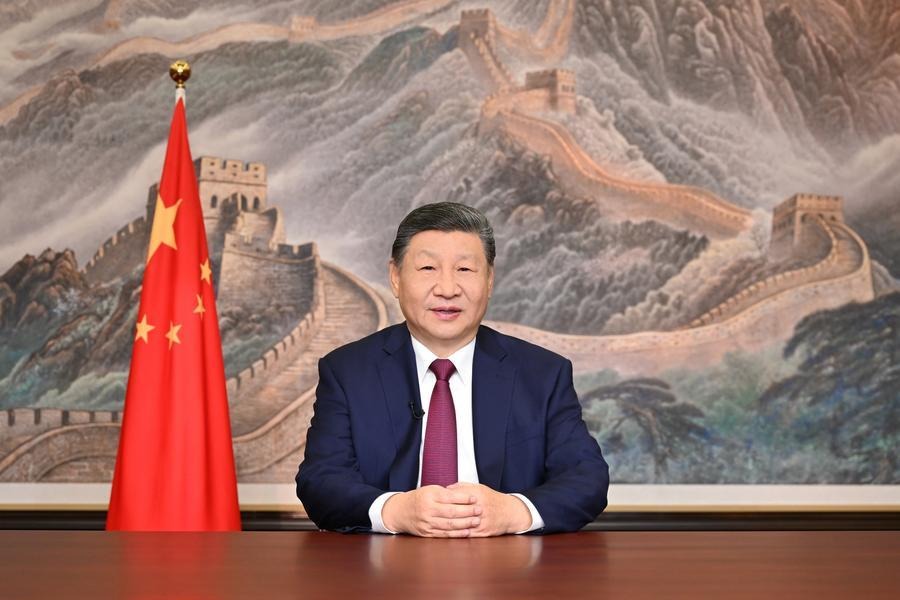
In his annual New Year’s address delivered from Beijing on December 31, 2025, Chinese President Xi Jinping articulated a comprehensive vision for China’s domestic development and international role in the coming year. The televised message, presented against the symbolic backdrop of the Great Wall representing China’s enduring civilization, served as both a retrospective on national achievements and a forward-looking policy statement.
President Xi highlighted the successful completion of China’s 14th Five-Year Plan, characterizing 2025 as a year of substantial progress in the nation’s modernization journey. With characteristic optimism, he detailed how China had met its economic and social development targets while advancing what he termed ‘Chinese modernization’ – a distinct development model balancing economic growth with socialist principles.
Looking toward the future, Xi emphasized that 2026 would inaugurate the 15th Five-Year Plan period, calling for intensified efforts in high-quality development, deepened reforms, and expanded opening-up policies. The address positioned innovation as the central driver of China’s economic transformation, aiming to evolve the country into a global technological powerhouse.
Beyond domestic affairs, Xi’s message conveyed China’s aspirations on the world stage, presenting the nation as both a stable development model and a responsible international stakeholder. The speech implicitly positioned China’s governance approach as an alternative paradigm in global affairs, particularly emphasizing South-South cooperation and multilateral engagement.
The annual address, a established tradition in Chinese political communication, effectively blended nationalist symbolism with policy direction, creating a narrative bridge between China’s historical legacy and its contemporary ambitions. Xi’s delivery, marked by his characteristic rhetorical style, balanced solemnity with encouragement, projecting confidence in China’s developmental path amid global uncertainties.