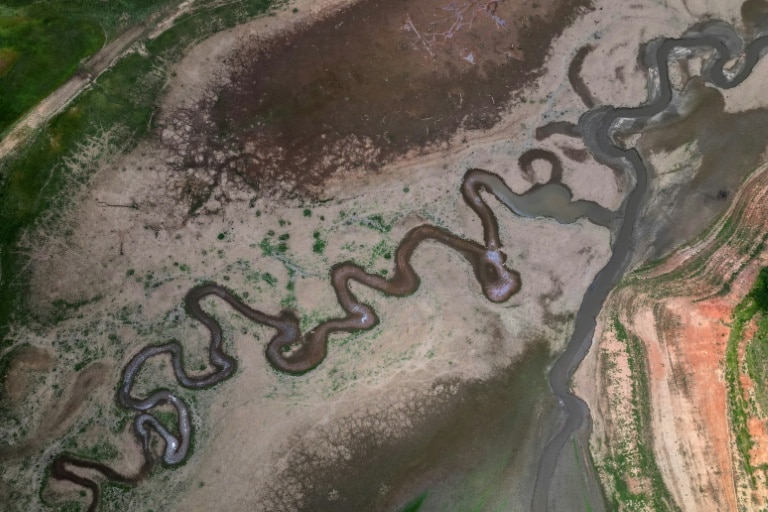
A groundbreaking United Nations report has declared that humanity has entered an unprecedented era of “global water bankruptcy,” marking a critical turning point in the planetary freshwater crisis. The comprehensive assessment from the UN University Institute for Water, Environment and Health (UNU-INWEH) reveals that decades of systematic overuse, pollution, and environmental destruction have pushed the world’s water systems beyond recovery thresholds.
The research institute asserts that conventional terms like “water stress” and “water crisis” have become inadequate to describe the current emergency. These previously used descriptors implied a future scenario that could still be prevented, whereas the world has already transitioned into a new phase of irreversible damage to aquatic ecosystems.
Water bankruptcy, as defined by the report, represents a condition where long-term water consumption drastically exceeds natural replenishment rates, causing such severe ecological damage that restoration to previous levels becomes virtually impossible. This alarming state manifests through multiple indicators: the dramatic shrinkage of major lakes worldwide, increasingly frequent instances of major rivers failing to reach oceans during dry seasons, and the disappearance of approximately 410 million hectares of wetlands over the past fifty years—an area nearly equivalent to the entire European Union.
Groundwater depletion presents another critical symptom, with about 70% of major aquifers essential for drinking water and agriculture showing persistent long-term declines. This has led to rising occurrences of “day zero” scenarios where urban demand completely outstrips available supply.
Climate change exacerbates the crisis, having driven the loss of over 30% of global glacier mass since 1970. This melting threatens the seasonal meltwater relied upon by hundreds of millions of people for survival and agriculture.
UNU-INWEH Director Kaveh Madani emphasized that while not every nation individually faces water bankruptcy, the consequences are visible across all inhabited continents. He urged governments to confront this “bitter reality” immediately and implement policy overhauls rather than treating water scarcity as a temporary challenge. The report advocates for adopting the bankruptcy framework to facilitate honest assessment and prompt action before further irreversible damage occurs.
The findings, drawn from extensive existing data and statistics, will be formally proposed in a peer-reviewed paper scheduled for publication in Water Resources Management journal. While some scientists not involved in the report acknowledge the value of highlighting water emergencies, they caution that a blanket global declaration might overlook significant progress being made at local levels to address water management challenges.