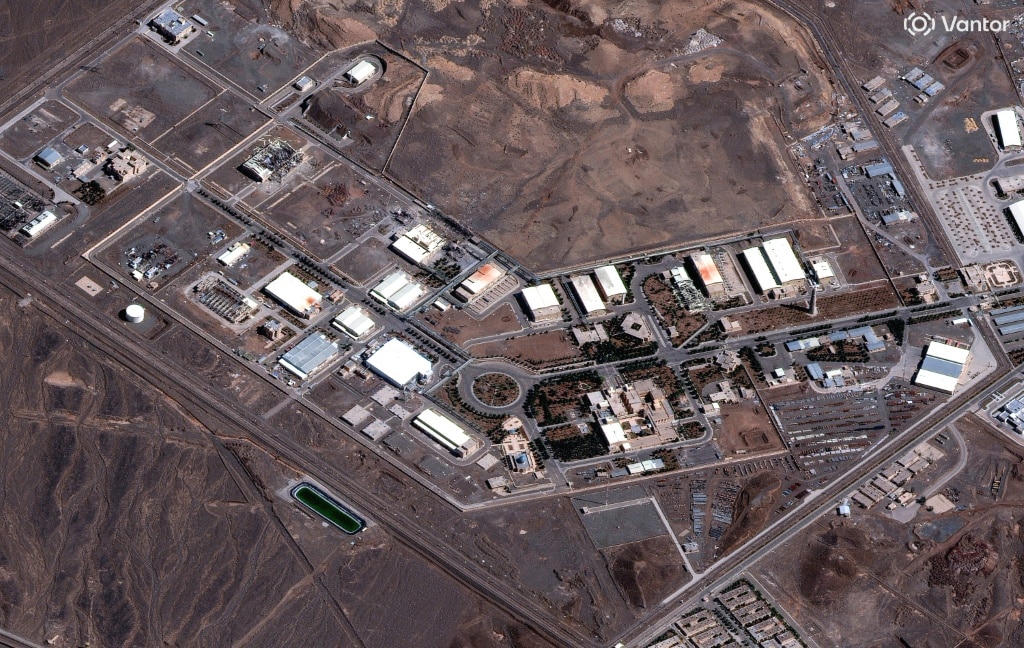
The head of the United Nations’ International Atomic Energy Agency (IAEA) Rafael Grossi has issued an urgent call for Iran to grant international inspectors immediate access to its bomb-damaged nuclear facilities, amid growing global fears over nuclear proliferation risks. In a confidential IAEA report obtained by Agence France-Presse (AFP) and released Thursday, the watchdog reaffirmed that its prolonged inability to access and verify Iran’s nuclear stockpiles constitutes a serious proliferation concern, urging Tehran to cooperate with inspectors in a constructive manner.
Diplomatic insiders familiar with the report’s contents note that satellite imagery analysis has detected no visible activity at Iran’s key nuclear sites since the outbreak of the latest regional Middle East conflict. However, the IAEA has been completely locked out of most critical Iranian nuclear facilities since joint Israeli-U.S. military strikes targeting nuclear installations during a 12-day conflict in June 2025. Additional strikes against Iranian nuclear infrastructure during the war that began on February 28 have further complicated inspection efforts, and the agency has repeatedly requested unfettered access over the past months with no result.
This development aligns with a recent CNN report from Sunday, which cited satellite data showing Iran has reopened 50 of the 69 tunnel entrances destroyed by U.S. and Israeli strikes at 18 underground missile facilities. Beyond that, the IAEA confirmed this week it was only able to carry out a limited inspection at the Bushehr nuclear power plant – the only Iranian nuclear site accessible to inspectors so far. Bushehr, which was originally built and operates with Russian support for civilian energy purposes, was also hit during the 2025 military strikes.
In the official report, the IAEA acknowledged that repeated military attacks on Iranian nuclear infrastructure have created an unprecedented, complex situation for verification work. Even so, the agency emphasized that immediate access to carry out full verification activities across all Iranian sites remains critical. The findings of the confidential report will be the focus of discussion at the upcoming IAEA Board of Governors meeting scheduled for next week.
Before the June 2025 U.S. strikes, IAEA analysts calculated that Iran held approximately 440 kilograms of uranium enriched to 60 percent purity. This level is extremely close to the 90 percent enrichment required to build a functional nuclear weapon, and far exceeds the 3.67 percent limit set by the 2015 Joint Comprehensive Plan of Action (JCPOA) – the now-defunct nuclear agreement between Iran and world powers. Since the 2025 strikes, the exact location and status of this large enriched uranium stockpile has remained completely unknown to international inspectors.
“The agency’s lack of access to verify the previously declared highly enriched uranium and low enriched uranium for nearly a year — which is long overdue according to standard safeguard practices — is a matter of proliferation concern,” the report stated. Grossi’s official call to Iran, included in the report, stressed “utmost urgency” for Tehran to engage constructively with the IAEA to enable full, effective implementation of international nuclear safeguard protocols across the country.
Israel and the United States have long maintained that Iran harbors secret ambitions to develop a nuclear weapons arsenal. U.S. President Donald Trump has cited this alleged threat as the core justification for launching military strikes against Iranian nuclear and military infrastructure. In any potential peace deal to end the ongoing conflict, Trump has insisted Iran must agree to two non-negotiable terms: permanent abandonment of any nuclear weapons program, and full destruction of its existing enriched uranium stockpile.
For its part, the Iranian government in Tehran has repeatedly denied any intention to pursue military nuclear applications, maintaining that all of its nuclear research and development activities are strictly for peaceful civilian purposes, and that Iran retains an inherent right to develop nuclear energy under international non-proliferation treaties.