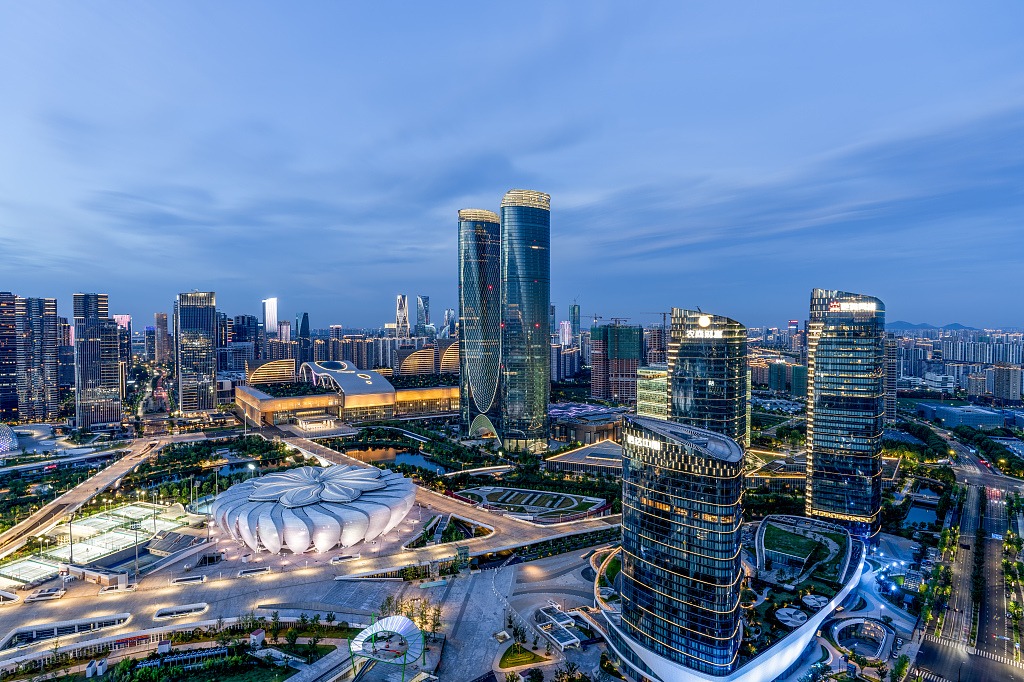
Hangzhou has achieved international acclaim as the United Nations designated the Chinese metropolis among the world’s top 20 Zero Waste Cities. This prestigious recognition from the UN Secretary-General’s Advisory Board on Zero Waste highlights Hangzhou’s successful integration of technological innovation with environmental sustainability in waste management.
The city’s transformation stems from its pioneering ‘digital intelligence’ approach that has revolutionized waste processing for its 12.6 million residents. Between 2021 and 2024, Hangzhou achieved a remarkable reduction in daily waste generation per capita from 1.06 kilograms to 0.99 kg. The municipality maintains an exceptional 98% utilization rate for general industrial solid waste while keeping hazardous waste landfill rates below 3.5%. Since late 2020, the city has accomplished ‘zero landfill’ status for municipal solid waste.
Central to this success is Hangzhou’s smart waste governance platform, functioning as a digital brain that coordinates citywide operations. The system integrates 7,361 waste collection points, 1,780 clearance vehicles, nine incineration plants, and 11 kitchen waste treatment facilities into a unified network. Real-time data monitoring ensures complete transparency, enabling regulators to track waste movement and optimize resource allocation with unprecedented precision.
For citizens, this technological advancement translates into practical benefits through platforms like Huge Recycle, which serves 559,000 households across Yuhang and Linping districts. Residents can schedule door-to-door pickups via mobile app and convert recyclables into ‘eco-credits’ redeemable for shopping benefits or cash rewards. The system employs an ‘exclusionary classification’ method that simplifies participation—residents need only separate kitchen and bathroom waste while placing all other recyclables in a single bag.
Beyond citywide systems, Hangzhou has developed specialized solutions including 3,200 ‘zero-waste cells’ established across schools, communities, and shopping malls. Innovative approaches range from Jingling Recycling Buses collecting low-value recyclables in Xihu district to biological decomposition using black soldier fly larvae in Fuyang district.
The UN will feature Hangzhou’s case study in a high-profile global release on March 30, coinciding with the UN International Day of Zero Waste. According to Gao Yiliang, director of the Hangzhou Ecology and Environment Bureau’s Soil and Solid Waste Chemicals Division, this recognition represents ‘a high affirmation of our exploration in deeply integrating digitalization with the circular economy.’ The city has codified its successful practices into official guidelines, demonstrated during recent events like the Yuhang district marathon where single-use materials were eliminated and paper guides replaced with electronic alternatives.