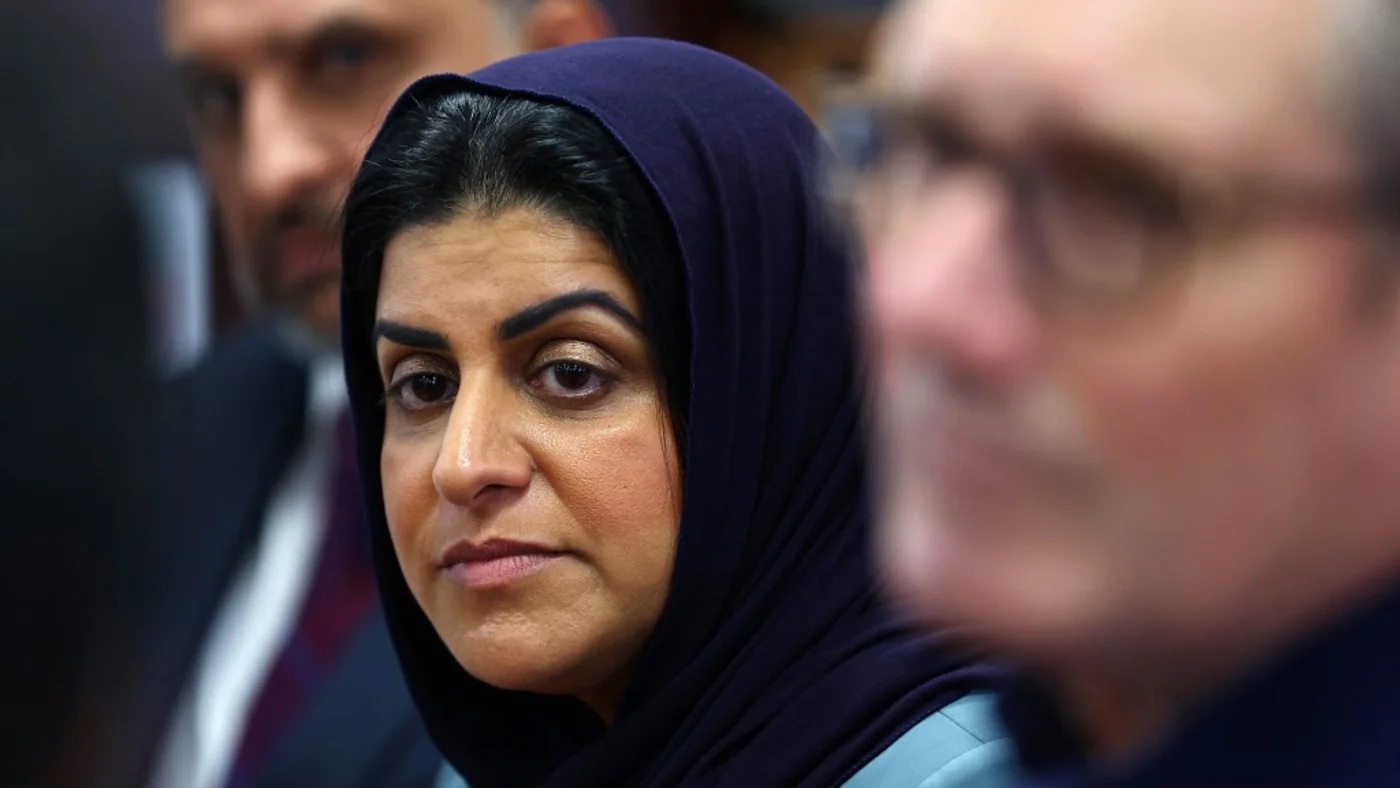
The United Kingdom’s Home Secretary, Shabana Mahmood, has officially sanctioned a Metropolitan Police request to prohibit this year’s Al-Quds Day demonstration in London. The decision, announced via social media platform X on Wednesday, stems from mounting concerns regarding potential public disorder amidst heightened Middle Eastern tensions.
The Al-Quds Day observance, originating in post-revolution Iran in 1979, traditionally serves as an international day of solidarity with Palestine. This year’s scheduled event coincides with escalating military engagements between the US-Israeli alliance and Iran, triggering both pro-war and anti-war demonstrations across Western capitals.
In her official justification, Minister Mahmood stated: ‘I am satisfied this prohibition is necessary to prevent serious public disorder, considering the protest scale and multiple planned counter-protests within the context of the ongoing Middle East conflict.’ The Home Secretary clarified that stationary demonstrations would remain subject to stringent police conditions, adding: ‘I expect to see the full force of the law applied to anyone spreading hatred and division instead of exercising their right to peaceful protest.’
The Islamic Human Rights Commission (IHRC), primary organizer of UK Al-Quds events, vehemently condemned the policing decision. The organization accused the Metropolitan Police of abandoning their ‘sworn principle of policing without fear or favour’ while allegedly capitulating to ‘Zionist lobby pressure.’ The IHRC confirmed seeking legal counsel while proceeding with a sanctioned static protest on March 15th.
This year’s demonstration coincides with recent military actions against Iran, including the assassination of Supreme Leader Ayatollah Ali Khamenei and a school bombing in Minab that claimed approximately 180 lives, predominantly children. Cabinet colleague Courts Minister Sarah Sackman declined to characterize the attack as a war crime, describing it instead as the ‘realities of war’ during a Sky News interview.