Despite Russian President Vladimir Putin’s declaration of victory, Ukrainian military units continue to maintain defensive positions in the strategically vital city of Pokrovsk, according to frontline observations. The city, which has endured nearly 18 months of continuous combat, remains partially under Ukrainian control despite relentless Russian advances from the south.
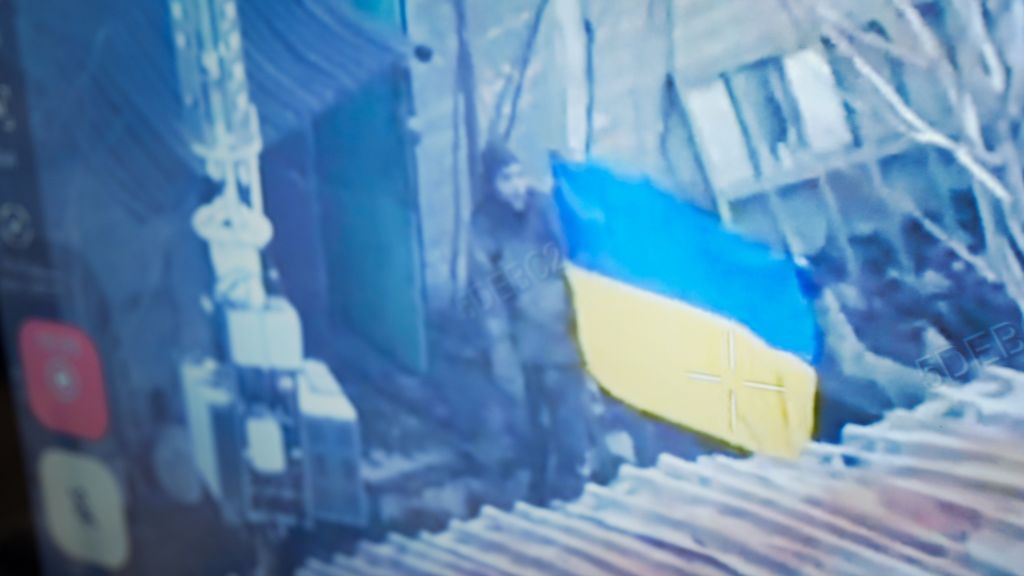
At a Ukrainian command post situated behind front lines, military personnel coordinate defensive operations through rapid radio communications while monitoring numerous live drone feeds. In a symbolic demonstration of defiance, soldiers from the Skala Assault Regiment executed a high-risk maneuver to briefly display the Ukrainian flag within the city’s northern sector—a direct refutation of Kremlin claims regarding total occupation.
Yuri, commander of the Skala Regiment, emphasized the psychological significance of this resistance: ‘The whole world should know we will not just give up our territory. If we do not show this, everyone will lose faith and stop helping Ukraine.’
Military assessments indicate Ukrainian forces maintain control up to the railway line that bisects the devastated urban landscape. Battalion commanders utilize detailed tactical maps with plastic figurines to track positions, revealing that Russian forces have employed small infiltration teams—sometimes disguised as civilians—to penetrate Ukrainian defenses.
While acknowledging the challenging conditions, soldiers describe the situation as ‘hard, but under control’ and ‘tense, but not critical.’ The conflict has exacted heavy casualties on both sides, with Ukrainian troops reporting the retrieval of documents from fallen Russian soldiers. One soldier with the call sign Rabbit remarked on the human cost with grim determination: ‘Not enough,’ when asked if they had eliminated sufficient enemy combatants.
The technological asymmetry presents significant challenges, as Russian forces deploy thermal-imaging drones capable of 24/7 surveillance. Ukrainian troops have developed countermeasures and frequently express hope for adverse weather conditions that impede aerial reconnaissance.
International perspectives emerge from foreign volunteers like the Latvian deputy commander known as ‘Godfather,’ who warns that Western support remains crucial: ‘If Ukraine loses the war, it’s going to be our country next.’ He criticized international response efforts as containing ‘a lot of talking, a lot of bureaucracy and not enough doing.’
The collective resolve among Ukrainian defenders remains firm, with soldiers emphasizing their connection to the land and rejecting territorial concessions despite the tremendous physical and psychological toll of prolonged urban warfare.