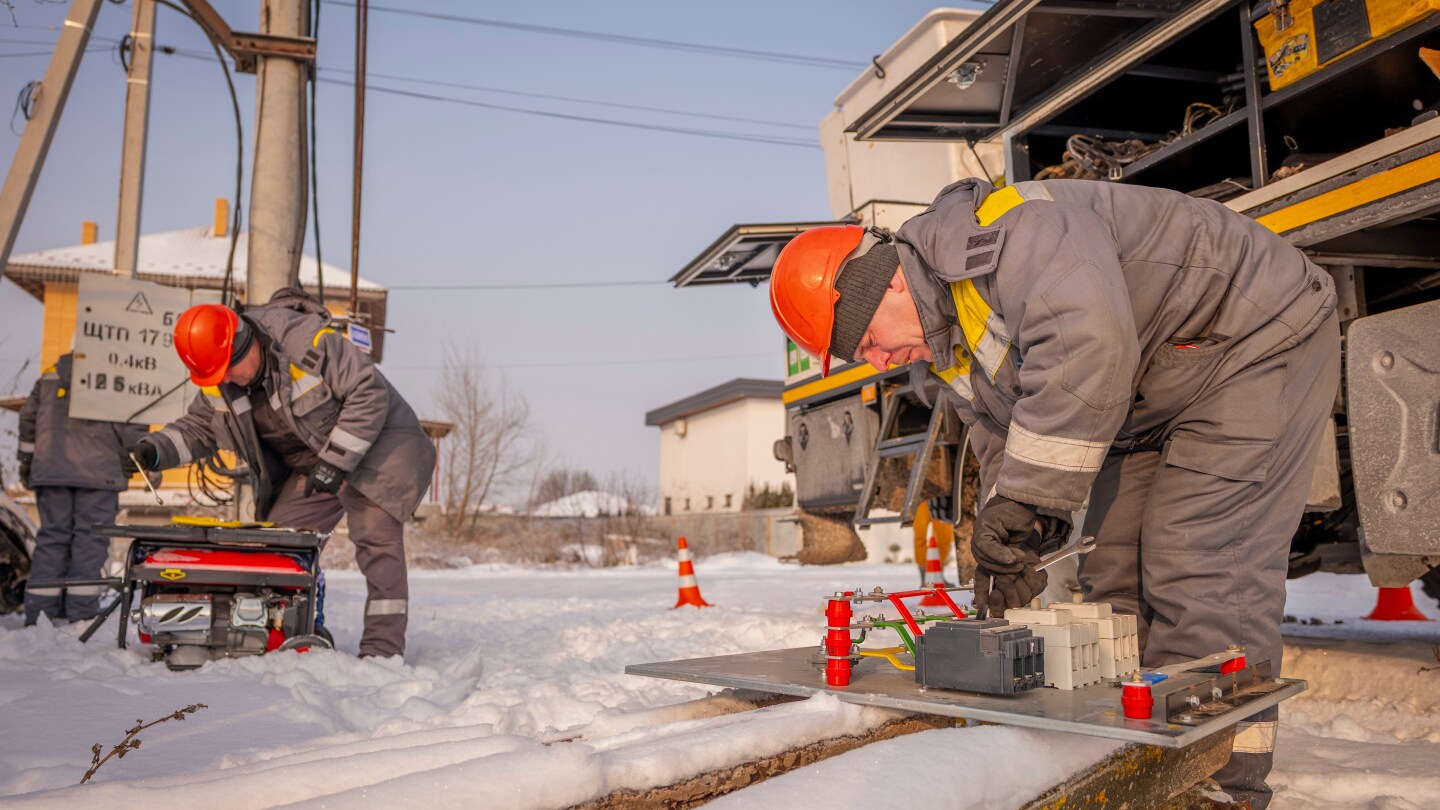
In the freezing outskirts of Kyiv, teams of emergency repair personnel are engaged in a relentless battle against time and temperatures plunging to -15°C (13°F). These dedicated workers, representing private electricity provider DTEK, labor from dawn until midnight through snow-covered landscapes to rebuild electrical systems devastated by systematic Russian attacks on Ukraine’s energy infrastructure.
The situation in Boryspil, a town of approximately 60,000 residents, exemplifies the critical challenges facing energy restoration efforts. According to Yurii Bryzh, head of DTEK’s Boryspil regional department, even limited success in restoring four hours of daily electricity creates subsequent complications. When power returns, residents immediately activate all available electrical appliances to complete essential tasks—cooking, washing, and recharging devices—resulting in system overloads and renewed blackouts.
Kyiv Mayor Vitali Klitschko has characterized these outages as the most extensive since Russia’s full-scale invasion began nearly four years ago, with some households enduring days without electricity. The capital’s apartments have become freezing enclaves, with residents bundling in heavy layers against the penetrating cold. Streets remain darkened at night, with towering apartment blocks showing no signs of life behind their windows.
The human impact is profound. Scientists Mykhailo, 39, and Hanna, 43, described how their daughter’s bedroom temperatures match the frigid outdoor conditions. The family sleeps together under multiple blankets for warmth, taking their child to work during daytime hours since their workplace maintains generator power while her kindergarten lacks heating.
Elderly residents demonstrate remarkable resilience. Seventy-six-year-old Zinaida Hlyha utilizes heated water bottles for warmth, consciously avoiding complaints by comparing her situation to soldiers enduring trench warfare. Eighty-nine-year-old physicist Raisa Derhachova occasionally plays piano in what she describes as ‘terrifying cold,’ having survived World War II only to confront another devastating conflict.
Energy analyst Dennis Sakva of Dragon Capital investment company explains the technical challenges: Russian strikes specifically target power plants and major substations, with replacement equipment like transformers requiring months for procurement. Sakva categorizes Ukraine’s current heroes into two groups: military personnel defending the nation and energy workers battling to maintain civilian infrastructure.
The extensive damage to Ukraine’s energy grid represents a strategic warfare approach by Russia, exploiting winter conditions to maximize civilian hardship while testing the nation’s resilience and repair capabilities.